2026 Medicare Part D Redesign: Up to 15% Drug Cost Impact
The 2026 Medicare Part D redesign introduces a pivotal $2,000 out-of-pocket spending cap, which could significantly alter prescription drug costs for beneficiaries, potentially affecting expenses by up to 15% through revised plan and manufacturer contributions.
The landscape of prescription drug coverage is undergoing a significant transformation, with the 2026 Medicare Part D Redesign: How New Policy Changes Could Impact Your Prescription Drug Costs by Up to 15% set to reshape how millions of Americans manage their medication expenses. This overhaul isn’t just a minor tweak; it’s a fundamental restructuring with far-reaching implications for beneficiaries, drug plans, and pharmaceutical manufacturers alike. Understanding these changes now is crucial for preparing for the future of your healthcare spending.
Understanding the Inflation Reduction Act’s Influence
The Inflation Reduction Act (IRA) of 2022 serves as the bedrock for the sweeping changes coming to Medicare Part D in 2026. This landmark legislation aims to lower prescription drug costs for seniors and people with disabilities by empowering Medicare to negotiate drug prices and redesigning the Part D benefit structure. Its impact is multifaceted, touching upon everything from out-of-pocket spending to the financial responsibilities of drug manufacturers and plans.
Prior to the IRA, Medicare Part D beneficiaries faced an unpredictable financial burden, especially those with high prescription drug costs who entered the catastrophic phase. This phase, while offering significant coverage, still required beneficiaries to pay 5% of their drug costs, with no annual cap. The IRA directly addresses this vulnerability, providing a much-needed safety net.
Key Provisions of the Inflation Reduction Act for Part D
The IRA introduces several critical elements that will profoundly alter the Medicare Part D program. These provisions are designed to create a more equitable and affordable system for beneficiaries.
- Out-of-Pocket Spending Cap: A cornerstone of the redesign is the implementation of a $2,000 annual cap on out-of-pocket prescription drug costs for beneficiaries. This is a game-changer for those with high medication expenses.
- Drug Price Negotiation: Medicare will gain the power to negotiate prices for certain high-cost drugs, aiming to reduce the overall cost of medications.
- Manufacturer Discounts: Pharmaceutical manufacturers will be required to provide greater discounts on drugs, particularly in the catastrophic phase, shifting more of the financial burden away from beneficiaries and Medicare.
- Premium Stabilization: While not a direct cap, the IRA includes measures intended to slow the growth of Part D premiums, providing more predictability for enrollees.
These provisions, collectively, represent a significant shift in how prescription drug costs are distributed and managed within the Medicare Part D framework. The intent is clear: to make essential medications more affordable and accessible for all beneficiaries, particularly those who rely on high-cost treatments.
The New $2,000 Out-of-Pocket Cap: A Game Changer
One of the most anticipated and significant changes under the 2026 Medicare Part D redesign is the introduction of a $2,000 annual cap on out-of-pocket prescription drug costs. This provision is poised to offer profound financial relief to millions of beneficiaries, particularly those managing chronic conditions or requiring expensive medications. For years, there was no limit to how much a Medicare Part D enrollee could spend on their prescriptions annually, leaving many vulnerable to substantial financial strain.
This cap means that once a beneficiary has spent $2,000 out-of-pocket on covered prescription drugs within a calendar year, they will not have to pay any additional costs for the remainder of that year. This includes deductibles, co-payments, and coinsurance. The impact for individuals who typically spend thousands of dollars on medications annually cannot be overstated; it provides a clear ceiling to their financial exposure, allowing for better budget planning and reducing the risk of medical debt.
Who Benefits Most from the Out-of-Pocket Cap?
While all beneficiaries will indirectly benefit from a more stable system, certain groups will experience the most direct and substantial relief from the $2,000 cap. This includes individuals with:
- High-cost specialty drugs: Medications for conditions like cancer, multiple sclerosis, or rheumatoid arthritis often come with exorbitant price tags.
- Multiple chronic conditions: Those needing several different maintenance medications can quickly accumulate significant out-of-pocket expenses.
- Limited incomes: Beneficiaries on fixed incomes who previously struggled to afford their medications will find this cap a crucial support.
The elimination of the 5% coinsurance in the catastrophic phase is directly tied to this cap. Previously, once a beneficiary reached the catastrophic phase, they still paid 5% of their drug costs. With the new cap, this 5% responsibility is effectively removed once the $2,000 threshold is met. This ensures that the most vulnerable beneficiaries are fully protected from unlimited drug spending. The move represents a significant step towards greater equity and affordability within the Medicare Part D program, aligning it more closely with other health insurance models that include out-of-pocket maximums.
Restructured Part D Coverage Phases and Cost-Sharing
The 2026 redesign doesn’t just introduce an out-of-pocket cap; it fundamentally reshapes the entire structure of Medicare Part D’s coverage phases and dictates how costs are shared among beneficiaries, drug plans, and manufacturers. This intricate rebalancing aims to distribute financial responsibility more equitably and incentivize better drug pricing. Understanding these new phases is key to grasping how your costs might change.
Previously, Part D consisted of four phases: deductible, initial coverage, coverage gap (donut hole), and catastrophic coverage. The new structure maintains some elements but significantly alters the cost-sharing percentages within each, particularly by eliminating the 5% catastrophic phase coinsurance for beneficiaries. This shift is designed to protect individuals from runaway costs once they reach higher spending thresholds.
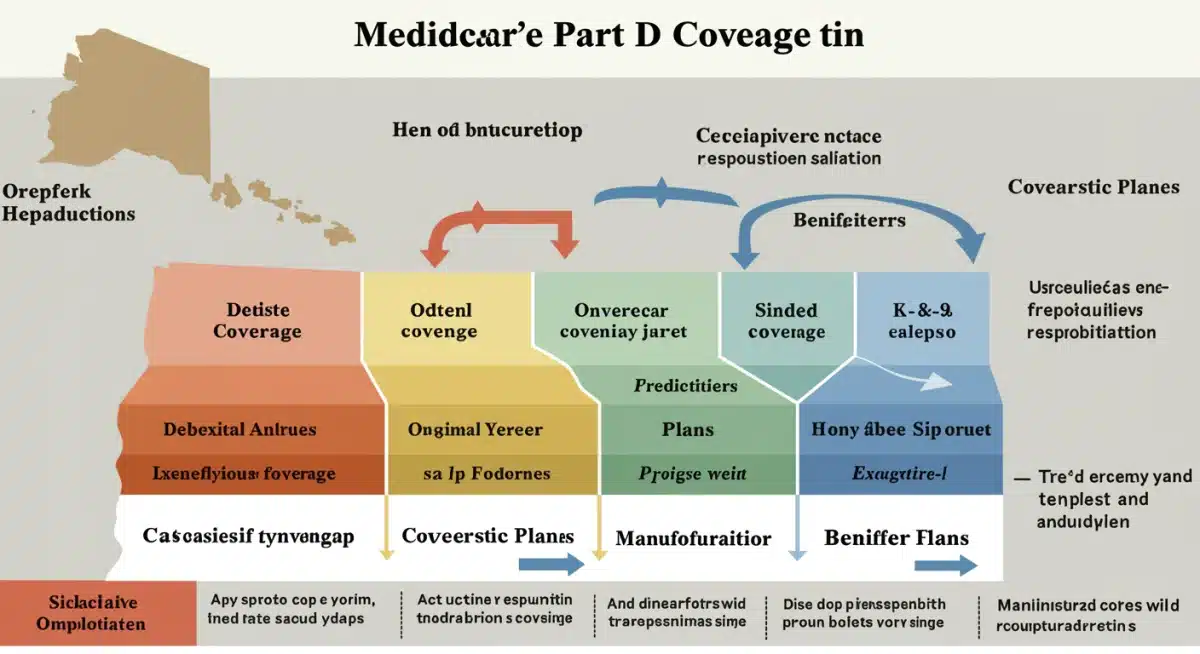
The financial burden is now more heavily distributed among drug plans and manufacturers, especially in the catastrophic phase. This new model encourages plans to better manage formularies and negotiate lower prices, as they will bear a larger share of the costs for high-spending beneficiaries. Manufacturers, in turn, are compelled to offer greater discounts, reducing the overall expense for the system.
Detailed Breakdown of the New Cost-Sharing Model
The revamped cost-sharing model introduces specific adjustments across the different phases:
- Deductible Phase: While the deductible amount may vary by plan, beneficiaries are typically responsible for 100% of drug costs until the deductible is met. The IRA doesn’t directly cap the deductible, but changes in overall plan liabilities could influence future deductible amounts.
- Initial Coverage Phase: After meeting the deductible, beneficiaries pay a portion (co-pay or coinsurance), and the plan covers the rest, up to a certain spending limit. The exact percentages will continue to be plan-specific, but the overall framework is adjusted by the subsequent phases.
- Catastrophic Coverage Phase: This is where the most significant changes occur. Once a beneficiary’s out-of-pocket costs reach the new $2,000 annual cap, they enter the catastrophic phase and pay nothing for covered prescription drugs for the remainder of the year. This phase is now almost entirely covered by Medicare, drug plans, and manufacturers, with zero beneficiary cost-sharing.
This restructuring aims to create a more predictable and financially manageable experience for beneficiaries, shifting a substantial portion of the risk for high drug costs away from individuals and onto the entities that can better absorb or influence those costs. The impact on beneficiary spending, particularly for those with chronic illnesses, is expected to be overwhelmingly positive.
Potential Impact on Your Prescription Drug Costs by Up to 15%
The 2026 Medicare Part D redesign introduces a complex interplay of changes that could lead to a significant variation in individual prescription drug costs, with estimates suggesting an impact of up to 15%. This percentage is not a universal reduction or increase but rather an indication of the potential swing in costs depending on a beneficiary’s specific drug regimen, plan choice, and overall spending habits. For those with high drug costs, the changes are overwhelmingly positive, offering substantial savings.
The most direct impact will be felt by beneficiaries who currently spend more than $2,000 out-of-pocket annually. These individuals will see their annual maximum spending capped, leading to considerable savings. Conversely, some beneficiaries with very low drug costs might experience minor shifts in premiums or co-pays as plans adjust to the new cost-sharing framework. However, the overall intent of the legislation is to reduce the financial burden on the average beneficiary.
Factors Influencing Cost Fluctuations
Several variables will determine the precise impact on an individual’s drug costs:
- Current Drug Spending: Beneficiaries who regularly hit the catastrophic phase will see the most dramatic reduction in costs due to the $2,000 cap.
- Plan Premiums: While the IRA aims to slow premium growth, individual plan premiums may still fluctuate as insurers adjust to their increased liability in the catastrophic phase and new manufacturer discounts.
- Formulary Changes: Drug plans might adjust their formularies or preferred drug lists in response to the new cost-sharing rules and drug price negotiations, potentially affecting which drugs are covered and at what tier.
- Negotiated Drug Prices: The success of Medicare’s drug price negotiation efforts will directly influence the cost of certain high-priced medications, which could then be reflected in lower co-pays or overall plan costs.
It’s important for beneficiaries to actively review their current drug usage and anticipate how these changes might affect their specific situation. While the $2000 cap offers substantial protection, understanding the nuances of the restructured phases and how plans adapt will be crucial for optimizing savings. The goal is to minimize unexpected expenses and maximize the benefits of the new system, potentially leading to significant reductions for many.
Navigating Premium Adjustments and Plan Choices
While the $2,000 out-of-pocket cap is a significant win for beneficiaries, the 2026 Medicare Part D redesign also brings with it the complexities of premium adjustments and the need for careful plan selection. Drug plans will be recalibrating their offerings to account for their increased financial responsibility in the catastrophic phase and the new manufacturer discounts. This means that while some costs may decrease, others, like monthly premiums, could see changes.
The Inflation Reduction Act includes provisions aimed at slowing the growth of Part D premiums, but this doesn’t guarantee that individual premiums won’t change. Plans will need to balance their liabilities and administrative costs, which could lead to varying premium adjustments across different plans and regions. Beneficiaries will need to be more vigilant than ever during the annual enrollment period to ensure they are choosing the plan that best fits their needs and budget under the new structure.
Strategies for Smart Plan Selection
To navigate the evolving landscape of Medicare Part D, beneficiaries should consider several key strategies when choosing a plan:
- Review Your Medications Annually: Your current drug list is the most important factor. Ensure your preferred pharmacy and all your medications are covered at the most favorable tier.
- Compare Premiums and Deductibles: While the out-of-pocket cap is significant, lower premiums and deductibles can still lead to overall savings, especially if your drug costs are moderate.
- Understand Formularies: Pay close attention to a plan’s formulary (list of covered drugs) and how your specific medications are tiered. A drug moving to a higher tier could increase your co-pay.
- Utilize Medicare’s Plan Finder: The official Medicare Plan Finder tool will be updated to reflect the 2026 changes, making it an invaluable resource for comparing plans based on your specific drug list.
The emphasis shifts towards a more proactive approach to plan selection. Relying on past choices without re-evaluation could lead to missed opportunities for savings or unexpected higher costs. By carefully comparing plans and understanding the new cost-sharing dynamics, beneficiaries can optimize their coverage and potentially reduce their overall prescription drug expenses, even with premium adjustments.
Anticipating Manufacturer and Pharmacy Responses
The sweeping changes introduced by the 2026 Medicare Part D redesign will not only impact beneficiaries and plans but will also prompt significant responses from pharmaceutical manufacturers and pharmacies. These key stakeholders play a crucial role in the drug supply chain, and their adaptations to the new policy landscape will have ripple effects throughout the system. Manufacturers, in particular, face increased financial responsibilities, especially in the catastrophic coverage phase, which could influence their pricing strategies and drug development pipelines.
Pharmaceutical companies will be required to provide greater discounts, effectively sharing more of the cost burden for high-spending beneficiaries. This new financial imperative might lead manufacturers to re-evaluate their pricing models, potentially offering more competitive rates upfront or focusing research and development on drugs that can maintain profitability under the new negotiation framework. The intent is to drive down drug costs at the source, rather than solely relying on beneficiary cost-sharing.
Implications for Drug Development and Availability
The changes could also influence the pharmaceutical innovation landscape. Some manufacturers might adjust their investment in certain drug categories, prioritizing those that are less affected by price negotiation or where they can still achieve sustainable returns. This is a critical area to monitor, as it could potentially impact the availability of new treatments in the long run. However, the legislation also aims to ensure that beneficiaries still have access to a wide range of essential medications.
- Pharmacy Reimbursement: Pharmacies, as crucial points of access for beneficiaries, may also face adjustments in their reimbursement rates from Part D plans. These changes could influence their operational models and the services they offer.
- Supply Chain Dynamics: The entire drug supply chain, from manufacturers to distributors and pharmacies, will need to adapt to the new financial flows and negotiation powers. This could lead to greater efficiency but also potential challenges during the transition period.
- Patient Support Programs: Manufacturers might also re-evaluate or expand their patient assistance programs to help beneficiaries manage costs outside of the Part D benefit, especially for drugs not subject to negotiation or with higher initial co-pays.
Ultimately, the responses of manufacturers and pharmacies will be critical in shaping the real-world impact of the 2026 redesign. While the legislation aims to create a more affordable system, the industry’s adaptation will determine the extent to which these benefits are realized by beneficiaries. Vigilance and continued monitoring of these industry shifts will be essential for understanding the full scope of the changes.
Preparing for the 2026 Changes: Actionable Steps
With the 2026 Medicare Part D redesign on the horizon, proactive preparation is essential for all beneficiaries. Waiting until the last minute to understand these significant policy shifts could lead to unexpected costs or missed opportunities for savings. Taking actionable steps now can help ensure a smooth transition and optimize your prescription drug coverage under the new framework. This involves a combination of research, review, and strategic planning aligned with your individual health needs.
One of the most important steps is to regularly review your current prescription drug usage. Keep an updated list of all your medications, including dosage and frequency. This will be invaluable when comparing plans and estimating your potential out-of-pocket costs under the new rules. Understanding your typical annual drug spending can also provide a baseline for assessing the financial impact of the $2,000 out-of-pocket cap.
Key Preparatory Actions for Beneficiaries
To effectively prepare for the 2026 changes, consider these practical steps:
- Stay Informed: Regularly check official Medicare resources and reputable news sources for updates on the implementation of the IRA provisions. Medicare.gov will be the definitive source for official information.
- Consult with a Benefits Counselor: Organizations like State Health Insurance Assistance Programs (SHIP) offer free, unbiased counseling to help beneficiaries navigate Medicare choices. They can provide personalized advice based on your specific situation.
- Analyze Your Current Plan: Understand your current Part D plan’s premium, deductible, co-pays, and formulary. This baseline will help you evaluate how new plans compare.
- Project Future Costs: Based on your current medications, try to estimate your annual drug spending. This will help you see how the $2,000 out-of-pocket cap will directly benefit you if you are a high spender.
The annual open enrollment period for Medicare (typically October 15 to December 7) will be particularly critical in the lead-up to 2026. This is your opportunity to switch plans if your current one no longer meets your needs or if a new plan offers better benefits under the redesigned structure. By being well-informed and taking a proactive approach, beneficiaries can position themselves to maximize the benefits and minimize the potential disruptions of the 2026 Medicare Part D redesign.
| Key Change | Brief Description |
|---|---|
| $2,000 Out-of-Pocket Cap | Annual limit on beneficiary prescription drug spending, providing significant financial relief. |
| Catastrophic Phase Redesign | Beneficiary 5% coinsurance eliminated after reaching the out-of-pocket cap. |
| Increased Manufacturer Discounts | Pharmaceutical companies required to provide larger discounts, especially in catastrophic coverage. |
| Medicare Drug Price Negotiation | Medicare gains power to negotiate prices for certain high-cost drugs, aiming for lower overall costs. |
Frequently Asked Questions About 2026 Medicare Part D
The most significant change is the introduction of a $2,000 annual out-of-pocket spending cap for prescription drugs. Once beneficiaries reach this limit, they will not pay any further costs for covered medications for the remainder of the year, offering substantial financial protection.
Beneficiaries with high drug costs, especially those currently spending thousands annually, will see significant savings. The $2,000 cap provides a clear maximum on their yearly out-of-pocket expenses, eliminating the previous unlimited 5% coinsurance in the catastrophic phase.
The Inflation Reduction Act aims to slow the growth of Part D premiums. However, individual plan premiums may still fluctuate as insurers adjust to increased liabilities in the catastrophic phase and new manufacturer discounts. It’s crucial to compare plans annually.
Manufacturers will be required to provide greater discounts on drugs, particularly in the catastrophic phase. This shifts more of the financial burden onto them, incentivizing lower drug prices and potentially influencing their pricing and development strategies.
Start by reviewing your current medications and annual spending. Stay informed through official Medicare resources, and consider consulting a benefits counselor. During open enrollment, carefully compare plans to find one that best aligns with your needs under the new structure.
Conclusion
The 2026 Medicare Part D redesign represents a monumental shift in how prescription drug costs are managed for millions of Americans. By introducing a $2,000 out-of-pocket spending cap and fundamentally restructuring cost-sharing responsibilities, the Inflation Reduction Act aims to create a more affordable and predictable system. While the precise impact on individual beneficiaries may vary by up to 15% depending on their specific circumstances, the overarching goal is to provide substantial financial relief, especially for those with high prescription drug expenses. Understanding these changes, actively engaging in plan selection, and staying informed will be crucial for navigating the new landscape and maximizing the benefits of this significant reform.