2026 Energy Transition: 3 Policy Shifts Reshaping U.S. Grid
The 2026 energy transition in the United States is fundamentally altering the nation’s electricity infrastructure through three significant policy shifts, aiming to enhance resilience, reduce emissions, and integrate advanced renewable technologies.
The landscape of energy in the United States is on the precipice of a profound transformation. By 2026, a series of ambitious policy shifts are set to redefine how electricity is generated, distributed, and consumed, ushering in a new era for the U.S. grid. This pivotal moment, often referred to as the 2026 energy transition, promises to reshape the nation’s power infrastructure, driving sustainability, resilience, and economic growth.
The Accelerating Push for Renewable Energy Adoption
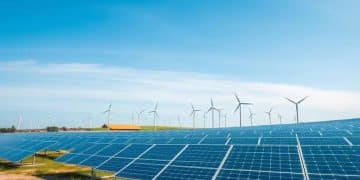
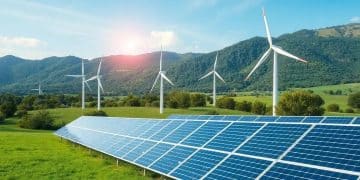
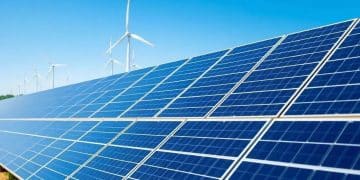
The push for renewable energy is not new, but by 2026, it will be significantly accelerated by specific policy mechanisms designed to overcome historical barriers. These policies aim to make clean energy sources like solar and wind not just competitive, but often the preferred option for new power generation.
One of the primary drivers is enhanced tax credits and incentives. While existing credits have played a role, new legislation is expected to extend and expand these benefits, making renewable projects more financially attractive for developers and investors. This stability provides a clearer path for long-term investments, which are crucial for large-scale energy infrastructure projects. The goal is to reduce the levelized cost of energy (LCOE) for renewables even further, ensuring they outcompete fossil fuels on price alone.
Expanding Investment Tax Credits (ITCs) and Production Tax Credits (PTCs)
The continuation and expansion of ITCs and PTCs are central to this acceleration. These credits have historically been instrumental in the growth of solar and wind power, respectively. By 2026, expect to see:
- Longer-term certainty: Policies extending credits for a decade or more, rather than short, unpredictable cycles.
- Direct pay options: Allowing entities without sufficient tax liability to receive cash payments instead of tax credits, broadening access.
- Incentives for domestic manufacturing: Additional credits for projects using U.S.-made components, boosting local economies.
These financial incentives are not just about reducing costs; they’re about de-risking investments in renewable projects, attracting a wider pool of capital, and ultimately speeding up deployment across the country. The stability provided by these policies is critical for developers to plan and execute large-scale projects, which often require years from conception to operation.
Furthermore, expect to see new mandates and clean energy standards at both federal and state levels. These policies will set ambitious targets for renewable energy generation, compelling utilities to procure a larger percentage of their power from clean sources. This creates a guaranteed market for renewables, further stimulating investment and innovation. The combination of financial incentives and regulatory mandates forms a powerful dual approach to rapidly integrate more clean energy into the grid.
Modernizing Grid Infrastructure: A Smart and Resilient Network
An aging and often vulnerable grid infrastructure is a significant challenge to achieving a robust energy transition. By 2026, major policy shifts will prioritize and fund the modernization of the U.S. grid, transforming it into a more intelligent, resilient, and interconnected network capable of handling diverse energy sources and demand patterns.
The focus will be on smart grid technologies, which involve integrating advanced sensors, digital controls, and communication networks into the electricity system. This allows for real-time monitoring and management of electricity flow, enabling utilities to respond more effectively to fluctuations in supply from intermittent renewable sources and to manage demand more efficiently. The goal is to minimize power outages, reduce energy waste, and improve the overall reliability of the system.
Investing in Smart Grid Technologies and Energy Storage
Significant federal funding and regulatory support are being directed towards upgrading transmission lines, deploying advanced metering infrastructure (AMI), and integrating substantial energy storage solutions. These investments are critical for a future grid that relies heavily on renewables.
- Grid hardening and resilience: Funding for projects that protect infrastructure from extreme weather events and cyber threats.
- Advanced metering infrastructure: Deployment of smart meters that provide real-time data to consumers and utilities, enabling demand-side management.
- Battery storage mandates: Policies encouraging or requiring utilities to deploy large-scale battery storage to balance renewable energy fluctuations.
Energy storage, particularly utility-scale batteries, is a game-changer for grid modernization. It addresses the intermittency challenge of solar and wind power, allowing excess energy generated during peak production times to be stored and then discharged when demand is high or renewable output is low. Policies promoting storage, through direct incentives or mandates, will be crucial in ensuring grid stability and maximizing the value of renewable energy assets. This integration of storage also enhances grid resilience, providing backup power during outages and smoothing out power delivery.
Furthermore, policies are expected to streamline the permitting process for new transmission lines, which are essential for bringing renewable energy from remote generation sites to urban load centers. Historically, the lengthy and complex permitting process has been a major bottleneck for renewable energy deployment. New policies aim to accelerate these approvals while maintaining environmental safeguards, ensuring that the infrastructure keeps pace with renewable energy growth.
Decentralizing Energy Production and Empowering Consumers
Beyond utility-scale changes, the 2026 energy transition will also see a significant shift towards decentralized energy production and greater consumer empowerment. This involves fostering distributed generation, where electricity is produced closer to where it’s consumed, and enabling consumers to play a more active role in managing their energy use. This approach not only enhances grid resilience but also promotes local economic development and energy independence.
Key policies will focus on supporting rooftop solar, community solar projects, and microgrids. These initiatives allow homeowners, businesses, and communities to generate their own power, reducing their reliance on the centralized grid and lowering their energy bills. Policies like favorable net metering rules, which compensate consumers for excess electricity they feed back into the grid, are critical for making these investments economically viable.
Promoting Community Solar and Microgrid Development
New policies are designed to make distributed energy resources (DERs) more accessible and beneficial for a wider range of consumers. This includes simplifying regulatory frameworks and offering financial support for smaller-scale projects.
- Expanded net metering policies: Ensuring fair compensation for residential and commercial solar producers.
- Community solar initiatives: Programs that allow multiple subscribers to benefit from a single solar installation, making solar accessible to renters and those without suitable rooftops.
- Microgrid incentives: Funding and regulatory support for self-sufficient local grids that can operate independently during outages, enhancing local resilience.
These policies empower consumers by giving them more control over their energy choices and consumption. They can not only generate their own power but also participate in demand response programs, where they reduce their energy use during peak demand periods in exchange for financial incentives. This active participation helps to balance the grid and reduce the need for expensive peak power generation.
Additionally, policies will encourage the development of virtual power plants (VPPs), which aggregate various DERs like rooftop solar, battery storage, and smart thermostats into a single, coordinated system that can provide grid services. VPPs offer a flexible and cost-effective way to integrate distributed resources into grid operations, providing both capacity and ancillary services traditionally supplied by large power plants. This decentralization not only strengthens the grid against disruptions but also fosters a more equitable and participatory energy system.
The Role of Electrification in the Energy Transition
A crucial, often overlooked, aspect of the 2026 energy transition is the widespread electrification of various sectors. As the grid becomes cleaner, policies are pushing for the conversion of end-uses from fossil fuels to electricity. This includes transportation, heating, and industrial processes. The logic is straightforward: if the electricity itself is generated from renewable sources, then electrifying other sectors significantly reduces overall carbon emissions.
Policies supporting electrification will manifest in several ways. For transportation, this means continued and expanded incentives for electric vehicles (EVs), alongside massive investments in charging infrastructure. For buildings, it involves promoting electric heat pumps over natural gas furnaces, and for industry, it means encouraging the adoption of electric boilers and other electric-powered manufacturing processes. These shifts require not only consumer buy-in but also robust policy frameworks to drive adoption and ensure the necessary infrastructure is in place.
Incentives for Electric Vehicles and Charging Infrastructure
The push for electric vehicles is a cornerstone of electrification efforts, driven by both environmental goals and technological advancements. Policies will continue to support this growth:
- EV purchase tax credits: Expanded and potentially higher credits for new and used EVs, making them more affordable.
- Charging infrastructure grants: Federal and state funding for building public and private EV charging networks, including fast chargers.
- Fleet electrification mandates: Requirements for government and commercial fleets to transition to electric vehicles.
Beyond transportation, policies are also targeting building electrification. Heat pumps, which are significantly more efficient than traditional heating and cooling systems, are a key technology. Incentives for heat pump installation, alongside stricter building codes that favor electric appliances, will accelerate this transition. The goal is to move away from burning fossil fuels directly in homes and businesses, thereby improving indoor air quality and reducing localized pollution.
The synergy between a cleaner grid and widespread electrification is powerful. As more renewable energy comes online, the environmental benefits of electrification multiply. This virtuous cycle is a core component of achieving aggressive decarbonization targets. Policies supporting both sides of this equation – clean generation and electrified end-uses – are essential for a successful and comprehensive energy transition by 2026 and beyond.
Addressing Equity and Environmental Justice in Policy
As the U.S. embarks on the 2026 energy transition, a critical policy dimension involves ensuring that the benefits are equitably distributed and that historically marginalized communities are not left behind, or worse, disproportionately burdened. Environmental justice has become a central tenet of new energy policies, aiming to correct past injustices and create a more inclusive energy future.
Policies are being designed to direct investments and job creation into disadvantaged communities. This includes specific carve-outs in renewable energy programs for projects located in these areas, as well as workforce development initiatives tailored to provide training and employment opportunities in the clean energy sector for residents of these communities. The goal is to ensure that the transition creates economic opportunities and improves public health outcomes where they are most needed.
Prioritizing Underserved Communities for Clean Energy Investment
New policy frameworks integrate environmental justice considerations into funding and project selection processes, ensuring that equity is a foundational element of the energy transition.
- Targeted funding for community-led projects: Direct financial support for clean energy projects developed and owned by communities.
- Pollution reduction initiatives: Programs aimed at reducing air and water pollution from legacy fossil fuel infrastructure in frontline communities.
- Workforce development and job training: Funding for programs that train residents of disadvantaged communities for jobs in the renewable energy sector.
Furthermore, policies are addressing the legacy of pollution from fossil fuel power plants, which have historically been sited in or near low-income communities and communities of color. This involves not only regulating emissions more strictly but also providing resources for community-driven clean-up efforts and transitioning these sites into new economic opportunities, such as renewable energy generation or green industrial parks. The aim is to transform environmental burdens into community assets.
The inclusion of robust public participation mechanisms in energy planning and decision-making is another key aspect of environmental justice policies. This ensures that the voices of affected communities are heard and considered throughout the transition process, leading to more effective and equitable outcomes. By embedding equity and environmental justice into the core of energy policy, the 2026 energy transition seeks to build a cleaner, fairer, and more prosperous future for all Americans, not just a select few.
Economic Implications and Job Creation
The three major policy shifts driving the 2026 energy transition are not just about environmental sustainability; they also carry significant economic implications, particularly in terms of job creation and industrial growth. The investments in renewable energy, grid modernization, and electrification are expected to stimulate economic activity across various sectors, creating new jobs and fostering innovation.
The renewable energy sector, for instance, is already a significant job creator, and expanded policies will only accelerate this trend. Jobs will emerge in manufacturing solar panels and wind turbine components, installing and maintaining renewable energy systems, and developing new energy technologies. These are often well-paying, skilled jobs that can revitalize local economies, particularly in regions transitioning away from traditional fossil fuel industries.
Growth in Green Jobs and Manufacturing
The policy shifts are designed to foster a domestic clean energy industry, reducing reliance on foreign supply chains and creating resilient, future-proof jobs.
- Manufacturing boom: Increased demand for U.S.-made components for solar, wind, and battery storage.
- Installation and maintenance: A surge in demand for technicians and skilled labor to deploy and maintain new energy infrastructure.
- Research and development: Investments in R&D for next-generation clean energy technologies, creating high-tech jobs.
Grid modernization efforts will also generate substantial employment. Upgrading transmission lines, deploying smart grid technologies, and installing energy storage systems require a skilled workforce of engineers, electricians, and construction workers. These infrastructure projects often involve local labor, providing direct economic benefits to communities where the work is being done. The long-term nature of infrastructure development provides stable employment opportunities.
Furthermore, the electrification of transportation and buildings will spur growth in related industries. The demand for electric vehicles will boost automotive manufacturing, while the widespread adoption of heat pumps will create jobs in HVAC installation and manufacturing. This ripple effect extends throughout the economy, supporting a diverse range of businesses and industries. The economic benefits of the energy transition are thus multifaceted, encompassing direct job creation, industrial growth, and increased consumer savings through lower energy costs.
| Key Policy Shift | Impact on U.S. Grid by 2026 |
|---|---|
| Renewable Energy Adoption | Accelerated deployment of solar and wind with enhanced tax credits and mandates. |
| Grid Modernization | Investment in smart grid tech, energy storage, and resilient infrastructure. |
| Decentralized Energy & Electrification | Growth of distributed generation and widespread electrification of transport/buildings. |
| Equity & Environmental Justice | Policies ensuring equitable benefits and investment in disadvantaged communities. |
Frequently asked questions about the 2026 energy transition
The main goals are to accelerate renewable energy adoption, modernize the U.S. grid for increased resilience, and promote widespread electrification. These efforts aim to reduce carbon emissions, enhance energy security, and foster economic growth through green jobs and technological innovation across the nation.
Policy shifts will significantly boost renewable energy growth through extended tax credits, direct pay options for projects, and incentives for domestic manufacturing. These measures will make solar and wind power more financially competitive and broaden access to clean energy investments, driving rapid deployment nationwide.
Grid modernization is crucial for integrating diverse energy sources and managing demand efficiently. It involves investments in smart grid technologies, advanced metering, and energy storage solutions. This will enhance grid resilience, minimize outages, and ensure stable power delivery, especially with intermittent renewable sources.
Consumers will benefit through increased opportunities for rooftop and community solar, microgrids, and virtual power plants. These initiatives empower individuals to generate their own power, reduce energy bills, and participate in demand response programs, enhancing local energy independence and resilience against grid disruptions.
Absolutely. The energy transition is expected to create numerous green jobs in manufacturing, installation, and R&D. Investments in grid infrastructure and electrification will also stimulate economic activity, fostering industrial growth and providing stable employment opportunities across various sectors, benefiting both local and national economies.
Conclusion
The year 2026 marks a critical juncture for the U.S. energy landscape, driven by three major policy shifts that promise to fundamentally reshape the nation’s electricity grid. From the aggressive acceleration of renewable energy adoption to the comprehensive modernization of grid infrastructure and the empowering decentralization of energy production, these policies are laying the groundwork for a more sustainable, resilient, and equitable energy future. The economic implications, including significant job creation and industrial growth, underscore the transformative potential of this transition, positioning the United States at the forefront of global clean energy innovation and climate action.