How to refinance your mortgage in 2025 for better rates

To refinance your mortgage in 2025, compare lenders for the best rates, understand all fees involved, check your credit score, and clearly define your financial goals to avoid common mistakes.
How to refinance your mortgage in 2025? It’s a question many homeowners are grappling with as rates fluctuate. If you’re looking for ways to save on your monthly payments, understanding the refinancing process can unlock new savings and financial freedom.
Understanding mortgage refinancing
Understanding mortgage refinancing is essential for homeowners seeking to reduce their monthly payments or access their home equity. When done correctly, refinancing can lead to significant savings and improved financial health.
At its core, refinancing involves replacing your current mortgage with a new one, ideally at a lower interest rate or with better terms. This process can feel overwhelming, but breaking it down makes it manageable.
What is Mortgage Refinancing?
Mortgage refinancing is a financial strategy that allows homeowners to pay off their existing mortgage and take out a new one. Many people consider refinancing when interest rates drop. This may lower their payments and the overall cost of their home loan.
- Lower interest rates
- Change in loan duration
- Access to cash from equity
- Switching to a fixed or adjustable-rate mortgage
Understanding the different types of refinancing options is equally important. There are several choices available, such as rate-and-term refinancing and cash-out refinancing. Each option serves different financial goals and can impact your long-term financial strategy.
Why Consider Refinancing?
Homeowners refinance for various reasons. Some aim to take advantage of lower interest rates, while others want to consolidate debt or reduce their loan term. Knowing your reasons can help determine the best approach.
For instance, if you’re looking to lower your monthly payments but plan to stay in your home long-term, a lower interest rate can save you thousands over the life of your loan.
- Reduce monthly payments
- Shorten loan terms
- Access cash for renovations
- Consolidate debt
It’s essential to consider closing costs and other fees before refinancing. These costs can add up, diminishing your potential savings. It’s wise to calculate your break-even point to see if refinancing is worthwhile.
Researching lenders is another crucial step in the refinancing process. Comparing rates, customer service, and terms can lead to a better deal. Many lenders offer online tools to help potential borrowers evaluate their options.
Steps to refinance your mortgage

Steps to refinance your mortgage can seem complex, but breaking it down into manageable parts simplifies the process. Every homeowner should know these essential steps to ensure a smooth refinancing experience.
The first step in refinancing is to assess your current mortgage situation. Determine your interest rate, remaining balance, and how long you have left on your loan. This information is vital when deciding if refinancing is the best option for you.
Check Your Credit Score
Your credit score plays a significant role in determining your refinancing options. A good credit score can qualify you for lower interest rates. Make sure to check your credit report and correct any errors before applying.
- Request a free credit report
- Look for any inaccuracies
- Pay down existing debt
- Make all payments on time
Once you’ve checked your credit score, gather documents needed for the refinancing process. Lenders usually require proof of income, tax returns, and information about your current mortgage.
Shop Around for Lenders
Next, it’s essential to shop around and compare different lenders. Rates can vary significantly, so look for the best terms that meet your financial needs. Don’t forget to consider fees and closing costs, as these can affect the overall savings of refinancing.
Once you choose a lender, it’s time to gather your paperwork and apply for the new loan. Be prepared to provide detailed financial information. The lender will review your application, which may involve a credit check and possibly an appraisal of your home.
Lock in Your Rate
After your application is approved, the lender will discuss locking in your interest rate. Locking in your rate guarantees that you will receive that rate for a certain period. This can be beneficial if rates are rising.
- Discuss the rate lock options with your lender
- Consider how long you plan to keep the loan
- Be aware of any potential fees
- Know the locking period
Finally, you’ll review the loan documents before closing. Take your time to read everything carefully. Ensure all terms and conditions match what you’ve discussed with your lender. After you sign the documents, your new mortgage will replace your old one, leading to potential savings and financial freedom.
Best lenders for refinancing in 2025
When considering refinancing, knowing the best lenders for refinancing in 2025 can make a big difference. In today’s competitive market, various lenders offer enticing rates and terms that can help you save money.
To start, look at traditional banks, credit unions, and online lenders. Each type of lender has its pros and cons. For instance, banks often provide stability and reliability, while online lenders may offer more convenience and faster processing times.
Top Lenders to Consider
Here are some lenders that stand out as excellent choices for 2025:
- Quicken Loans: Known for its quick process and user-friendly online platform, Quicken Loans is a top contender for those looking for a fast refinancing experience.
- SoFi: SoFi offers competitive rates and unique benefits, such as no fees. Their customer service is also highly rated.
- Better.com: Better.com is known for no commission fees and a straightforward application process. Their focus is on providing a seamless digital experience.
- LoanDepot: This lender offers a wide range of mortgage products and has a reputation for excellent customer support.
Additionally, consider local lenders or regional banks. They may offer personalized services that larger, national lenders cannot. Often, local lenders understand the community’s needs better and can provide tailored solutions.
Interest Rates and Terms
When evaluating lenders, pay attention to interest rates and the different loan terms available. A lower interest rate can lead to significant savings over time. However, it’s essential to ensure that the overall loan conditions align with your financial goals.
Take the time to read reviews and compare offers. Websites that aggregate customer feedback can help you gauge the experiences of other borrowers. This information can guide your decision-making process.
Ultimately, finding the best lender for refinancing in 2025 requires research and a clear understanding of your needs. By evaluating various options, you can select a lender that offers favorable terms and exceptional service, paving the way for a smooth refinancing journey.
Common mistakes to avoid when refinancing
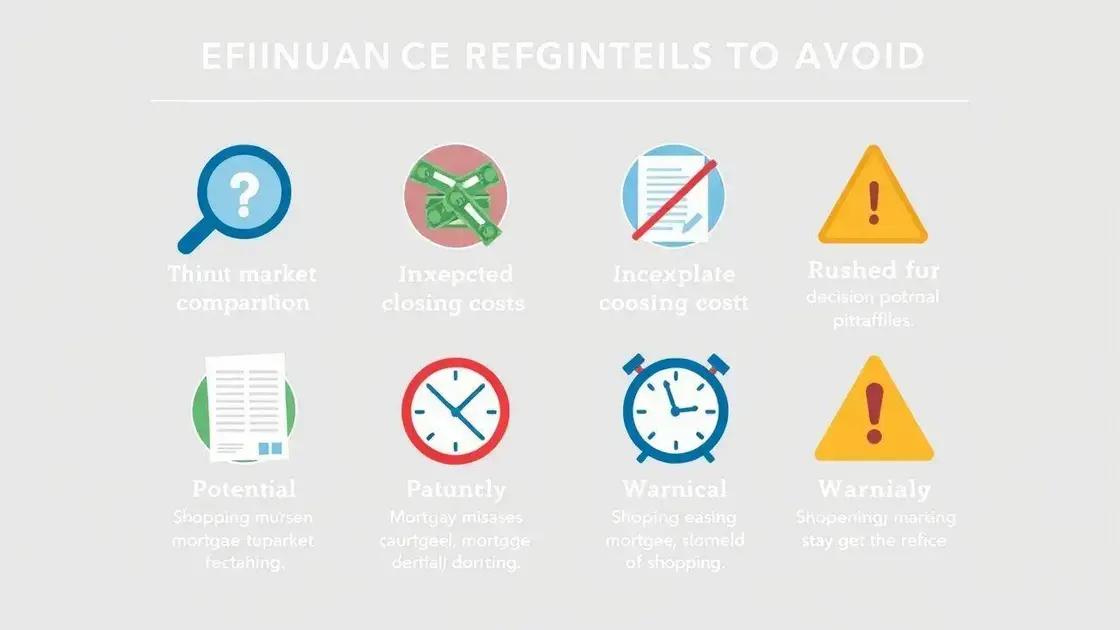
Understanding the common mistakes to avoid when refinancing your mortgage is essential for making the best financial decisions. Many homeowners overlook key factors that can lead to bigger issues down the road.
One frequent mistake is not shopping around for the best rates. Many borrowers accept the first offer they receive without comparing it to other lenders. This can lead to lost savings over time. Make sure to explore multiple lenders to find the most competitive rates and terms.
Ignoring Closing Costs
Another mistake is neglecting to consider closing costs. While refinancing can lower monthly payments, it often comes with fees that can add up quickly. Homeowners should calculate these costs and look for lenders who offer low or no closing costs.
- Obtain a detailed breakdown of fees
- Compare costs from different lenders
- Consider negotiating fees
- Check for hidden charges
Failing to check your credit score before refinancing can also be costly. A low credit score can result in higher interest rates. It’s wise to review your credit report for any discrepancies and make necessary improvements before applying.
Not Understanding Loan Terms
Many people misunderstand the terms of their new mortgage. Some borrowers focus only on the interest rate and overlook other aspects, like the length of the loan or whether it is fixed or adjustable. Knowing the differences can prevent unpleasant surprises later.
Be careful about refinancing to a longer loan term. While this may lower monthly payments, it can increase the total interest paid over time. Analyze your long-term financial goals before making decisions.
Lastly, not having a clear refinancing goal can lead to confusion. Whether you want to lower your monthly payment, access cash, or shorten your loan term, knowing your objectives will guide your refinancing process and help you avoid pitfalls.
FAQ – Frequently Asked Questions about Refinancing Your Mortgage
What is mortgage refinancing?
Mortgage refinancing is the process of replacing your current mortgage with a new one, typically to obtain a lower interest rate or better terms.
Why is it important to shop around for lenders?
Shopping around for lenders helps you compare rates and terms, ensuring you find the best deal for your refinancing needs.
What should I check before refinancing?
Before refinancing, check your credit score, review closing costs, and clearly define your financial goals.
How can I avoid common refinancing mistakes?
To avoid mistakes, understand all the terms and fees, compare different offers, and ensure your refinancing goals are clear.