Free meal assistance programs for children: what you need to know

Free meal assistance programs provide nutritious meals to children from low-income families, ensuring they have access to healthy food, which is essential for their growth and academic performance.
Free meal assistance programs for children play a crucial role in helping families meet nutritional needs. Have you ever wondered how these programs impact children’s well-being? Let’s dive into the details.
Understanding free meal assistance programs
Understanding free meal assistance programs is essential for ensuring that all children have access to nutritious meals. These programs aim to eliminate hunger among children by providing them with meals throughout the day, especially in schools.
In many cases, these programs are funded by government initiatives and local organizations, offering various types of support. Let’s explore how these programs function and the impact they have.
How Free Meal Assistance Programs Work
Free meal assistance programs typically operate within schools and community centers. They provide breakfast, lunch, and even snacks to children in need. The main goal is to ensure that no child goes hungry.
- Eligibility: Families must meet specific income guidelines to qualify for assistance.
- Application Process: Parents usually need to fill out a form providing details about their income and household size.
- Meal Types: Programs may offer hot meals, grab-and-go options, or even meals during weekends or school breaks.
The Benefits of These Programs
The benefits of free meal assistance programs extend beyond just filling a child’s stomach. Access to nutritious food helps in better concentration and improved academic performance. When children are well-fed, they are more likely to excel in their studies.
Proper nutrition also plays a crucial role in overall health. Children who participate in these programs have lower chances of experiencing nutritional deficiencies. As a result, their growth and development can improve significantly.
Moreover, families save money on groceries, allowing them to allocate resources to other essential needs. This relief can have a lasting impact on their financial stability.
In summary, understanding free meal assistance programs reveals how vital they are in nurturing capable and healthy future generations. By ensuring children have sufficient meals, we are fostering environments where they can thrive.
Eligibility requirements for assistance
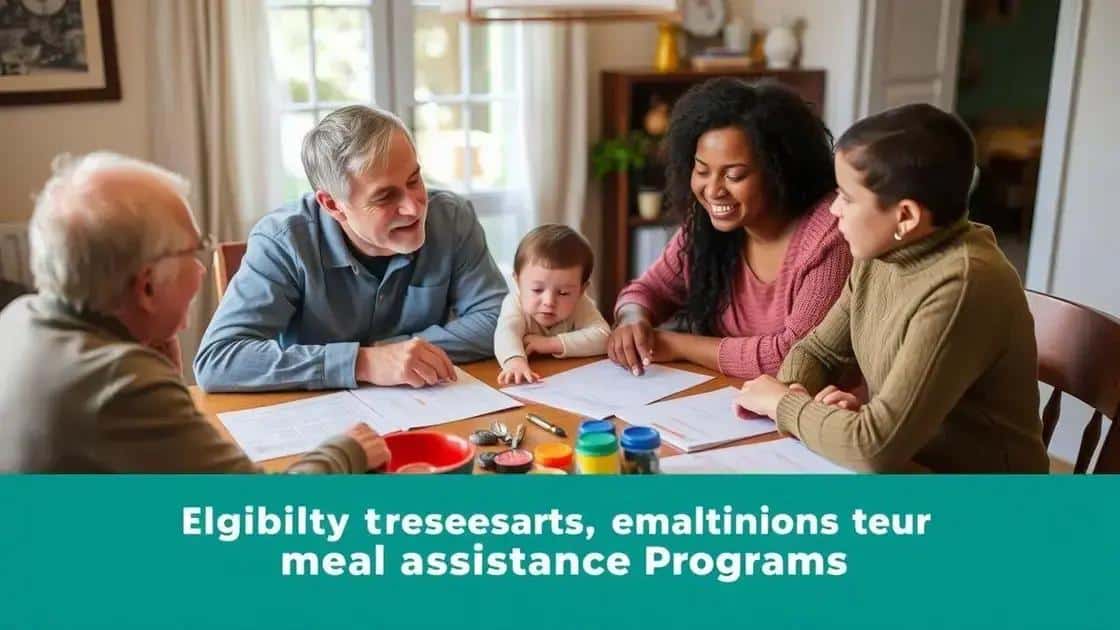
Eligibility requirements for free meal assistance programs are designed to ensure that those who need help can access it. Each program may have slightly different rules, but they all aim to support families with limited resources.
Most programs require families to meet specific income guidelines based on household size. Generally, if a family’s income falls below a certain percentage of the federal poverty line, they may qualify for assistance. This helps ensure that meals go to those who need them most.
Common Eligibility Criteria
When applying for assistance, families should be aware of some common eligibility criteria. Here are important factors that can affect their application:
- Income Limits: Families must provide proof of income to demonstrate that they qualify.
- Household Size: The number of people living in the household can influence eligibility.
- Application Process: Parents typically need to complete an application form with relevant information.
It’s important for families to check the specific requirements of their local programs, as these can vary by state or district. Some areas may have additional options like free meals during the summer or after-school programs that also require separate applications.
Besides income requirements, some programs offer assistance to children based on specific circumstances. For instance, children who are homeless or in foster care may receive expedited assistance. This ensures that even the most vulnerable children receive the necessary support without delay.
Understanding these eligibility requirements can make a big difference in accessing free meal assistance programs. By knowing the rules, families can navigate the application process more effectively and ensure their children receive the meals they need.
How to apply for meal programs
Applying for meal programs can seem challenging, but it is actually a straightforward process. Understanding each step can help families secure the support they need quickly. Most programs encourage families to apply as early as possible to ensure children do not miss out on meals.
The first step is to gather the required documents. Families may need to provide proof of income, household size, and any other relevant information. Having this information ready can streamline the application process.
Steps to Apply
Here are the main steps families should follow when applying for meal assistance programs:
- Research: Start by researching local programs. Websites and community centers often have detailed information.
- Complete the Application: Families can fill out an application form, usually available online or at local schools and community centers.
- Provide Documentation: Submit the necessary paperwork along with the application form.
After submitting the application, families may need to wait for approval. Some programs may take a few days to process applications, while others can provide immediate assistance. It’s important to remember that during this time, families can reach out for updates or clarification.
If approved, families will receive a notification with details on how to access meals. Many programs offer options such as in-school meals, meal pick-up sites, or home delivery services. Each program varies, so understanding these choices is vital for making the most of the assistance provided.
Also, families should keep in mind that applying for meal assistance programs is not a one-time process. If a family’s situation changes, such as a loss of income or an increase in household size, they should reapply or update their information. This ensures they continue receiving the necessary support for their children.
Benefits of free meals for children’s health

The benefits of free meals for children’s health extend far beyond simply filling their stomachs. Access to nutritious meals can significantly improve kids’ overall well-being, allowing them to grow and learn effectively.
Well-balanced meals provided through these programs are essential for children. These meals often include fruits, vegetables, whole grains, and proteins that promote healthy growth. Good nutrition enhances energy levels, helping kids stay focused and engaged during school hours.
Key Health Benefits
Here are some key benefits associated with free meal programs:
- Improved Concentration: Proper nutrition boosts brain function and improves concentration, which is vital for learning.
- Healthy Growth: Regular access to healthy meals ensures that children receive essential vitamins and minerals needed for growth.
- Stronger Immunity: A nutritious diet helps build a stronger immune system, reducing the risk of illnesses.
- Better Academic Performance: Studies show that children who have access to nutritious meals perform better academically compared to those who do not.
In addition to these direct health benefits, free meals reduce food insecurity in families. When children know they will receive at least one nutritious meal a day, it alleviates stress for their families. This can lead to improved mental health, both for parents and children.
Furthermore, consistent access to healthy meals fosters life-long healthy eating habits. Learning to enjoy a variety of healthy foods at a young age can set children up for a lifetime of better health choices. Programs that provide education about nutrition along with meal distribution can further enhance these benefits, equipping families with knowledge on how to maintain these habits.
FAQ – Frequently Asked Questions about Free Meal Assistance Programs for Children
What are free meal assistance programs?
Free meal assistance programs provide nutritious meals to children from low-income families, ensuring they have access to healthy food.
How can I apply for these meal programs?
To apply, you typically need to fill out an application form and provide proof of income and household size, either online or at local schools.
Who is eligible for free meal assistance?
Eligibility is usually based on family income and household size, with specific guidelines set by local programs.
What type of meals are provided through these programs?
These programs often provide balanced meals that include fruits, vegetables, whole grains, and proteins to support children’s nutrition.