Child care assistance programs in urban areas: what you need to know

Child care assistance programs in urban areas provide crucial financial support to families, enabling access to quality child care and enhancing parents’ ability to work or pursue education.
Child care assistance programs in urban areas play a crucial role in supporting families, ensuring children receive quality care while parents work. Have you ever wondered how these programs really function and if you qualify? Let’s dive into the details.
Understanding child care assistance programs
Understanding child care assistance programs is essential for families seeking support. These programs aim to help parents afford quality care for their children, allowing them to work and provide for their families. In many urban areas, the availability and accessibility of these programs can significantly impact a family’s financial stability.
What Are Child Care Assistance Programs?
Child care assistance programs are government initiatives designed to provide financial support to families with young children. They help cover the costs of child care, enabling parents to go to work or pursue education. These programs vary by state, so it is essential to know what is available in your area.
Eligibility Criteria
To qualify for child care assistance, families typically must meet certain criteria. This includes income limits, which determine if you can access assistance. Other factors may include:
- The number of children needing care.
- The age of the children.
- Whether the parents are employed, in school, or in training.
Each program may have specific requirements, so it’s crucial to review them carefully.
While eligibility is essential, knowing how to apply for these programs is equally important. Many families miss out on assistance simply because they aren’t aware of the application process. You can often find application forms online or at your local department of social services. Make sure to gather all necessary documentation, such as proof of income and identification, to streamline your application.
Benefits of Child Care Assistance
There are numerous benefits associated with child care assistance programs:
- Reduced financial burden on families.
- Access to quality child care providers.
- Increased productivity for working parents.
These advantages can lead to better outcomes for both children and their parents. When parents have reliable child care, they can concentrate more on their jobs or studies, leading to improved job performance and educational attainment.
Eligibility criteria and application process
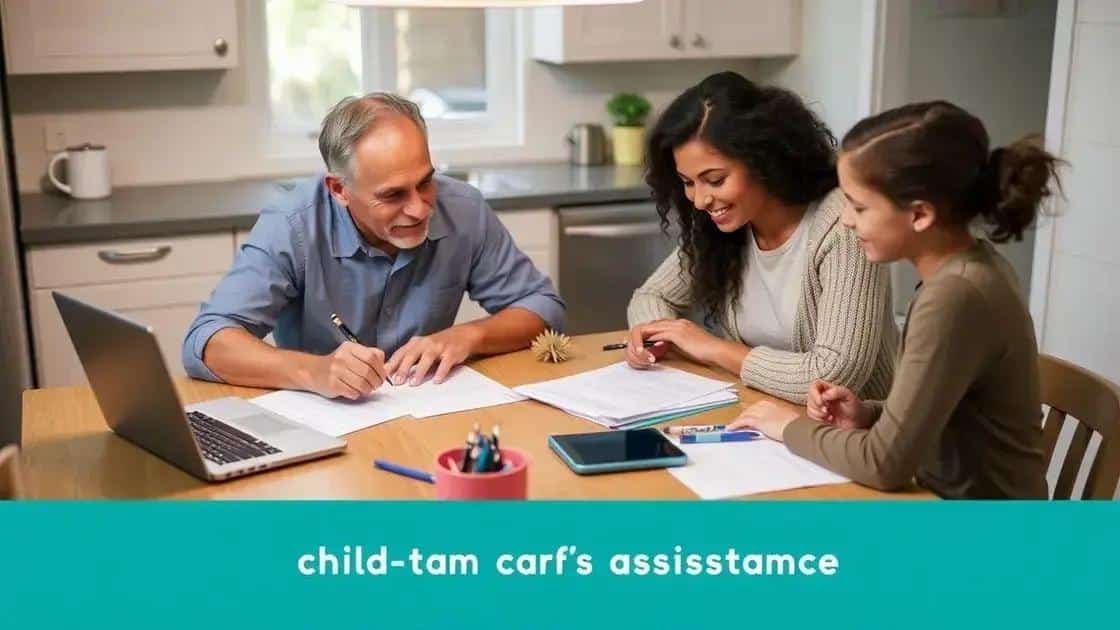
Many families are eager to access child care assistance programs, but understanding the eligibility criteria and application process is crucial. Each program has specific guidelines that families must meet to receive support. Being informed can help make the process smoother and more effective.
Eligibility Criteria
Eligibility for child care assistance generally depends on several factors, including:
- Family income: Programs often have limits on how much money a family can earn.
- Employment status: Most programs require at least one parent to be employed, in school, or actively seeking work.
- Age of children: Usually, assistance is available for children under a certain age, often 13 years old.
Families should ensure that they meet these criteria before applying. It’s wise to check local guidelines since they can vary.
The Application Process
The application process for child care assistance can feel overwhelming, but it’s manageable with the right information. Start by gathering necessary documents, such as:
- Proof of income, like pay stubs or tax returns.
- Identification for all family members.
- Documentation of child care needs, including provider information.
Once you have everything ready, applications can typically be submitted online, by mail, or in person at local offices. Following up on your application can help expedite the process.
It’s important to note that responses to applications can sometimes take several weeks. Therefore, applying early is advisable to ensure families have the support they need promptly. Additionally, if circumstances change, such as a job loss or an increase in family size, inform the program promptly, as this may affect eligibility.
Benefits of child care assistance in cities
The benefits of child care assistance in cities extend far beyond merely helping families afford child care. These programs support working parents and contribute to the overall well-being of children. Understanding these advantages can help families appreciate the importance of accessing such services.
Financial Relief for Families
One of the most significant benefits of child care assistance is the financial relief it provides to families. Parents often struggle with the high costs of child care, which can consume a large portion of their incomes. Assistance helps cover these costs, freeing up funds for other essential expenses like housing, transportation, and food.
Access to Quality Care
Child care assistance programs generally encourage parents to enroll their children in quality care settings. This can lead to numerous positive outcomes for children, including:
- Improved social skills through interaction with peers.
- Enhanced cognitive development from structured learning activities.
- Better emotional well-being due to consistent adult supervision.
Accessing quality care helps ensure that children are safe, educated, and nurtured while their parents are at work.
Another essential benefit is the support it provides for working parents. This assistance allows parents to pursue their careers or education, knowing their children are in a safe environment. When parents can concentrate on their jobs, they tend to experience increased productivity and job satisfaction.
Community and Economic Impact
The benefits of child care assistance also extend to the broader community and economy. When parents are supported and can work, they contribute to the local economy. This can lead to:
- Increased family incomes, resulting in higher spending in the community.
- Lower turnover rates at businesses due to stable employment.
- A healthier workforce, as families experience less stress and better work-life balance.
These factors combined create a more robust and connected community, highlighting how crucial child care assistance is not just for individual families but for society as a whole.
Success stories: impact on urban families

Success stories from families who have benefited from child care assistance programs provide powerful insights into the positive impact these services can have. Many urban families have found that these programs have transformed their lives, allowing them to thrive in various ways.
Improved Work-Life Balance
For families juggling multiple responsibilities, child care assistance makes a significant difference. Many parents report feeling less stressed and more focused at work. Having reliable child care frees them from worrying about their children’s safety and well-being during working hours. This peace of mind allows parents to engage fully in their jobs and stimulate career growth.
Educational Advancement
Child care assistance programs do not just help with immediate needs; they can also support long-term educational goals. Parents often share how receiving assistance allowed them to pursue further education or training. With affordable child care, they can attend classes or gain new skills that lead to better job opportunities. Stories abound of parents who have moved from entry-level positions to more stable, higher-paying jobs because they had access to quality care.
Building Stronger Communities
Many families find that child care assistance programs foster a sense of community. Parents often connect with other families using the same services, leading to friendships and support networks. These connections can be invaluable, as parents share advice and resources, creating a supportive environment for their children to grow and thrive.
Moreover, children in these programs benefit from socialization and diverse experiences. They learn important skills such as sharing, cooperation, and communication, which are essential for their development.
Real-Life Example
Take, for instance, a single mother named Maria who struggled to balance her job and child care expenses. After enrolling in a child care assistance program, Maria found an affordable option for her three children, which allowed her to work full-time without the fear of neglecting their needs. Maria has since been promoted at work and actively participates in her children’s education. Her journey underscores how child care assistance can create a ripple effect of positive changes in urban families.
FAQ – Frequently Asked Questions about Child Care Assistance Programs
What are child care assistance programs?
Child care assistance programs help families afford child care by providing financial support based on eligibility criteria like income and family size.
Who is eligible for child care assistance?
Eligibility usually depends on factors such as income, employment status, and the age of the children needing care.
How do I apply for child care assistance?
You can apply for child care assistance online, by mail, or in person at your local social services office. Make sure to gather necessary documents like proof of income.
What benefits do families gain from these programs?
Families benefit from reduced financial stress, access to quality child care, enhanced job opportunities, and a stronger community support network.