Fintech innovations disrupt traditional credit markets

Fintech innovations disrupt traditional credit markets by providing faster, more accessible lending solutions that leverage technology to enhance user experience and increase inclusivity.
Fintech innovations disrupt traditional credit markets in ways we haven’t seen before. It’s fascinating how these fresh ideas are reshaping how we perceive lending and borrowing. Have you ever wondered how technology could change your access to credit?
Understanding fintech in the credit landscape
Understanding the role of fintech in the credit landscape is essential for grasping how these innovations are transforming financing options.
More than just a buzzword, fintech refers to technology-driven solutions that enhance various financial activities. One notable shift is how consumers and businesses access credit. Traditional methods often involved long wait times and stringent regulations, leaving many without options. Now, fintech companies offer quicker processes, utilizing technology to streamline applications and approvals.
Key Features of Fintech Solutions
Fintech platforms leverage data and algorithms to evaluate creditworthiness. This creates opportunities for different lending models that can cater to diverse needs.
- Speed: Fintech solutions can approve loans in minutes.
- Accessibility: Borrowers can access funds from anywhere, often using just a smartphone.
- Flexibility: Various options are available, allowing consumers to select products that fit their specific needs.
Additionally, many fintech companies prioritize user experience, making it simpler for individuals to manage their finances online. Calculators, budgeting tools, and personalized insights are often included, enhancing the overall user journey.
Emerging Trends in Fintech
As fintech evolves, we see trends like peer-to-peer lending gaining traction. This model connects borrowers directly with lenders, bypassing the need for traditional banks. It’s an exciting change, enabling more people to secure funds in a quick and efficient manner.
Understanding these differences helps demystify the credit landscape. With the advent of fintech, borrowers have more power and options than ever before. The challenge lies in discerning which solutions offer the best fit for individual circumstances.
By recognizing these shifts, stakeholders can make informed decisions about their financial futures. The continued evolution of fintech promises to keep reshaping the credit market dramatically.
The impact of fintech on traditional lending

The impact of fintech on traditional lending is profound and reshaping the entire landscape of finance. With new technologies emerging, the way borrowers seek and obtain credit has changed dramatically.
Fintech platforms leverage advanced technology to bypass some of the pitfalls associated with traditional banking. For instance, speed is a major advantage; many fintech companies can approve loans in minutes rather than weeks. This rapid turn-around not only benefits borrowers, but also lenders, who can quickly adapt to market conditions.
Key Changes in Lending Processes
As fintech solutions gain traction, several key changes have emerged in the lending process:
- Accessibility: More people can access loans without stepping foot in a bank.
- Automation: Automation reduces paperwork, streamlining the application process.
- Personalization: Algorithms analyze personal data to tailor loan offers to applicants.
Traditional lenders often rely on credit scores to determine eligibility. Conversely, fintech companies may use alternative data sources, such as social media activity or payment histories, which can provide a clearer picture of a borrower’s reliability.
Additionally, new lending models have emerged due to fintech innovations. Peer-to-peer lending connects individuals wanting to borrow directly with those willing to lend. This model cuts out the middleman, allowing for lower fees and better rates for borrowers. As a result, more people are able to secure funds even if they might not qualify through traditional channels.
Challenges for Traditional Lenders
The rise of fintech does present challenges for traditional lenders. They must adapt or risk losing market share to more innovative competitors. Many banks are now looking to partner with fintech startups to enhance their offerings and improve customer experience.
Understanding the impact of fintech on traditional lending reveals a dynamic and evolving financial landscape. Borrowers now enjoy greater choices and flexibility as they navigate their options. As technology continues to advance, it’s likely that the lending landscape will keep on changing.
Innovative solutions offered by fintech startups
Innovative solutions offered by fintech startups are changing the way we think about finance and lending. These companies are bringing new ideas that simplify processes and improve user experience.
One significant area of innovation is in online lending platforms. These platforms provide quick access to funds with minimal documentation. Borrowers can often complete applications in minutes, a stark contrast to traditional banks where the process could take days. This kind of efficiency is a game changer in the finance sector.
Popular Fintech Solutions
Various fintech startups have emerged with unique offerings, making financial services more accessible:
- Mobile Banking Apps: Users can manage accounts, transfer money, and pay bills directly from their phones, without visiting a bank.
- Peer-to-Peer Lending: This model connects borrowers and lenders directly, allowing individuals to fund loans with better rates.
- Robo-Advisors: Automated platforms provide investment advice based on algorithms, catering to users with different financial goals.
Moreover, many fintech startups focus on inclusivity. They aim to offer services to underserved populations by using alternative data for credit scoring. This approach opens doors for individuals who might otherwise struggle to obtain credit through conventional means.
Another innovative solution is the use of blockchain technology. This technology enhances security and transparency in transactions, which builds trust between lenders and borrowers. By leveraging such technologies, fintech startups are transforming how people interact with financial services, making them more trustworthy and efficient.
Future of Fintech Innovations
The future of these solutions looks promising. As fintech continues to evolve, expect even more personalized options tailored to user needs. Companies are increasingly using artificial intelligence to analyze spending habits and offer customized financial products.
Overall, the innovative solutions coming from fintech startups are paving the way for a more flexible and inclusive financial world. The focus on user experience and accessibility shows that the future of finance is not just about money; it’s about improving lives.
Future trends in credit markets influenced by fintech
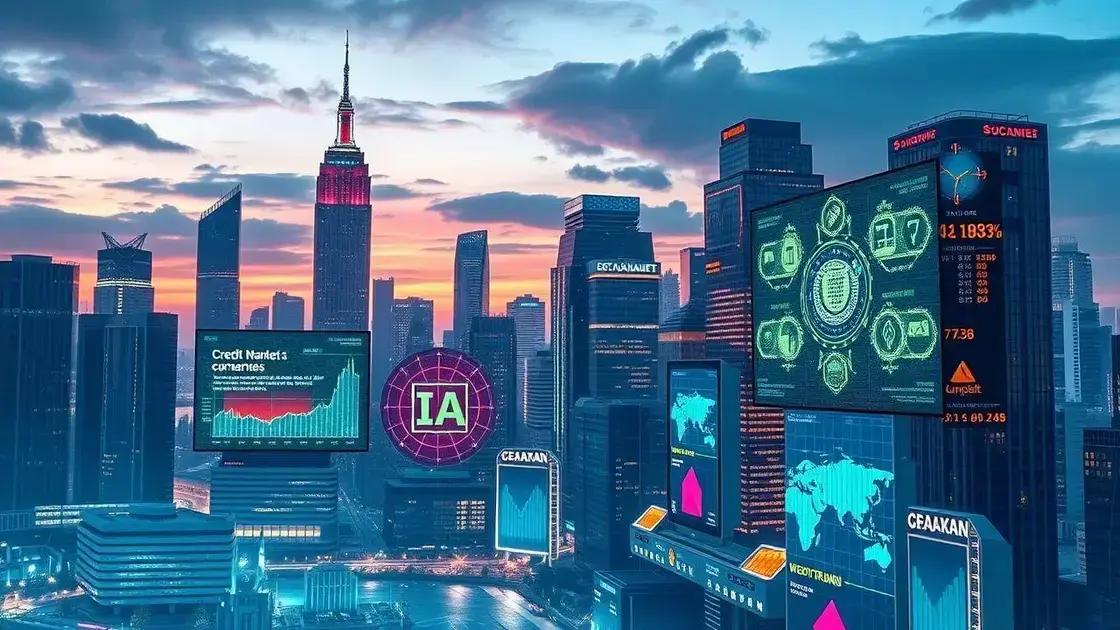
Future trends in credit markets influenced by fintech are fascinating to observe as technology continues to evolve. These trends show how consumer behavior and industry practices are shifting.
One significant trend is the rise of alternative lending. As fintech companies leverage technology, they provide faster and more flexible loan options. Traditional credit models are being challenged as borrowers seek alternatives that offer quick access to funds. This shift means that more people can secure loans without the stringent requirements of conventional banks.
Emerging Technologies and their Impact
Technologies like artificial intelligence (AI) and machine learning are becoming crucial in assessing borrowers’ creditworthiness. By analyzing vast amounts of data, these technologies can evaluate risk more accurately than traditional methods. This allows lenders to make better decisions and offer personalized loan products.
- Real-time data analysis: Fintech companies can use current financial data to provide real-time insights on loan applications.
- Blockchain technology: This technology enhances security and transparency in transactions, reducing fraud and increasing trust.
- Mobile-first solutions: Consumers prefer managing their finances through mobile apps, prompting lenders to adopt user-friendly interfaces.
Furthermore, sustainability is becoming a crucial consideration in credit markets. Many fintechs are focusing on green financing, offering loan products tied to environmentally friendly initiatives. This shift reflects a growing awareness among consumers who prefer companies that prioritize sustainability.
Increased Collaboration
An additional trend is the rise of partnerships between traditional financial institutions and fintech companies. Banks are recognizing the importance of innovation and are engaging with startups to enhance their services. This collaboration will likely lead to new products that blend the best aspects of both worlds, ensuring better customer experiences.
As these trends unfold, it’s clear that the credit landscape will continue to transform dramatically. The influence of fintech is reshaping how consumers access loans and manage their finances, paving the way for a more inclusive and responsive credit market.
FAQ – Frequently Asked Questions about Fintech Innovations in Credit Markets
What are the main benefits of using fintech for loans?
Fintech offers faster approval times, lower fees, and more flexible options compared to traditional banks.
How does alternative lending work in fintech?
Alternative lending connects borrowers directly with lenders, often using technology to simplify the loan application process.
What role does technology play in credit scoring?
Fintech companies use AI and alternative data to evaluate creditworthiness, providing a more comprehensive picture of a borrower.
What trends should we expect in the future of credit markets?
Expect increased collaboration between banks and fintechs, a rise in personalized financial products, and a focus on sustainable lending solutions.