2026 Unemployment Benefits: State-by-State Guide to Payments & Eligibility

Understanding the complex landscape of 2026 unemployment benefits is crucial, as maximum weekly payments and eligibility requirements vary significantly by state, directly impacting financial stability for those seeking support.
Navigating the intricacies of unemployment benefits can often feel overwhelming, especially with varying regulations across different states. For those looking ahead, a clear understanding of 2026 unemployment benefits comparison is essential to prepare for potential financial challenges or to simply stay informed about available support. This comprehensive guide will break down the key aspects of unemployment insurance across the United States in 2026, offering a state-by-state analysis of maximum weekly payments and crucial eligibility requirements.
Understanding the Basics of Unemployment Insurance in 2026
Unemployment insurance (UI) programs are a cornerstone of financial safety nets in the United States, designed to provide temporary income support to eligible workers who lose their jobs through no fault of their own. As we look towards 2026, the fundamental structure of these programs remains largely consistent, though specific parameters, especially benefit amounts and eligibility criteria, are subject to state-level determination and periodic adjustments.
These programs are primarily funded through taxes paid by employers, and each state manages its own UI system. This decentralized approach leads to significant variations in how benefits are calculated, how long they can be received, and the specific conditions an applicant must meet. Understanding these foundational elements is the first step in appreciating the nuances of the 2026 landscape.
Key Components of Unemployment Insurance
Several universal components define unemployment insurance, even with state-specific differences. These include:
- Weekly Benefit Amount: This is the monetary sum an eligible individual receives each week.
- Maximum Benefit Duration: The total number of weeks an individual can receive benefits.
- Eligibility Criteria: The conditions an applicant must satisfy to qualify for benefits.
- Waiting Period: A typically unpaid period before benefits begin.
Each of these components will vary, making a detailed state-by-state comparison vital for anyone seeking accurate information. The goal of UI is to offer a temporary bridge, allowing individuals to cover essential expenses while actively searching for new employment.
In conclusion, while the overarching purpose of unemployment insurance remains constant, the execution and specific details are entirely state-driven. This necessitates a thorough examination of individual state policies to gain a clear picture of what 2026 unemployment benefits entail for residents across the nation.
Maximum Weekly Payments: A State-by-State Breakdown for 2026
One of the most significant variations in unemployment benefits across the United States is the maximum weekly payment an individual can receive. These figures are not static; they are often adjusted annually or biennially based on economic indicators, state legislative actions, and cost-of-living considerations. For 2026, while definitive numbers will solidify closer to the year, we can project trends and highlight the typical range observed.
States with higher average wages and cost of living generally tend to offer higher maximum weekly benefits, aiming to provide a more proportionate level of support. Conversely, states with lower economic indicators might have more modest maximums. This disparity underscores the importance of a detailed state-specific analysis.
Projected Trends in Maximum Weekly Benefits
Looking at historical adjustments and economic forecasts, some trends are likely to influence 2026 maximum weekly payments:
- Inflationary Adjustments: Many states incorporate inflation into their benefit calculations, meaning maximums may see slight increases to maintain purchasing power.
- Legislative Review: State legislatures periodically review and amend their unemployment laws, potentially leading to significant changes in benefit structures.
- Economic Performance: A state’s economic health can influence its capacity and willingness to increase maximum benefit amounts.
It is important to note that the maximum weekly benefit is just that—a maximum. An individual’s actual weekly benefit amount is usually a fraction of their average weekly wages earned during a specific base period, up to the state-defined maximum. This ensures that benefits are somewhat tailored to an individual’s prior earnings.
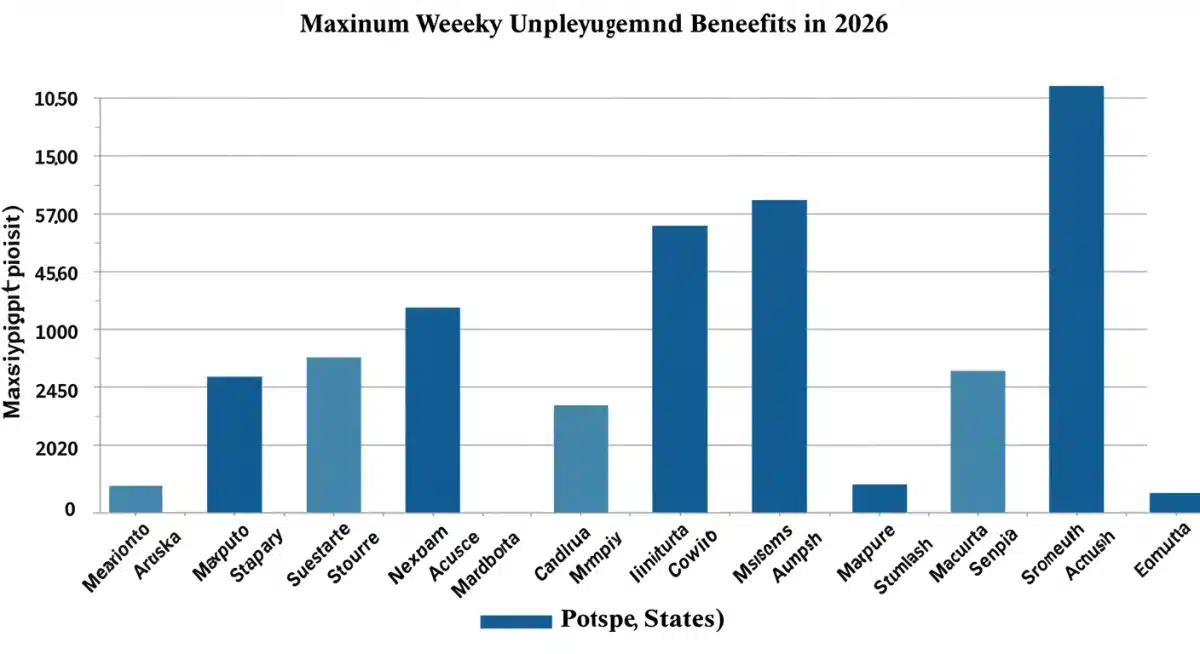
For instance, a state like Massachusetts might have a significantly higher maximum weekly benefit compared to a state like Mississippi. This difference reflects not only economic disparities but also differing state philosophies on social welfare and worker support. Individuals should consult their state’s Department of Labor or equivalent agency for the most precise and up-to-date figures as 2026 approaches.
In essence, the maximum weekly payment is a critical figure for anyone considering unemployment benefits. It sets the ceiling for financial support, and its variation across states highlights the diverse economic landscapes and policy priorities within the United States. Staying informed about these figures is key for financial planning.
Eligibility Requirements: What You Need to Know for 2026
Beyond the monetary amounts, understanding the eligibility requirements is paramount for anyone seeking unemployment benefits in 2026. These criteria are designed to ensure that benefits are directed to those who genuinely qualify and are actively seeking re-employment. While there are federal guidelines that provide a framework, each state has the authority to set its specific rules, leading to a complex mosaic of requirements across the nation.
Generally, to be eligible for UI benefits, an individual must meet certain conditions related to their past employment, the reason for their job loss, and their current availability and search for work. Failing to meet even one of these criteria can result in a denial of benefits, making a thorough review essential.
Common Eligibility Criteria Across States
Despite state-specific nuances, several common eligibility requirements typically apply:
- Monetary Eligibility: Applicants must have earned a certain amount of wages during a specified “base period” before becoming unemployed. This ensures a history of attachment to the workforce.
- Reason for Separation: The job loss must generally be through no fault of the applicant. This means being laid off, having hours reduced, or experiencing a plant closing often qualifies, while voluntarily quitting without good cause or being fired for misconduct typically does not.
- Able and Available for Work: Claimants must be physically and mentally able to work and available for suitable employment.
- Actively Seeking Work: Most states require claimants to demonstrate an active search for new employment, often involving a certain number of job contacts per week.
Some states may also have a waiting period, typically one week, during which an applicant is eligible for benefits but does not receive payment. This period can sometimes be waived or retroactively paid, depending on state law and economic conditions.
Understanding these requirements is not a one-time task; it often involves staying updated on any legislative changes or policy shifts within one’s state. Eligibility can be a complex area, and it’s always advisable for individuals to consult their state’s unemployment agency directly or seek legal counsel if they have specific questions about their situation.
In summary, meeting the eligibility requirements is as crucial as knowing the benefit amounts. These rules ensure the integrity of the unemployment insurance system and direct aid to those who qualify based on their work history and circumstances of job loss. Careful attention to these details will be critical for 2026 applicants.
The Impact of State Economic Conditions on 2026 Benefits
The economic health of individual states plays a significant role in shaping their unemployment benefit programs for 2026. A state with a robust economy, characterized by low unemployment rates and strong job growth, might have stronger unemployment trust funds, potentially allowing for more generous benefits or more flexible eligibility rules. Conversely, states facing economic downturns or high unemployment may find themselves with strained resources, leading to more conservative benefit structures or stricter requirements.
These economic conditions influence not only the maximum weekly payments but also the duration of benefits and the overall solvency of the state’s unemployment insurance fund. Policymakers often balance the need to support unemployed workers with the fiscal sustainability of the program.
How Economic Indicators Influence UI
Several economic indicators directly impact unemployment insurance:
- Unemployment Rate: A high unemployment rate can quickly deplete state UI funds, potentially leading to calls for federal assistance or state-level adjustments to benefits.
- Wage Growth: States with higher average wage growth may see corresponding increases in their maximum weekly benefit amounts to keep pace with the cost of living.
- Trust Fund Solvency: The financial health of a state’s unemployment trust fund is a key determinant of its ability to pay benefits. States aim to maintain a healthy reserve to withstand economic shocks.
Economic forecasts for 2026 will undoubtedly influence state legislative decisions regarding UI. For example, if a state anticipates a period of economic expansion, it might consider increasing benefits or expanding eligibility. Conversely, a projected slowdown could lead to measures aimed at preserving the fund’s stability.
Moreover, federal actions can also impact state UI programs, especially during widespread economic crises, as seen with federal extensions and supplemental benefits. While these are typically temporary, they highlight the interconnectedness of state and federal economic policies.
Ultimately, the economic backdrop of each state in 2026 will be a powerful determinant of its unemployment benefit offerings. Citizens and policymakers alike must monitor these conditions closely to understand the context and potential evolution of UI programs.
Navigating the Application Process for 2026 Unemployment Benefits
Applying for unemployment benefits in 2026, while varying by state, generally follows a structured process designed to verify eligibility and expedite payments. Understanding this process beforehand can significantly reduce stress and potential delays. The application is typically handled through the state’s Department of Labor or an equivalent agency, often with robust online portals for convenience.
The key to a smooth application is thorough preparation and accurate submission of all required documentation and information. Any discrepancies or missing details can lead to processing delays or even denial of benefits.
Steps in the Unemployment Application Process
While specific steps may differ, a general outline of the application process includes:
- Gathering Information: Collect personal identification, employment history (including employer names, addresses, and dates of employment), reason for separation, and wage information.
- Filing the Claim: This is typically done online, but can also be by phone or in person. It’s crucial to file as soon as possible after job loss.
- Waiting Period: Most states have a one-week waiting period before benefits can be paid.
- Weekly Certifications: Claimants must typically certify their eligibility each week, confirming they are able, available, and actively searching for work.
- Appeals Process: If a claim is denied, applicants have the right to appeal the decision.
It’s vital to be honest and accurate throughout the application process. Providing false information can lead to severe penalties, including repayment of benefits and legal consequences. Additionally, claimants must diligently fulfill the weekly certification requirements and actively engage in job search activities as mandated by their state.
States also provide resources and guidance for applicants, often through their official websites or dedicated helplines. Leveraging these resources can be invaluable, especially for first-time applicants or those facing unique circumstances. As 2026 approaches, states will continue to refine their online systems to make the application process more user-friendly and efficient.
In essence, a successful unemployment benefits application in 2026 hinges on preparation, accuracy, and adherence to state-specific procedures. A proactive approach to understanding and fulfilling these requirements will greatly enhance the chances of receiving timely financial support.
The Role of Federal vs. State Laws in 2026 Unemployment Benefits
Understanding the interplay between federal and state laws is crucial when examining 2026 unemployment benefits. While the unemployment insurance system is a federal-state partnership, the division of responsibilities is distinct. Federal law establishes the basic framework and provides funding mechanisms, while individual states are largely responsible for administering their own programs, setting specific benefit levels, and defining eligibility criteria.
This dual structure means that while there’s a shared goal of providing a safety net, the practical application and experience of unemployment benefits can vary dramatically from one state to another. For 2026, this dynamic is expected to continue, with states maintaining significant autonomy over their UI systems.
Key Distinctions in Federal and State Responsibilities
The roles of federal and state authorities can be broadly categorized:
- Federal Role: Establishes broad guidelines, provides administrative funding to states, and can implement temporary emergency programs (like extensions during recessions). It also sets the federal unemployment tax (FUTA).
- State Role: Administers the UI program, collects state unemployment taxes from employers, determines weekly benefit amounts, sets maximum benefit duration, defines specific eligibility rules, and manages the state’s unemployment trust fund.
This distinction means that while a federal minimum might exist for certain aspects, states almost always have the authority to exceed these minimums or implement more specific rules. For example, while federal law might establish a basic framework for what constitutes a qualifying job separation, states will detail what specific acts of misconduct or voluntary quits disqualify an applicant.
During periods of economic crisis, the federal government often steps in to provide additional funding or temporary benefit extensions, supplementing state programs. These interventions, while not permanent, highlight the federal capacity to provide broad support when state resources are stretched. However, these are generally exceptional measures rather than standard operating procedures for 2026.
In conclusion, the balance between federal oversight and state autonomy is a defining characteristic of the US unemployment insurance system. For 2026, individuals should primarily focus on their state’s specific laws and regulations, as these will directly dictate their eligibility and the level of benefits they might receive, while also being aware of the broader federal guidelines that underpin the system.
Future Outlook and Potential Changes for 2026 Unemployment Benefits
As we advance towards 2026, it’s reasonable to anticipate ongoing discussions and potential adjustments to unemployment benefit programs. The landscape of work is continually evolving, influenced by technological advancements, shifts in economic sectors, and changing employment patterns. These broader trends often prompt policymakers to re-evaluate the effectiveness and suitability of existing UI systems.
While radical overhauls are infrequent, incremental changes to maximum weekly payments, eligibility criteria, and benefit duration are common. These adjustments aim to keep programs relevant and responsive to the needs of the workforce and the economy. Staying informed about legislative proposals and economic forecasts is key to anticipating these shifts.
Areas of Potential Reform or Focus
Several areas might see continued focus or reform efforts by 2026:
- Gig Economy Workers: The classification and eligibility of independent contractors and gig workers for UI benefits remain a topic of debate and potential legislative action in many states.
- Modernizing IT Systems: Many states are investing in upgrading their outdated UI IT infrastructure to improve efficiency, reduce fraud, and enhance the applicant experience.
- Trust Fund Solvency: Discussions around ensuring the long-term financial health of state unemployment trust funds are ongoing, potentially leading to adjustments in employer contributions or benefit structures.
Furthermore, the experience of recent economic disruptions has highlighted the importance of flexible UI systems that can quickly adapt to unforeseen circumstances. This could lead to more proactive measures being built into state laws to trigger additional benefits or extensions during periods of high unemployment, without requiring separate legislative action each time.
Public discourse surrounding unemployment benefits often includes debates on their role in incentivizing work versus providing adequate support. These philosophical considerations can also drive policy changes, affecting how benefits are structured and who qualifies. Individuals should monitor local and national news for updates on these discussions.
Ultimately, the future of 2026 unemployment benefits will be shaped by a combination of economic realities, legislative priorities, and the ongoing effort to ensure these programs effectively serve their purpose. While the core function of UI will likely remain, the specific details are always subject to evolution.
| Key Aspect | Brief Description |
|---|---|
| Maximum Weekly Payments | Vary significantly by state, reflecting economic conditions and cost of living. |
| Eligibility Requirements | Include monetary earnings, reason for separation, and active job search. |
| State Economic Impact | State economic health directly influences benefit generosity and fund solvency. |
| Application Process | Requires accurate information, timely filing, and weekly certifications. |
Frequently Asked Questions About 2026 Unemployment Benefits
To find specific 2026 unemployment benefit amounts, you should consult your state’s Department of Labor or equivalent agency website. These official sources will provide the most accurate and up-to-date information on maximum weekly payments and other relevant details as they are finalized for the year.
Generally, voluntarily quitting your job without “good cause” is a disqualifying factor for unemployment benefits. However, “good cause” definitions vary by state and can include unsafe working conditions or a move for a spouse’s employment. Always check your state’s specific regulations.
The base period is a specific timeframe, usually the first four of the last five completed calendar quarters before you filed your claim, during which your wages are reviewed to determine monetary eligibility for unemployment benefits. Each state defines its base period.
Federal unemployment extensions are typically enacted during periods of severe economic downturn or national emergencies. As of now, there are no standing federal extensions projected for 2026, but this can change based on future economic conditions and legislative action.
Yes, unemployment benefits are generally considered taxable income by both federal and most state governments. You will typically receive a Form 1099-G from your state’s unemployment agency detailing the benefits paid, which you must report on your tax returns.
Conclusion
The landscape of unemployment benefits in 2026, while complex, is fundamentally designed to offer a critical financial lifeline to those facing job loss. This analysis has highlighted the significant state-by-state variations in maximum weekly payments and eligibility requirements, underscoring the importance of localized knowledge. Understanding these nuances, from the impact of state economic conditions to the intricacies of the application process and the interplay of federal and state laws, empowers individuals to navigate the system effectively. As the job market evolves, staying informed about potential legislative changes and economic trends will be paramount for anyone seeking or relying on unemployment support.