Exclusive Report: Top 3 Geopolitical Risks to US National Security in Early 2026
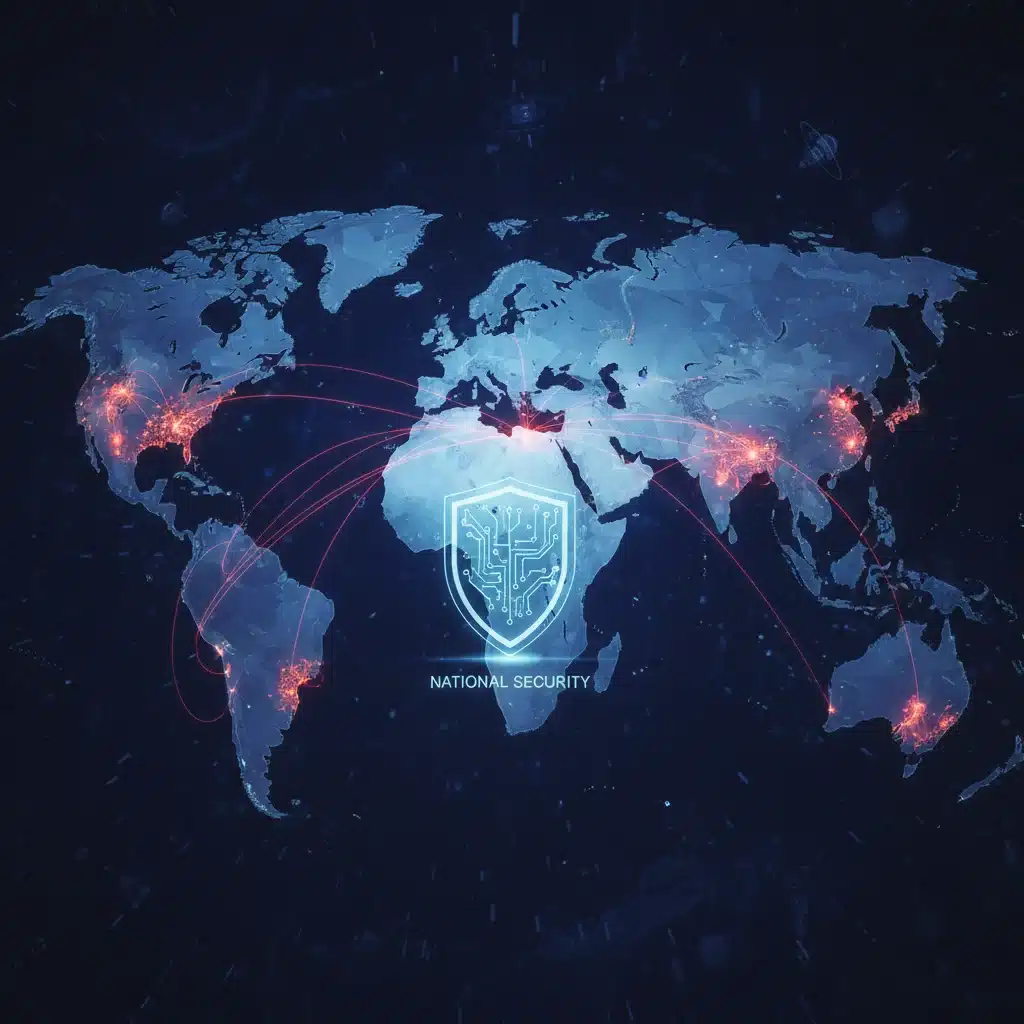
The geopolitical landscape is a dynamic and ever-evolving tapestry of power, influence, and strategic competition. As we approach early 2026, the United States faces a complex array of challenges that could profoundly impact its national security. Understanding these emerging threats is not merely an academic exercise; it is a critical imperative for policymakers, strategists, and citizens alike. This exclusive report delves into the top three emerging US Geopolitical Risks that demand immediate and sustained attention. These risks are interconnected, often amplifying one another, and require a holistic approach to mitigation and response. From the shifting balance of power in critical regions to the proliferation of disruptive technologies, the stability of the international order and the safety of the American people hang in the balance.
The world stage is characterized by increasing multi-polarity, with traditional alliances being tested and new power blocs forming. This fluid environment creates both opportunities and significant vulnerabilities for the United States. Navigating this intricate web requires foresight, adaptability, and a deep understanding of the underlying forces at play. Our analysis focuses on risks that are not merely present but are actively escalating, demonstrating the potential for significant destabilization within the next year. We will explore the nuances of each risk, examining their origins, potential trajectories, and the implications for US foreign policy and defense strategies. The goal is to provide a clear, actionable framework for comprehending these critical challenges and fostering informed discussion about the path forward.
1. Escalating Great Power Competition in the Indo-Pacific
The Indo-Pacific region continues to be the epicenter of great power competition, with China’s assertive rise posing the most significant long-term strategic challenge to the United States. By early 2026, this competition is expected to intensify further, driven by several factors. China’s continued military modernization, particularly its naval and air capabilities, directly challenges US dominance and freedom of navigation in critical waterways like the South China Sea and the Taiwan Strait. The expansion of China’s anti-access/area denial (A2/AD) capabilities creates a formidable barrier to US power projection, complicating any potential intervention in regional conflicts. This military build-up is not just about raw numbers; it’s about technological sophistication, including hypersonic missiles, advanced cyber warfare units, and space-based assets that can disrupt US command and control systems.
The Taiwan issue remains the most volatile flashpoint. While the United States maintains a policy of strategic ambiguity, any move by Beijing to assert control over Taiwan, whether through coercion or force, would trigger a profound crisis with global ramifications. By early 2026, increased military drills, economic pressure, and diplomatic isolation campaigns against Taiwan are highly probable, raising the constant specter of miscalculation. The economic interdependence between the US and China, particularly in critical supply chains, adds another layer of complexity. Any conflict or significant escalation could severely disrupt global trade, leading to economic shocks far beyond the immediate region. This economic weaponization is a growing concern, with China leveraging its market size and control over key resources to exert influence.
Beyond Taiwan, the broader strategic competition encompasses technological dominance, economic influence, and ideological narratives. China’s Belt and Road Initiative (BRI) continues to expand its reach, creating dependencies and extending Beijing’s political influence across Asia, Africa, and even parts of Europe. The US and its allies are working to counter this influence through initiatives like the Build Back Better World (B3W) partnership, but the scale and speed of China’s investments present a formidable challenge. The race for technological supremacy, particularly in artificial intelligence, quantum computing, and advanced semiconductors, is another critical dimension. China’s stated goal of becoming a global leader in these fields by 2030 directly threatens US technological superiority, which has long been a cornerstone of its national security.
The alliances and partnerships in the Indo-Pacific are under constant strain and adaptation. The AUKUS security pact (Australia, UK, US) and the Quad (US, Japan, India, Australia) are examples of US-led efforts to bolster regional security and counter China’s influence. However, these alliances require continuous diplomatic effort and resource commitment to remain effective. Regional nations are often caught between two giants, seeking to balance their economic ties with China against their security interests with the US. This hedging strategy can create instability and unpredictability. The South China Sea disputes, involving multiple claimant states, remain a persistent source of tension. China’s continued militarization of artificial islands and its assertive maritime claims challenge international law and freedom of navigation, raising the risk of accidental confrontations. These maritime flashpoints are a key component of the overall US Geopolitical Risks in the region.
Furthermore, internal political dynamics within key Indo-Pacific nations, including potential shifts in leadership or domestic instability, could impact their foreign policy orientations and willingness to align with US objectives. The US must maintain robust diplomatic engagement, provide credible security assurances, and foster economic alternatives to China’s growing influence. The risk of a regional arms race is also significant, as nations react to China’s military expansion by increasing their own defense spending and acquiring advanced weaponry. This could lead to a more unstable and conflict-prone region, where minor incidents could quickly escalate. Therefore, managing this complex web of relationships and preventing escalation will be a primary focus for US national security planners in early 2026.
2. Cyber Warfare and Hybrid Threats from State and Non-State Actors
The digital domain has become an increasingly critical battleground, and by early 2026, the threat of sophisticated cyber warfare and hybrid attacks against the United States is expected to reach unprecedented levels. State-sponsored actors, particularly those from Russia, China, Iran, and North Korea, continuously probe and exploit vulnerabilities in US critical infrastructure, government networks, and private sector enterprises. These attacks are not just about espionage; they aim to disrupt, degrade, and potentially destroy essential services, including power grids, financial systems, transportation networks, and healthcare facilities. A coordinated cyberattack on multiple critical sectors could cripple the US economy and sow widespread panic, representing a significant US Geopolitical Risks.
The proliferation of advanced persistent threats (APTs) and the development of new offensive cyber capabilities mean that the sophistication of these attacks is constantly increasing. Adversaries are employing artificial intelligence and machine learning to enhance their attack vectors, making detection and attribution more challenging. The line between cybercrime and state-sponsored activity is also blurring, with some state actors leveraging criminal groups or allowing them to operate with impunity, creating plausible deniability. Ransomware attacks, while often financially motivated, can have strategic implications, particularly when targeting critical services or supply chains. The recovery costs and operational disruptions can be immense, impacting national resilience.
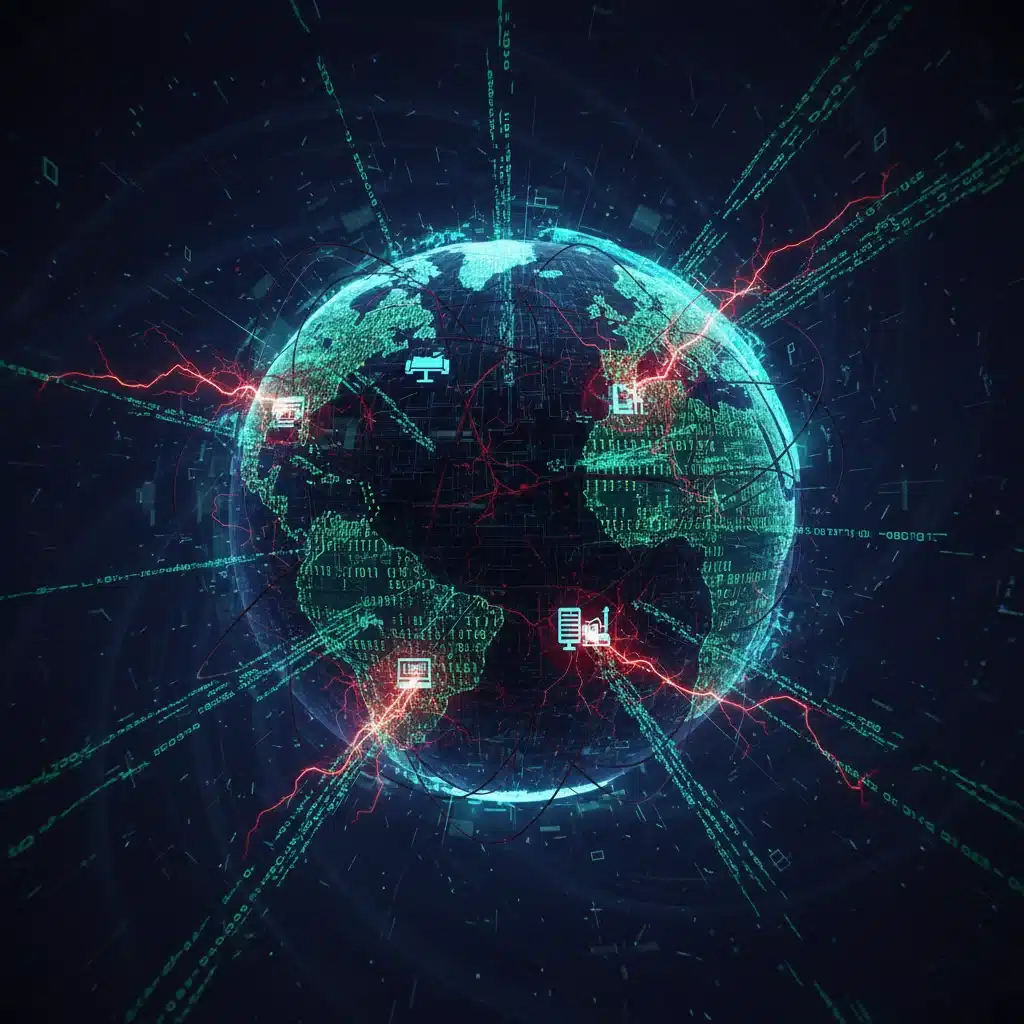
Hybrid threats extend beyond the digital realm to include disinformation campaigns, election interference, and the weaponization of social media. Foreign adversaries actively seek to sow discord, undermine public trust in institutions, and influence political outcomes within the United States. These campaigns are becoming increasingly sophisticated, utilizing deepfakes, AI-generated content, and micro-targeting to spread propaganda and exacerbate societal divisions. The goal is often to weaken the US from within, eroding its democratic foundations and reducing its capacity to act decisively on the global stage. The ability to distinguish between legitimate information and foreign-backed disinformation campaigns is a growing challenge for both individuals and government agencies.
The challenge is compounded by the difficulty of deterrence in the cyber domain. Attribution of attacks can be notoriously difficult, making it hard to implement effective retaliatory measures. The ‘gray zone’ nature of cyberattacks, often falling below the threshold of armed conflict, means that traditional military responses may not be appropriate or effective. This creates a dangerous asymmetry, where adversaries can inflict significant damage without fear of conventional reprisal. The US needs to enhance its cyber defenses, develop more robust deterrence strategies, and foster international norms for responsible state behavior in cyberspace. This includes strengthening international cooperation on threat intelligence sharing and joint response frameworks. The private sector also plays a crucial role, as much of the nation’s critical infrastructure is privately owned and operated. Public-private partnerships are essential for building collective resilience against these pervasive threats.
Furthermore, the development of quantum computing poses a future threat to current encryption standards, potentially rendering much of today’s secure communication vulnerable. While this is a longer-term risk, the race to develop quantum-resistant cryptography is already underway and represents a critical national security imperative. The US must invest heavily in both offensive and defensive cyber capabilities, recruit and train a highly skilled cyber workforce, and continuously adapt its strategies to counter the evolving threat landscape. The interconnectedness of modern societies means that a successful cyberattack against one sector can have cascading effects across multiple domains, making comprehensive defense a necessity.
3. Resurgence of Transnational Terrorism and Regional Instability
Despite significant efforts to counter terrorism globally, the threat of transnational terrorist organizations remains a persistent and evolving US Geopolitical Risks. By early 2026, a resurgence of certain groups, coupled with new forms of radicalization and the exploitation of regional instabilities, could pose renewed challenges to US national security interests both at home and abroad. The withdrawal of troops from Afghanistan, for instance, has created a vacuum that extremist groups like ISIS-K and a resurgent Al-Qaeda might exploit to regroup, recruit, and plan external operations. These groups are highly adaptable, leveraging ungoverned spaces and local grievances to establish new safe havens and expand their operational reach.
The ideological appeal of these groups, often amplified through sophisticated online propaganda, continues to radicalize individuals globally, including within Western countries. The use of social media and encrypted messaging platforms makes it difficult to monitor and disrupt their recruitment efforts. Lone wolf attacks, inspired but not directly commanded by these organizations, remain a significant concern, as they are often difficult to detect in advance. The convergence of extremist ideologies, including religiously motivated terrorism and racially or ethnically motivated violent extremism (REMVE), presents a complex threat landscape. REMVE groups, often operating domestically but with transnational links, pose a growing challenge to internal security and democratic institutions.

Regional instability in areas such as the Sahel, parts of the Middle East, and Sub-Saharan Africa provides fertile ground for terrorist organizations to thrive. Weak governance, economic hardship, and ongoing conflicts create environments where these groups can gain traction, recruit members, and establish operational bases. The spillover effects of these instabilities, including refugee flows and humanitarian crises, can further strain international resources and create new vulnerabilities. The competition among great powers for influence in these regions can also inadvertently exacerbate local conflicts, providing opportunities for non-state actors to exploit the chaos. For example, proxy conflicts can inadvertently strengthen militant groups by providing them with resources or a power vacuum to fill.
The proliferation of advanced weaponry, including drones and improvised explosive device (IED) technology, enhances the capabilities of terrorist groups, making them more lethal and harder to counter. The potential for these groups to acquire chemical, biological, radiological, or nuclear (CBRN) materials, while still low, remains a catastrophic risk that requires constant vigilance. Counterterrorism efforts need to evolve beyond purely military solutions to include robust intelligence sharing, law enforcement cooperation, capacity building for partner nations, and addressing the root causes of radicalization, such as poverty, lack of education, and political grievances. A comprehensive strategy must also involve disrupting financial networks that support terrorism and countering extremist narratives online.
Furthermore, the interconnectedness of the global financial system means that even seemingly minor regional instabilities can have broader economic repercussions, impacting trade routes, energy supplies, and investment climates. The US must continue to invest in its intelligence capabilities, special operations forces, and diplomatic efforts to counter these evolving threats. Building resilient communities at home against radicalization and enhancing international partnerships to share intelligence and best practices are crucial components of mitigating this persistent US Geopolitical Risks. The fight against terrorism is a long-term endeavor that requires continuous adaptation and a multi-faceted approach, recognizing that the nature of the threat is constantly shifting and becoming more diffuse.
Strategic Implications and Way Forward for US National Security
The three emerging US Geopolitical Risks outlined above – escalating great power competition in the Indo-Pacific, sophisticated cyber warfare and hybrid threats, and the resurgence of transnational terrorism and regional instability – are not isolated challenges. They are deeply interconnected, forming a complex web that demands a comprehensive and integrated approach to US national security. A crisis in the Indo-Pacific, for instance, could be accompanied by debilitating cyberattacks on US infrastructure, while regional instabilities could provide new avenues for terrorist groups to exploit. Understanding these interdependencies is crucial for developing effective strategies.
To effectively navigate this challenging landscape, the United States must prioritize several key areas. Firstly, strengthening alliances and partnerships is paramount. In an era of multi-polarity, collective security and burden-sharing are more important than ever. This involves not only traditional military alliances but also diplomatic and economic cooperation to counter adversarial influence and promote shared values. Investing in these relationships provides a significant force multiplier and enhances overall global stability against common threats. Consistent engagement and mutual respect are foundational to maintaining strong alliances.
Secondly, technological superiority must be maintained and enhanced. This requires sustained investment in research and development, fostering innovation in critical areas like AI, quantum computing, cybersecurity, and advanced materials. Protecting intellectual property and securing critical supply chains are equally important to prevent adversaries from gaining an unfair advantage. The competition for technological dominance is a long-term strategic contest that will shape the future balance of power. Educational initiatives to cultivate a skilled workforce in STEM fields are also vital to this endeavor.
Thirdly, resilience – both national and societal – must be a core component of US strategy. This includes hardening critical infrastructure against cyber and physical attacks, enhancing disaster preparedness, and building societal cohesion against disinformation campaigns. A resilient nation is better equipped to absorb shocks, recover quickly, and deter aggression. Investing in public education and media literacy can empower citizens to critically evaluate information and resist foreign influence operations. Community-level preparedness and robust emergency response systems are also critical for national resilience.
Fourthly, proactive diplomacy and conflict prevention are essential. While military readiness is crucial, diplomatic efforts to de-escalate tensions, resolve disputes peacefully, and establish clear lines of communication with adversaries can prevent conflicts from erupting or spiraling out of control. This requires skilled diplomats, sustained engagement, and a willingness to explore creative solutions to intractable problems. Diplomacy, when effectively wielded, can be the most powerful tool in preventing geopolitical crises.
Finally, a whole-of-government approach, integrating the efforts of defense, intelligence, diplomatic, economic, and law enforcement agencies, is necessary. These challenges cannot be addressed in silos; coordination and collaboration across all instruments of national power are vital for coherent and effective responses. This also extends to collaboration with the private sector, which plays an increasingly important role in national security, particularly in areas like cybersecurity and critical infrastructure protection. The complexity of these US Geopolitical Risks demands a unified and agile response from all segments of government and society.
In conclusion, early 2026 presents the United States with a formidable set of geopolitical challenges. The escalating great power competition in the Indo-Pacific, the pervasive threat of cyber warfare and hybrid attacks, and the persistent danger of transnational terrorism and regional instability collectively represent the top three emerging US Geopolitical Risks. Addressing these risks will require strategic foresight, robust investment, strong alliances, and a flexible, adaptive approach to national security. The future stability of the international order and the continued prosperity and security of the American people depend on a clear-eyed assessment of these threats and a determined commitment to safeguarding US interests in an increasingly complex world. Proactive measures and continuous adaptation will be key to navigating the turbulent waters ahead.