Social welfare programs for the homeless: a lifeline

Social welfare programs for the homeless provide essential services such as housing assistance, food support, healthcare, and job training, effectively helping individuals regain stability and improve their quality of life.
Social welfare programs for the homeless play a vital role in addressing the needs of one of society’s most vulnerable groups. Have you ever wondered how these initiatives make a difference in people’s lives? Let’s explore what these programs offer and their impact.
Understanding social welfare programs
Understanding social welfare programs is essential for grasping how they assist individuals in need. These programs aim to provide support for the homeless, ensuring they receive the resources necessary for stability and improvement in their lives.
What Are Social Welfare Programs?
Social welfare programs serve as a safety net for vulnerable populations, particularly the homeless. They offer various services tailored to meet immediate needs and promote long-term solutions.
Key Features of These Programs
These programs often include:
- Housing Assistance: Providing temporary or permanent shelters.
- Food Services: Offering meals and nutritional support.
- Healthcare Access: Facilitating medical services for better well-being.
- Employment Support: Helping individuals find jobs and gain skills.
Every region has its own take on these programs, influenced by local policies and the population’s needs. For instance, some programs focus on emergency aid while others emphasize rehabilitation and reintegration into society.
Impact on Communities
The impact of these programs on communities is profound. They not only help individuals find their footing but also foster a sense of belonging and community resilience. By addressing the root causes of homelessness, these initiatives play a crucial role in creating healthier environments.
In addition, social welfare programs enhance community safety and economic stability. When individuals receive the help they need, they are more likely to contribute positively to society, reducing crime rates and increasing productivity.
Challenges Faced
Despite their benefits, social welfare programs often face challenges such as funding shortages and stigma. Misconceptions about homelessness can also hinder public support, making it difficult for programs to thrive.
Engaging the community in discussions about these challenges can break down barriers and promote greater understanding. It’s important to raise awareness about the significance of supporting social welfare initiatives and the positive change they can bring.
Key services offered to the homeless
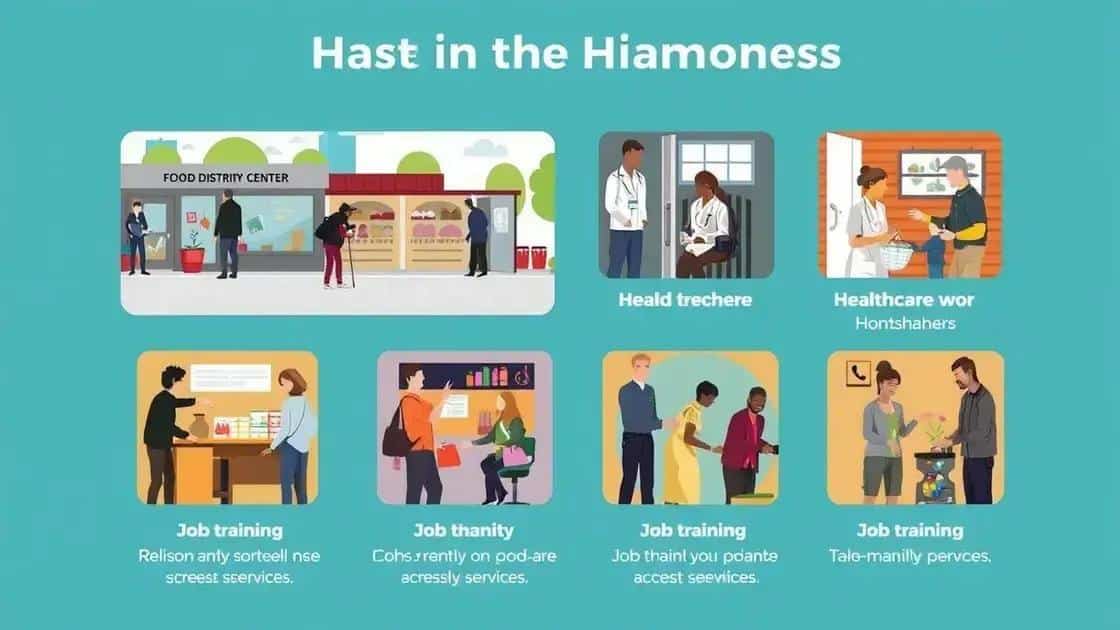
Key services offered to the homeless play a crucial role in helping individuals regain stability. These services are designed to meet immediate needs while also providing a foundation for lasting change.
Housing Assistance
Providing housing assistance is one of the most important services available. This can include emergency shelters, transitional housing, and permanent supportive housing. Each option aims to offer individuals a safe space to start rebuilding their lives.
Food and Nutrition Programs
Access to food is another priority. Many programs offer free meals or food pantry services. By ensuring that individuals receive proper nutrition, they can better focus on other aspects of their lives.
- Community Meals: Organized by local groups to provide nutritious food.
- Food Banks: Distributing groceries to those in need.
- Nutrition Education: Teaching healthy eating habits.
Health care services are also vital. Regular medical check-ups and mental health support can greatly improve well-being. Many programs provide access to clinics and therapists who specialize in helping the homeless. Access to healthcare ensures that physical and mental health issues are addressed promptly.
Employment Support
Finding employment is often a critical step towards independence. Many social welfare programs offer vocational training and job placement services. These resources help individuals develop the necessary skills to enter or re-enter the workforce.
- Resume Workshops: Teaching how to create effective resumes.
- Job Fairs: Connecting individuals with potential employers.
- Skills Training: Providing courses on specific trades or soft skills.
Additionally, case management services play a significant role. Case workers guide individuals through available resources, helping them navigate the complexities of social services.
Success stories from various programs
Success stories from various programs showcase the positive impact these initiatives can have on the lives of homeless individuals. These stories highlight resilience and the power of support systems, illustrating how social welfare programs can transform lives.
Inspiring Transformations
One heartwarming example is that of a young woman named Sarah. After facing several challenges, including job loss and eviction, she sought help from a local shelter. Thanks to the comprehensive support she received, including food, counseling, and job training, Sarah was able to secure stable employment and move into her own apartment.
A similar success story involves a man named James, who struggled with addiction while living on the streets. He enrolled in a rehabilitation program through a social welfare service, where he received both medical and emotional support. Today, James shares his journey as a motivational speaker, helping others who face similar challenges.
Community Impact
These success stories not only inspire hope but also demonstrate the broader community impact of social welfare programs. When individuals succeed, they contribute positively to society, creating a ripple effect that benefits everyone.
- Stronger Community Ties: Success stories foster a sense of community unity.
- Reduced Stigma: Sharing these experiences helps challenge misconceptions about homelessness.
- Increased Support: Positive outcomes lead to more resources and funding for programs.
Moreover, many programs organize events to celebrate these achievements. These events allow participants to share their stories, encouraging others to seek help and highlighting the effectiveness of these initiatives.
By recognizing and telling these success stories, we can build awareness of the challenges faced by homeless individuals while also shining a light on the potential for change through available support.
Challenges and solutions in implementation

Challenges and solutions in implementation of social welfare programs for the homeless are vital to understand. Many programs face obstacles that can limit their effectiveness, but innovative solutions also emerge to address these issues.
Common Challenges
One significant challenge is funding limitations. Many social welfare programs rely on government grants and donations to operate. When funding decreases, services may be cut, which directly impacts those in need. Additionally, there is often a lack of awareness about available programs, leading to underutilization of vital resources.
Stigma and Misconceptions
Stigma surrounding homelessness can further complicate the implementation of these programs. Misunderstandings about the reasons behind homelessness can result in less community support and fewer volunteers. To combat this, it’s important to promote education and awareness about homelessness and its complexities.
- Community Outreach: Engaging local residents through presentations and discussions can bridge the gap.
- Collaborative Efforts: Partnering with local businesses and organizations can strengthen support networks.
- Success Stories: Sharing positive outcomes can help change perceptions and encourage involvement.
Another pressing challenge is ensuring that services meet the diverse needs of the homeless population. Some individuals may require specific assistance, such as mental health services, while others may need help with job training. Programs must adapt to these varied needs in order to be effective.
Innovative Solutions
To address these challenges, many programs are adopting innovative solutions. For instance, mobile outreach teams have been established to bring services directly to homeless individuals. This approach not only increases access but also builds trust within the community.
Moreover, technology is increasingly being used to connect homeless individuals with resources. Apps that provide information about food banks, shelters, and job opportunities are becoming more prevalent, helping individuals find the assistance they need quickly.
Collaboration among different organizations can also lead to better outcomes. By sharing resources and expertise, programs can create comprehensive support systems that address multiple needs more effectively.
FAQ – Frequently Asked Questions About Social Welfare Programs for the Homeless
What types of services do social welfare programs offer for homeless individuals?
Social welfare programs provide a variety of services, including housing assistance, food support, healthcare access, and job training.
How can I get involved in supporting social welfare programs?
You can support these programs by volunteering, donating, or advocating for policies that enhance resources and awareness for homeless individuals.
What are some challenges faced by social welfare programs?
Challenges include funding limitations, stigma around homelessness, and the need to address diverse client needs.
Are there success stories from individuals who benefited from these programs?
Yes, many individuals have transformed their lives through social welfare programs, overcoming challenges and achieving stable living conditions.