Global supply chain resilience efforts: what you need to know

Global supply chain resilience efforts focus on sustainability, technology integration, and transparency to enhance efficiency and better respond to disruptions experienced in today’s dynamic market.
Global supply chain resilience efforts have never been more important. As businesses face unprecedented disruptions, understanding how to bolster resilience is key. Have you considered what strategies your company could adopt to thrive amid these challenges?
Understanding global supply chain resilience
Understanding global supply chain resilience is essential for businesses today. As disruptions become more frequent, companies must adapt and develop stronger systems. This content will explore the significance of resilience in global supply chains.
What is Supply Chain Resilience?
Supply chain resilience refers to the ability of a supply chain to anticipate, prepare for, and respond to unexpected disruptions. Companies that prioritize resilience can recover quickly and continue to operate smoothly even during challenging times.
Importance of Resilience
Building resilience in supply chains provides numerous benefits:
- Increased Flexibility: A resilient supply chain can quickly adapt to changes in demand or supply.
- Enhanced Risk Management: Companies can better identify and mitigate risks associated with supply chain disruptions.
- Improved Customer Satisfaction: Maintaining consistent product availability helps meet customer expectations, even during crises.
Incorporating resilience involves assessing vulnerabilities within supply chains. For instance, businesses should evaluate their suppliers, logistics, and inventory systems to identify areas for improvement. Having multiple suppliers or alternative transportation routes can significantly enhance resilience. Regular training and contingency planning are also crucial.
Strategies to Build Resilience
To strengthen supply chain resilience, consider the following strategies:
- Invest in Technology: Using data analytics can improve forecasting and decision-making.
- Diversify Suppliers: Establishing a network of suppliers can reduce dependence on any single source.
- Enhance Collaboration: Working closely with partners fosters better communication and problem-solving.
By focusing on these key areas, companies can enhance their overall resilience. It’s vital for businesses to be proactive rather than reactive in their supply chain management strategies.
Understanding global supply chain resilience is no longer optional; it’s a necessity for survival. As companies embrace these principles, they will not only weather disruptions better but also position themselves for future growth.
Key challenges in maintaining supply chain stability
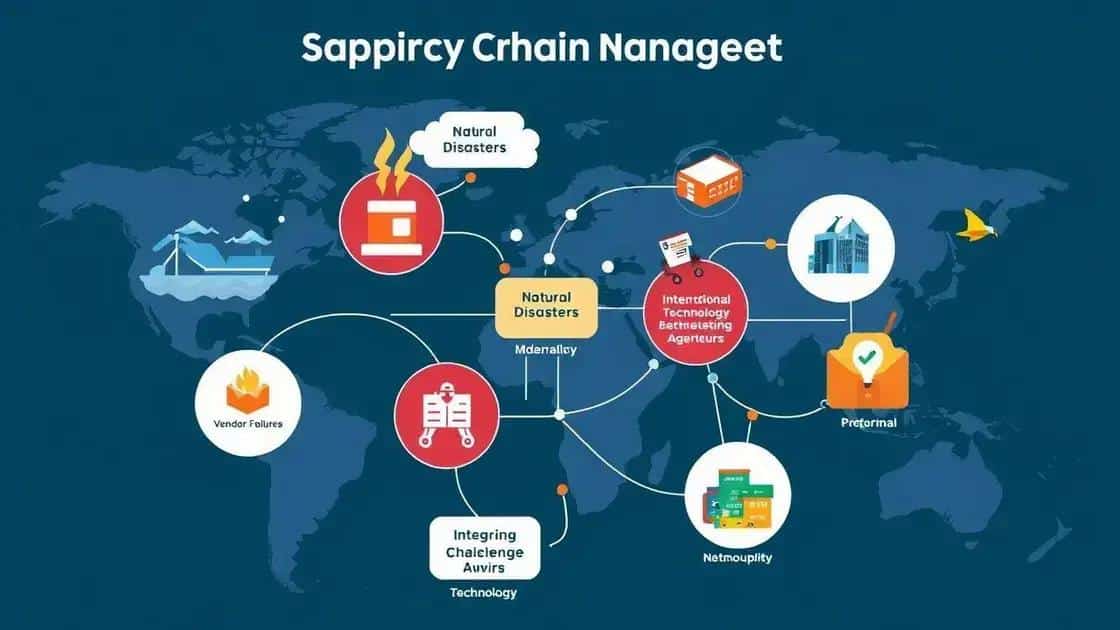
Key challenges in maintaining supply chain stability are crucial for businesses aiming for success. Understanding these challenges can help companies prepare better strategies to cope with disruptions.
Disruptions and Unexpected Events
Globally, supply chains face a variety of unexpected events that can disrupt operations. Natural disasters, political instability, and pandemics are just a few examples. Such events can affect the availability of products and services.
Complexity of Global Networks
Today’s supply chains are often complex and interconnected. This complexity can lead to vulnerabilities. For example, if one supplier fails, it can impact many others. Companies should constantly assess their supply chains for weak points.
- Supply Chain Visibility: Lack of visibility makes it hard to identify problems quickly.
- Supply Fluctuations: Changes in demand can lead to overstocking or stockouts.
- Vendor Reliability: Dependable vendors are crucial for maintaining stability.
The lack of transparency in the supply chain can lead to inefficiencies. Companies may struggle to track inventory across multiple locations. This can result in delays and increased costs.
Technological Adaptation
As technology evolves, firms must adapt. Some companies may be slow to implement new tools. This can hinder their ability to respond effectively to challenges. Embracing technology like data analytics can significantly improve decision-making.
- Integration of Advanced Tools: Technologies like AI can forecast demand patterns.
- Real-Time Tracking: Monitoring shipments helps maintain flow and minimize delays.
- Supply Chain Automation: Streamlining processes can increase efficiency and reduce errors.
Addressing these key challenges is vital for businesses targeting supply chain stability. By identifying potential pitfalls and leveraging technology, organizations can enhance their resilience and adaptability.
Innovative strategies for enhancing resilience
Innovative strategies for enhancing resilience in supply chains are essential for navigating today’s challenges. Companies that adopt effective strategies can better withstand disruptions.
Utilizing Data Analytics
Data analytics is a powerful tool for improving supply chain resilience. By analyzing historical data, companies can predict demand and identify potential issues before they arise. This proactive approach helps in making informed decisions.
Diversifying Suppliers
Relying on a single supplier can be risky. Diversifying suppliers across different regions can mitigate risks. It allows businesses to maintain steady supply even if one supplier faces challenges.
- Broader Network: Having multiple suppliers reduces reliance on one source.
- Cost Efficiency: Different suppliers may offer better pricing.
- Increased Agility: Quick shifts to alternative sources enhance responsiveness.
In addition to diversifying suppliers, developing strong relationships with them is crucial. Effective communication can lead to better cooperation during crises. Collaborative partnerships enable sharing of risks and resources.
Implementing Technology
Technology plays a vital role in building resilient supply chains. Inventory management systems and automated tools can streamline processes, leading to efficiency. Investing in real-time tracking solutions helps maintain visibility across the supply chain.
- Real-Time Updates: Tracking shipments can prevent delays.
- Inventory Optimization: Automated systems help prevent stockouts and overstock situations.
- Data Sharing: Collaboration with partners can improve decision-making.
Embracing a culture of innovation within organizations also fosters resilience. Encouraging employees to suggest improvements can lead to creative solutions. Regular training and development help teams stay adaptable to changing conditions.
Implementing these innovative strategies can significantly enhance the resilience of supply chains. Companies that actively seek improvements will not only weather disruptions but thrive in competitive markets.
Future trends in global supply chains

Future trends in global supply chains are shaping the way businesses operate. As technology and consumer expectations evolve, staying ahead of these trends is crucial for success.
Embracing Sustainability
One major trend is the focus on sustainability. Companies are increasingly aware of their environmental impact. By adopting sustainable practices, they can reduce waste and improve their brand image. This shift not only meets consumer demand but also ensures regulatory compliance.
- Green Logistics: Implementing eco-friendly transport options can lower carbon emissions.
- Sustainable Sourcing: Choosing suppliers who prioritize sustainability can enhance brand reputation.
- Waste Reduction: Innovative practices such as recycling and upcycling can minimize waste.
As sustainability becomes a priority, many businesses are re-evaluating their supply chain strategies. This includes considering new materials and processes that align with eco-friendly goals.
Integration of Artificial Intelligence
Another significant trend is the integration of artificial intelligence (AI) in supply chains. AI technologies, like machine learning and automation, improve efficiency. They help in areas such as demand forecasting and inventory management.
- Enhanced Decision Making: AI analyzes vast amounts of data to provide actionable insights.
- Predictive Analytics: Forecasting demand becomes more accurate, assisting in better planning.
- Robotic Automation: Automating repetitive tasks can save time and reduce human errors.
The use of AI not only increases efficiency but also allows for smarter strategies. Companies leveraging AI can respond more swiftly to changes in the market.
Supply Chain Transparency
Increasing transparency is also essential for future supply chains. Consumers want to know where products come from and how they are made. By offering more information, companies can build trust with their customers.
Using blockchain technology can enhance transparency. It allows for tracking products throughout the supply chain, ensuring authenticity and ethical practices. Additionally, companies that provide clear supply chain insights often gain a competitive edge over others.
Future trends in global supply chains emphasize sustainability, technology, and transparency. Embracing these trends will help businesses remain competitive and responsive in a rapidly changing environment.
FAQ – Frequently Asked Questions about Global Supply Chain Resilience
What is supply chain resilience?
Supply chain resilience is the ability of a supply chain to anticipate, prepare for, and respond to unexpected disruptions.
Why is sustainability important in supply chains?
Sustainability helps companies reduce their environmental impact while meeting consumer demand and maintaining a positive brand image.
How can technology improve supply chain management?
Using advanced technologies like AI can enhance efficiency, improve decision-making, and provide better visibility across the supply chain.
What role does transparency play in supply chain success?
Transparency builds trust with consumers by providing clear information about sourcing and manufacturing practices.