Online vs. In-Person Degrees 2026: A US Student’s Data Guide

A data-driven analysis of 2026 online versus in-person degree programs for US students reveals significant differences in cost, flexibility, and career integration, impacting educational pathways and future opportunities.
Choosing the right educational path is a monumental decision for any US student, and in 2026, the landscape of higher education presents a critical fork in the road: pursuing a degree through online vs in-person degrees. This choice, far from being purely logistical, deeply impacts academic experience, financial outlay, and even future career trajectories. Understanding the nuances of each option, backed by current data and trends, is essential for making an informed decision that aligns with personal goals and professional aspirations in a rapidly evolving world.
The evolving landscape of higher education in 2026
The year 2026 marks a pivotal moment in higher education, characterized by technological advancements and shifting student demographics. The traditional campus experience, while still highly valued, now contends with sophisticated online learning platforms that offer unprecedented accessibility and flexibility. This evolution has prompted a reevaluation of what constitutes a ‘quality’ education, pushing institutions to innovate and adapt their program offerings.
Universities nationwide are investing heavily in hybrid models and cutting-edge digital tools, blurring the lines between physical and virtual classrooms. This dynamic environment necessitates a thorough examination of both online and in-person modalities, considering how each prepares students for the demands of the modern workforce and fosters holistic development. The decision is no longer about choosing the ‘easier’ option, but rather the most effective one for individual learning styles and life circumstances.
Technological integration and instructional design
- Advanced Learning Platforms: Online programs in 2026 leverage AI-powered learning management systems (LMS) that personalize content and provide real-time feedback, enhancing engagement and comprehension.
- Immersive Virtual Realities: Some online degrees incorporate VR/AR for simulated labs and field experiences, offering practical skills training previously exclusive to in-person settings.
- Hybrid Models: Many institutions now offer blended programs, combining the flexibility of online learning with periodic in-person sessions for crucial collaborative and networking opportunities.
The continuous integration of technology has transformed instructional design, making online learning more interactive and less isolating than in previous years. Educators are trained to create engaging digital content, fostering a sense of community even across geographical distances. This commitment to pedagogical excellence ensures that online degrees maintain academic rigor comparable to their in-person counterparts.
Cost analysis: tuition, fees, and living expenses
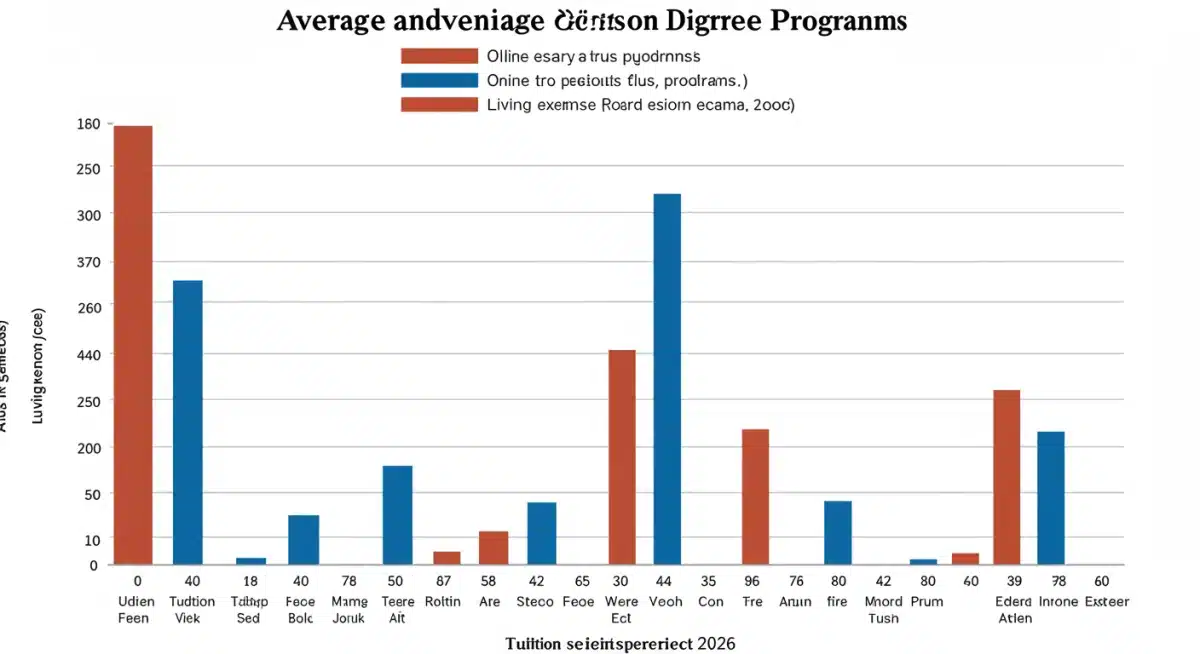
One of the most significant factors influencing the choice between online and in-person degrees is cost. While intuition might suggest online programs are always cheaper, a detailed analysis reveals a more complex financial picture in 2026. Tuition rates for online programs can sometimes be comparable to in-person ones, especially for highly specialized or prestigious degrees. However, the true savings often come from reduced auxiliary fees and, crucially, lower living expenses.
In-person students typically face substantial costs related to on-campus housing, meal plans, transportation, and various campus activity fees. These expenses can add tens of thousands of dollars to the overall cost of a degree. Online students, on the other hand, can often continue living at home or in more affordable locations, significantly mitigating these additional burdens. This financial flexibility allows many to pursue higher education without incurring crippling debt.
Hidden costs and potential savings
- Textbooks and Materials: Both formats require textbooks, though online programs often utilize more digital resources, potentially reducing costs.
- Technology Requirements: Online students need reliable internet and appropriate hardware, which can be an upfront investment.
- Opportunity Cost: In-person study often means less time for paid work, whereas online flexibility can allow students to maintain employment, offsetting educational costs.
Understanding the full financial commitment involves looking beyond tuition. While online programs might not always offer drastically lower tuition, the cumulative savings from reduced living expenses and the ability to work simultaneously can make them a more economically viable option for many. It’s vital for prospective students to conduct a comprehensive personal financial assessment before committing to either path.
Flexibility and accessibility: tailoring education to life
The hallmark of online degree programs in 2026 is their unparalleled flexibility and accessibility. This is a game-changer for non-traditional students, working professionals, parents, and individuals in remote areas who might otherwise find higher education out of reach. Online learning allows students to set their own schedules, study at their own pace, and balance academic pursuits with other life commitments without geographical constraints.
In contrast, in-person programs demand a fixed schedule and physical presence, which, while beneficial for some, can be a barrier for others. While campus life offers a structured environment and immediate access to resources, its rigidity can be a significant drawback for those with demanding personal or professional lives. The ability to access lectures and materials asynchronously provides a level of autonomy that traditional learning cannot match.
Balancing work, family, and study
- Asynchronous Learning: Online platforms allow students to engage with course content at any time, fitting study around work shifts, family responsibilities, or other obligations.
- Global Access: Students can pursue degrees from institutions across the US without needing to relocate, opening up a wider array of specialized programs.
- Self-Paced Progression: While most online programs have deadlines, the overall pace can often be adjusted, allowing students to accelerate or decelerate their studies as needed.
This flexibility extends beyond time management; it also democratizes access to education. Students with disabilities or those facing geographic isolation can participate fully in academic life, overcoming traditional barriers. The adaptability of online education ensures that learning can truly be a lifelong endeavor, integrated seamlessly into diverse lifestyles.
Academic rigor and learning experience
A common misconception about online degrees is that they lack the academic rigor of their in-person counterparts. However, in 2026, this notion is largely outdated. Reputable institutions offering online programs adhere to the same accreditation standards and often employ the same faculty who teach on campus. The focus has shifted from the mode of delivery to the quality of the educational content and outcomes.
The learning experience itself can vary significantly between the two. In-person learning thrives on immediate, face-to-face interaction, spontaneous discussions, and direct access to campus facilities like libraries and labs. Online learning, while lacking this physical immediacy, often fosters a different kind of engagement through structured online forums, virtual group projects, and one-on-one digital consultations with professors. Both models aim to cultivate critical thinking, research skills, and subject matter expertise.
Engagement and interaction differences
- Peer Interaction: In-person settings naturally facilitate peer-to-peer learning and networking through direct contact. Online platforms use discussion boards, virtual study groups, and video conferencing to replicate this.
- Faculty Access: While in-person students can drop into office hours, online students often have scheduled virtual meetings, email access, and dedicated communication channels, sometimes offering more consistent and documented interaction.
- Resource Utilization: Campus students benefit from physical libraries and specialized labs. Online students rely on extensive digital libraries, remote lab access, and virtual simulations.
Ultimately, the effectiveness of the learning experience depends on the individual student’s learning style and self-discipline. Online learning requires a high degree of self-motivation and time management, while in-person learning benefits from the structured environment and immediate accountability. Both can lead to profound academic growth and mastery of complex subjects.
Career outcomes and employer perceptions
For many US students, the ultimate goal of a degree is to enhance career prospects. In 2026, the perception of online degrees among employers has largely matured, with many recognizing the value and legitimacy of quality online programs. What matters most is the accreditation of the institution and the relevance of the degree to the job market, rather than the mode of delivery.
Data suggests that graduates from reputable online programs achieve similar career outcomes to their in-person counterparts, including starting salaries and job placement rates. In some sectors, the self-discipline and digital literacy acquired through online learning are even seen as advantageous. Employers are increasingly focused on skills and competencies, and a degree, regardless of its format, is a testament to a candidate’s ability to learn and adapt.
Networking and professional development
- Online Professional Networks: Online programs often integrate virtual career fairs, alumni networks, and professional development workshops accessible from anywhere, fostering global connections.
- In-Person Mentorship: Traditional campuses provide more opportunities for informal mentorships with professors and industry professionals through direct interaction and campus events.
- Internship Opportunities: While in-person students might have easier access to local internships, online students often leverage remote or geographically flexible internship opportunities, expanding their reach.
The key for both online and in-person graduates is proactive engagement with career services and networking opportunities. While the modes of networking may differ, the importance of building professional relationships remains constant. A well-designed online program often incorporates robust career support, ensuring graduates are well-prepared for the job market.
Student support services and campus life
Beyond academics, the student experience encompasses a wide array of support services and social opportunities. In-person programs excel in providing a vibrant campus life, with access to physical libraries, counseling centers, health services, recreational facilities, and a myriad of student organizations. This holistic environment fosters personal growth, social development, and a strong sense of community.
Online programs, while not replicating the traditional campus experience, have made significant strides in offering comprehensive virtual support services. This includes online tutoring, virtual counseling, digital library access, and dedicated technical support. Many online communities also foster a sense of belonging through virtual clubs, discussion forums, and online social events, aiming to mitigate feelings of isolation.
Building community and accessing resources
- Mental Health Support: In-person universities offer on-site counseling; online programs provide tele-counseling and digital wellness resources, ensuring support regardless of location.
- Academic Advising: Both formats provide academic advising, though online advising often utilizes video calls and email for convenience.
- Social Engagement: Campus life is rich with clubs and events. Online programs create virtual communities, discussion groups, and even host online social gatherings to foster peer connections.
The choice here often comes down to personal preference. Some students thrive in the dynamic, social environment of a traditional campus, while others prefer the independence and focused study environment offered by online learning. The availability and quality of support services are crucial for success in either modality, making it important to research what each institution provides.
| Key Aspect | Brief Description |
|---|---|
| Cost Efficiency | Online degrees often save on living expenses, while in-person involves higher auxiliary fees and housing. |
| Flexibility & Access | Online offers unparalleled schedule flexibility and geographical access, ideal for diverse student needs. |
| Academic Experience | Both formats offer rigorous academics; in-person has direct interaction, online fosters independent learning. |
| Career Perception | Employers increasingly value accredited online degrees similarly to in-person, focusing on skills and institution reputation. |
Frequently asked questions about 2026 degree programs
Yes, increasingly so. Employers in 2026 prioritize the reputation and accreditation of the institution and the skills acquired, rather than just the mode of delivery. Many recognize the self-discipline and digital proficiency developed through online learning as valuable assets.
While tuition can be similar, online programs often lead to significant savings on living expenses, transportation, and various campus fees. In-person degrees typically incur higher overall costs due to housing, meal plans, and activity fees.
In-person offers physical access to counseling, libraries, and health services. Online programs provide robust virtual equivalents, including tele-counseling, digital libraries, and extensive technical support, adapted for remote access and convenience.
Absolutely. Online programs facilitate networking through virtual career fairs, dedicated alumni portals, and online professional groups. While different from campus-based interactions, these platforms enable global connections and targeted industry engagement.
Online degree programs generally offer superior flexibility for students with demanding schedules, such as working professionals or parents. Asynchronous learning allows individuals to manage coursework around existing commitments, a key advantage over fixed in-person timetables.
Conclusion
The decision between pursuing an online or in-person degree in 2026 is deeply personal, influenced by individual circumstances, financial considerations, and learning preferences. A thorough data-driven analysis reveals that both modalities offer legitimate, high-quality educational experiences, each with distinct advantages. Online programs excel in flexibility, accessibility, and potential cost savings, making them ideal for students balancing multiple responsibilities or seeking specialized programs regardless of location. In-person degrees, conversely, provide an immersive campus experience, direct social interaction, and immediate access to physical resources. Ultimately, the ‘better’ choice hinges on aligning the program’s structure and resources with one’s unique needs and aspirations, ensuring a fulfilling academic journey and strong career foundation. Prospective students are encouraged to research specific programs thoroughly, considering accreditation, faculty expertise, and available support services to make the most informed decision for their future.