Interest Rate Hikes: Impact on US Mortgages & Loans Next 3 Months
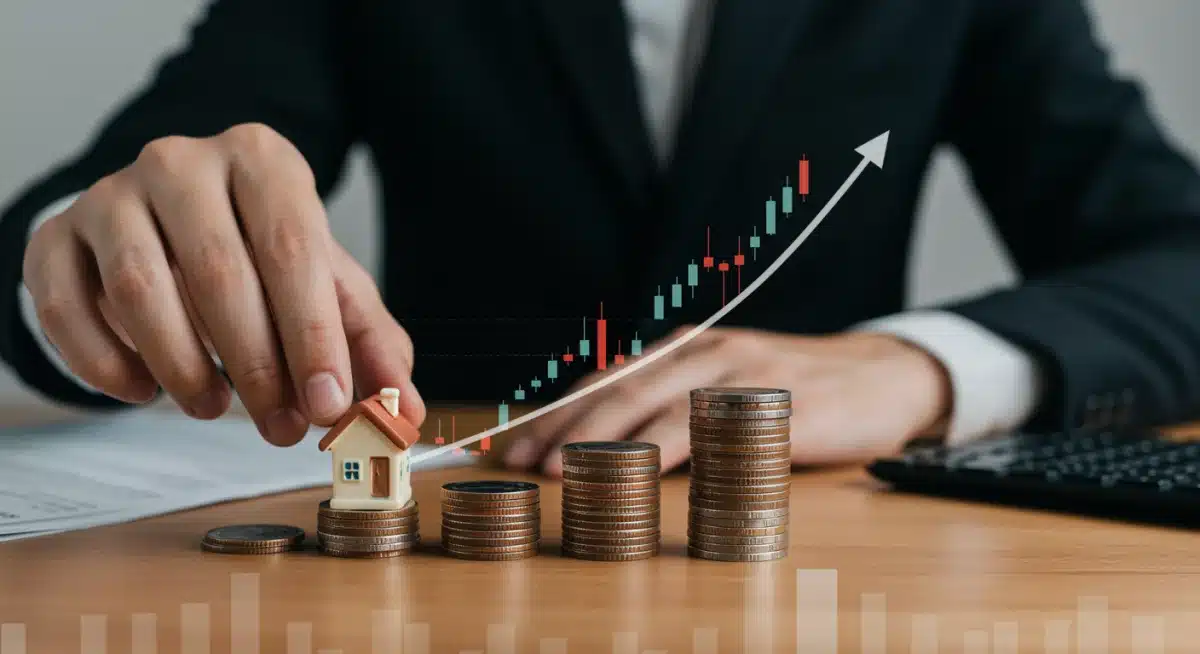
The recent series of interest rate hikes directly impacts the cost of borrowing for mortgages and various loans in the United States, necessitating immediate financial review and strategic planning for consumers.
The financial landscape in the United States is constantly shifting, and few factors influence personal finances as profoundly as interest rates. Recently, we’ve witnessed a series of significant interest rate hikes that are sending ripples through the economy. If you’re a homeowner with a mortgage or someone managing various types of loans, understanding the immediate and near-term implications of these changes is crucial for your financial well-being over the next three months.
Understanding the Federal Reserve’s Role in Interest Rate Hikes
The Federal Reserve, often referred to as ‘the Fed,’ plays a pivotal role in shaping the economic environment of the United States. Its primary tool for influencing the economy is the federal funds rate, which is the target rate for overnight borrowing between banks. When the Fed decides to increase this rate, it’s typically a strategic move to combat inflation, cool down an overheated economy, or stabilize financial markets. These decisions are not made lightly; they consider a vast array of economic indicators, from employment figures to consumer spending patterns.
The impact of a federal funds rate hike extends far beyond interbank lending. It serves as a benchmark that influences interest rates across the entire financial system. Commercial banks adjust their prime rates, which then affect the interest rates they offer on various financial products, including mortgages, car loans, credit cards, and personal lines of credit. This cascading effect means that even a seemingly small adjustment by the Fed can lead to noticeable changes in your monthly payments and overall borrowing costs.
Why the Fed Raises Rates
- Controlling Inflation: The most common reason for rate hikes is to curb inflation, which occurs when the general price level of goods and services rises, and the purchasing power of currency falls. By making borrowing more expensive, the Fed aims to reduce consumer and business spending, thereby slowing down demand and price increases.
- Economic Stability: Rate hikes can also be used to prevent asset bubbles or excessive risk-taking in the financial markets, ensuring a more stable and sustainable economic growth trajectory.
- Responding to Strong Economic Growth: In periods of robust economic growth and low unemployment, the Fed might raise rates to prevent the economy from overheating, which could lead to unsustainable inflation.
Understanding the Fed’s motivations provides essential context for anticipating future rate movements and their potential impact on your personal finances. It’s a complex dance between economic growth, inflation, and monetary policy, with direct consequences for every borrower.
Direct Impact on Mortgage Payments: What Homeowners Can Expect
For homeowners, especially those with adjustable-rate mortgages (ARMs) or those considering refinancing, the recent interest rate hikes are a critical concern. Unlike fixed-rate mortgages, which lock in an interest rate for the life of the loan, ARMs have rates that fluctuate periodically based on an index, often tied to the federal funds rate or another benchmark. As the Fed raises rates, the cost of borrowing for ARMs increases, leading to higher monthly payments.
Over the next three months, ARM holders should closely monitor their statements and prepare for potential payment adjustments. Even a seemingly small percentage increase in the interest rate can translate into a significant jump in the monthly outlay, impacting household budgets. It’s essential to review the terms of your ARM, including the adjustment period and any caps on rate increases, to understand your potential exposure.
Strategies for ARM Holders
- Review Loan Terms: Understand your adjustment period, index, margin, and caps. Knowing when your rate is scheduled to reset is key.
- Consider Refinancing: If your ARM is due to adjust soon and rates are still relatively low compared to where they might go, refinancing into a fixed-rate mortgage could provide stability and predictable payments.
- Increase Principal Payments: If feasible, paying extra towards your principal can reduce the overall loan amount, potentially mitigating the impact of future rate increases on your total interest paid.
Even if you have a fixed-rate mortgage, the wider impact of rising rates can affect your home’s equity and the housing market in general. Higher rates tend to cool down housing demand, potentially slowing appreciation or even leading to slight declines in property values in some areas. For those looking to sell or buy, the market dynamics become more challenging, with affordability being a primary concern for new buyers.
Auto Loans and Personal Loans: Rising Costs for Consumers
Beyond mortgages, the recent interest rate hikes also have a substantial effect on other forms of consumer credit, including auto loans and personal loans. These types of loans are often tied to benchmark rates, and as those benchmarks climb, so does the cost of borrowing for new loans and, in some cases, existing variable-rate loans. For anyone planning to purchase a new vehicle or seeking a personal loan for consolidation or other expenses, the timing of these rate changes is crucial.
Over the next three months, consumers can expect to see higher annual percentage rates (APRs) on new auto loans. This means that the total cost of financing a car will increase, leading to higher monthly payments or requiring a larger down payment to keep payments manageable. Similarly, personal loans, which offer flexibility for various financial needs, will also become more expensive. Lenders will adjust their offerings to reflect the new cost of capital, passing those increases on to borrowers.
Managing Higher Loan Costs
- Shop Around: Compare offers from multiple lenders for auto and personal loans. Even a small difference in APR can save you a significant amount over the life of the loan.
- Improve Credit Score: A higher credit score can qualify you for better interest rates, partially offsetting the impact of general market rate increases.
- Consider Shorter Loan Terms: While a shorter term means higher monthly payments, it can significantly reduce the total interest paid over the life of the loan, especially important in a rising rate environment.
Existing variable-rate personal loans will also see adjustments. Borrowers should review their loan agreements to understand how and when their rates might change. Proactive financial planning, such as budgeting for potential payment increases, can help mitigate any unexpected financial strain. The goal is to minimize borrowing costs wherever possible and manage debt effectively in a higher interest rate environment.
Credit Card Debt: A Growing Concern in a High-Rate Environment
Credit card debt often carries some of the highest interest rates among all loan types, making it particularly sensitive to interest rate hikes. Unlike mortgages or auto loans, credit card rates are almost always variable and directly linked to the prime rate, which moves in lockstep with the federal funds rate. This means that when the Fed raises rates, credit card APRs typically follow suit very quickly, often within one or two billing cycles.
For consumers carrying a balance on their credit cards, these hikes translate directly into higher minimum payments and a greater portion of their payment going towards interest rather than principal. Over the next three months, individuals with existing credit card debt will likely see their finance charges increase, making it more challenging to pay down their balances. This can create a debt spiral if not managed carefully, as the cost of borrowing continues to rise.
Mitigating Credit Card Debt Impact

To navigate this challenging environment, it’s crucial to prioritize paying down high-interest credit card debt. Strategies like the ‘debt snowball’ or ‘debt avalanche’ method can be highly effective. The debt snowball focuses on paying off the smallest balance first for psychological wins, while the debt avalanche prioritizes debts with the highest interest rates to save the most money. Another option might be to consolidate high-interest credit card debt into a personal loan with a lower, fixed interest rate, if your credit score allows.
Avoiding new credit card debt is also paramount. In a rising rate environment, every new purchase charged to a credit card could become significantly more expensive to pay off over time. Focusing on reducing existing balances and being mindful of new spending are key steps to maintaining financial health when credit card interest rates are on the rise.
The Broader Economic Outlook and Consumer Behavior
The recent interest rate hikes are not isolated events; they are part of a broader monetary policy strategy designed to influence the entire economy. As borrowing becomes more expensive, the ripple effects extend to various sectors, impacting consumer behavior, business investment, and overall economic growth. Over the next three months, we can expect to see shifts in how individuals and businesses make financial decisions, driven by the higher cost of capital.
From a consumer perspective, higher interest rates often lead to a reduction in discretionary spending. When the cost of borrowing for large purchases like homes and cars increases, people tend to postpone these decisions or opt for less expensive alternatives. This slowdown in demand is precisely what the Federal Reserve aims for when it seeks to cool down inflation. However, it can also lead to a deceleration in economic growth, which is a delicate balance the Fed constantly tries to manage.
Economic Considerations for Consumers
- Saving vs. Spending: Higher interest rates can make saving more attractive, as deposit accounts may offer better returns. This could encourage consumers to save more and spend less.
- Investment Decisions: The stock market can react sensitively to interest rate changes. Investors might shift their portfolios to reflect a higher-rate environment, potentially favoring less growth-oriented but more stable assets.
- Job Market: A slowdown in economic activity can eventually impact the job market. While the Fed aims for a ‘soft landing,’ a significant tightening of monetary policy can sometimes lead to increased unemployment.
Businesses also face higher borrowing costs for expansion, inventory, and operations, which can lead to reduced investment and hiring. This interconnectedness means that understanding the Fed’s actions requires looking at the bigger picture and anticipating how these changes will filter down to individual households and their financial stability.
Strategies for Navigating a High-Interest Rate Environment
Given the ongoing interest rate hikes and their projected impact over the next three months, proactive financial planning is more critical than ever. Whether you’re a homeowner, a borrower with various loans, or simply looking to manage your finances more effectively, there are several strategies you can employ to mitigate the adverse effects and even find opportunities.
The first step is to gain a clear understanding of your current financial situation. This involves reviewing all your debts, their interest rates, and their repayment terms. Identify which of your loans have variable rates and how quickly they might adjust. Knowledge is power when it comes to navigating a dynamic financial landscape.
Actionable Financial Strategies
- Emergency Fund: Ensure you have a robust emergency fund to cover at least three to six months of living expenses. This provides a buffer against unexpected payment increases or income disruptions.
- Debt Prioritization: Focus on paying down high-interest debt first, such as credit card balances. The money saved on interest can be redirected to other financial goals or to cushion against further rate hikes.
- Budget Review: Revisit your budget to identify areas where you can cut back on discretionary spending. Freeing up cash flow can help absorb higher loan payments without compromising essential needs.
- Explore Refinancing Options: If you have an adjustable-rate mortgage or a high-interest personal loan, explore refinancing into a fixed-rate option if current rates are still favorable or if you anticipate further increases.
- Seek Professional Advice: Consider consulting with a financial advisor who can provide personalized guidance based on your specific financial situation and goals.
By taking these proactive steps, you can better position yourself to weather the changes brought about by rising interest rates and maintain a strong financial footing in the months ahead. Adaptability and careful planning are your best allies in this evolving economic climate.
| Key Impact Area | Brief Description of Impact |
|---|---|
| Mortgages (ARMs) | Adjustable-rate mortgage payments will likely increase, impacting monthly budgets for homeowners. |
| Auto Loans | New auto loans will feature higher interest rates, increasing the total cost of vehicle financing. |
| Credit Card Debt | Variable credit card APRs will rise, making existing balances more expensive and harder to pay off. |
| Personal Loans | New personal loans will incur higher interest rates, raising the cost of borrowing for various needs. |
Frequently Asked Questions About Interest Rate Hikes
Generally, existing fixed-rate mortgages are not directly affected by interest rate hikes. Your monthly payment and interest rate remain locked in for the life of the loan. However, rising rates can indirectly impact your home equity and the broader housing market, potentially affecting refinancing opportunities if you consider them later.
If your ARM is resetting soon, evaluate your options. Consider refinancing to a fixed-rate mortgage to secure predictable payments, especially if current fixed rates are still manageable. Alternatively, prepare your budget for increased monthly payments and explore making extra principal payments to reduce the loan balance before the reset.
Higher interest rates increase the cost of borrowing, which can make qualifying for new loans more challenging as lenders assess your debt-to-income ratio. Your monthly payments will be higher for the same loan amount, potentially requiring you to borrow less or have a stronger financial profile to secure approval.
To protect your finances, focus on reducing high-interest variable debt, building an emergency fund, and reviewing your budget to identify areas for savings. Consider consolidating variable-rate debts into fixed-rate options if available. Proactive financial planning and debt management are crucial during periods of rising rates.
Yes, typically, interest rate hikes lead to higher interest rates on savings accounts, money market accounts, and Certificates of Deposit (CDs). This can be beneficial for savers, as their money can earn more interest. It’s a good time to shop for high-yield savings accounts and consider locking in CD rates for future gains.
Conclusion
The recent series of interest rate hikes by the Federal Reserve marks a significant shift in the financial landscape, directly impacting the cost of borrowing for millions of Americans. Over the next three months, homeowners with adjustable-rate mortgages, individuals seeking new auto or personal loans, and those carrying credit card debt will experience increased financial pressures. Understanding these changes and implementing proactive strategies such as debt prioritization, budget adjustments, and potentially refinancing, is essential for maintaining financial stability. While the economic environment presents challenges, it also underscores the importance of informed decision-making and prudent financial management to navigate these evolving conditions successfully.