Inclusive education policies transforming schools today

Inclusive education policies ensure that all students, regardless of their abilities or backgrounds, have equitable access to quality education, fostering collaboration, social skills, and a supportive learning environment.
Inclusive education policies aim to create learning environments where every student feels valued and supported. Have you wondered how these policies might reshape the educational landscape? In this article, we’ll dive into their significance and impact.
Understanding inclusive education policies
Understanding inclusive education policies is essential for creating equitable learning environments. These policies aim to ensure that every student, regardless of their background or abilities, has access to quality education. By fostering inclusion, schools can benefit all students and provide a richer educational experience.
Key Components of Inclusive Education Policies
Inclusive education policies generally focus on several critical areas. These components help schools adapt their practices to better meet the needs of diverse learners. Below are some fundamental elements:
- Access to resources: Schools must provide the necessary resources to support all students, including those with disabilities.
- Teacher training: Educators should receive training in inclusive practices and strategies to help every student succeed.
- Curriculum adaptation: Lessons must be designed to be flexible and cater to various learning styles and capabilities.
Additionally, engaging families and communities plays a vital role in the effectiveness of these policies. Schools can strengthen relationships with parents and caregivers, ensuring they are involved in the educational process. This collaboration fosters a sense of belonging and encourages openness in communication.
Benefits of Understanding These Policies
By comprehending the goals of inclusive education policies, educators can create environments where students feel valued. Schools that embrace inclusion have shown positive outcomes, such as reduced bullying and increased academic success. Moreover, understanding these policies helps prepare students for real-world interactions, promoting empathy and respect among peers.
A vital aspect of these policies is recognizing the importance of diversity. When students learn alongside peers from various backgrounds, they gain new perspectives and develop essential social skills. This diversity enriches the classroom experience and prepares students for a globalized world.
Key benefits of inclusive education

Understanding the key benefits of inclusive education is crucial for creating a supportive atmosphere for all students. Inclusion fosters an environment where every student can thrive and fully participate in the learning process. By prioritizing inclusion, schools can enhance the educational experience of all learners.
Enhanced Social Skills
One significant advantage of inclusive education is the enhancement of social skills among students. When children learn together, they develop important interpersonal skills and empathy. Interactions between diverse groups help students to understand and appreciate differences, preparing them for real-world challenges.
- Improved communication skills: Students learn to express themselves and engage with others effectively.
- Increased awareness: Exposure to various viewpoints fosters a greater understanding of different cultures and backgrounds.
- Stronger friendships: Inclusion encourages relationships that are based on shared experiences and mutual respect.
Another critical aspect is the academic benefits that inclusive education offers. Research shows that students in inclusive settings perform better academically compared to those in segregated environments. This success can be attributed to a variety of factors, including individualized support from teachers and peers.
Academic Success
Students in inclusive classrooms have access to differentiated instruction tailored to their specific needs. This personalized approach can lead to improved performance in various subjects. Additionally, collaborative learning opportunities promote problem-solving skills and critical thinking.
Furthermore, inclusion cultivates a sense of belonging and self-worth among all students. When children feel accepted and valued, they are more motivated to learn. The positive impact of this environment can extend well beyond the classroom, influencing students’ self-esteem and overall mental health.
Challenges in implementing inclusive policies
Implementing inclusive policies in education presents several challenges that schools and educators must navigate. Recognizing these obstacles is the first step toward creating a truly inclusive environment for all students. Some common challenges include resistance to change, insufficient training, and resource limitations.
Resistance to Change
One of the major hurdles in implementing inclusive education policies is the resistance to change among staff and the community. Many educators may feel comfortable with traditional teaching methods and may be hesitant to adapt to new practices. Overcoming this resistance requires a strong commitment to professional development and clear communication about the benefits of inclusion.
- Understanding the benefits: Educators must grasp how inclusion positively impacts all students.
- Addressing misconceptions: Addressing false beliefs that inclusion hinders academic progress can help reduce anxiety around change.
- Building a supportive culture: Fostering a culture that embraces diversity and inclusion within the school can encourage staff to engage with new practices.
Another challenge involves insufficient training for educators. Many teachers may lack the necessary training to effectively implement inclusive strategies, which can impact their confidence and effectiveness. Ongoing professional development is crucial for equipping educators with the skills they need to support diverse learners effectively.
Resource Limitations
Resource limitations can also hinder the successful implementation of inclusive education policies. Schools often face budget constraints that limit access to necessary resources such as materials, technology, and support staff. Addressing these limitations is vital for creating an inclusive environment.
Moreover, the lack of collaboration between professionals can impede progress. Effective inclusion often requires teamwork among teachers, special education staff, and support services. When collaboration is absent, students may not receive the comprehensive support they need to thrive.
Strategies for effective inclusion in schools
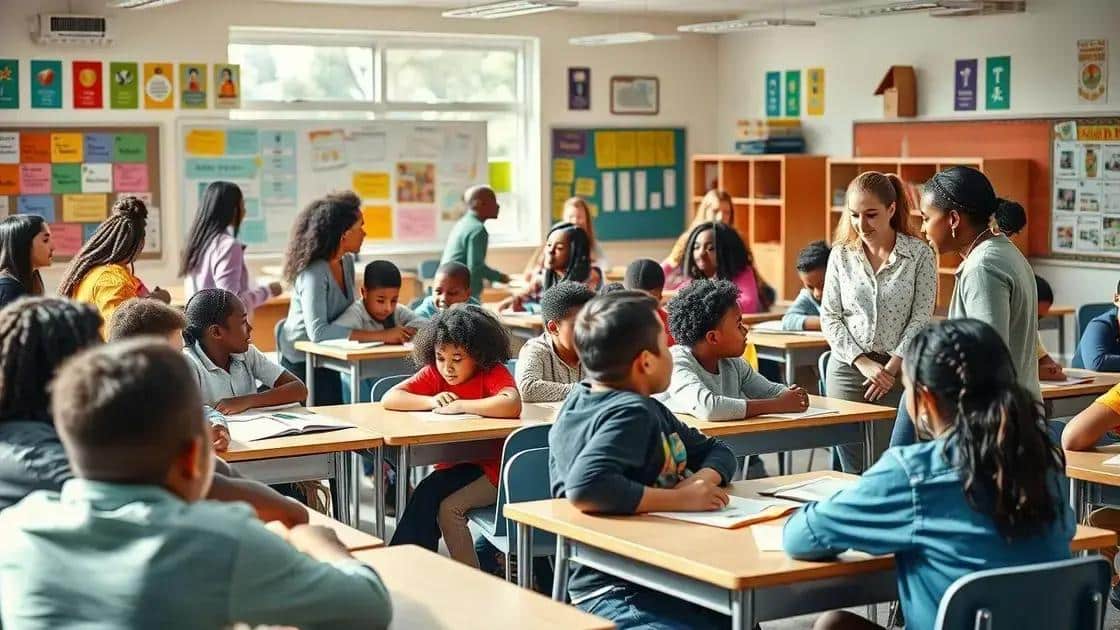
Implementing effective inclusion strategies in schools can create a supportive and engaging environment for all students. Schools can foster an inclusive atmosphere by adjusting their approaches in various ways. One key strategy is to promote collaborative learning among students.
Collaborative Learning
Collaborative learning allows students to work together in groups, benefiting from each other’s strengths. This method not only enhances learning but also encourages social skills and teamwork. Educators can create diverse groups that mix students of different abilities, fostering mutual respect and understanding.
- Peer teaching: Students can help each other learn, reinforcing their own knowledge while assisting classmates.
- Group projects: By working on common tasks, students learn to appreciate diverse perspectives.
- Rotating roles: Changing roles in group activities allows students to develop various skills.
An additional strategy is to implement individualized instruction. Tailoring lessons to meet the unique needs of each student can significantly enhance their learning experience. Teachers should assess students’ strengths and challenges to provide the most effective support.
Individualized Instruction
This approach may involve modifying lessons to incorporate various learning styles. For instance, visual aids, hands-on activities, and technology can cater to different preferences. Regular feedback from students helps educators refine their methods, ensuring that they effectively address each learner’s needs.
Lastly, fostering a positive school culture is crucial for successful inclusion. Creating an environment where diversity is celebrated encourages students to feel accepted and valued. Schools can conduct workshops on empathy and respect to promote understanding. Additionally, involving families in the educational process can strengthen connections and support for all students.
FAQ – Frequently Asked Questions about Inclusive Education Policies
What are inclusive education policies?
Inclusive education policies are frameworks aimed at ensuring that all students, regardless of their backgrounds or abilities, have access to quality education.
How do inclusion strategies benefit students?
Inclusion strategies foster social skills, enhance academic performance, and promote a sense of belonging among diverse learners.
What challenges do schools face when implementing inclusive policies?
Challenges include resistance to change, insufficient training for teachers, and limited resources to support diverse learners.
What role do teachers play in inclusive education?
Teachers are crucial in implementing inclusive practices by adapting lessons, facilitating collaboration, and creating a welcoming environment for all students.