Federal Grants for Teacher PD 2026: A Comprehensive Guide for US Educators

The landscape of education is constantly evolving, demanding that educators remain at the forefront of pedagogical innovation, technological integration, and subject matter expertise. Professional development (PD) is not merely a beneficial add-on; it is a critical component for fostering effective teaching, improving student outcomes, and ensuring the continued growth of our nation’s educational system. However, funding for these essential opportunities can often be a significant hurdle for individual educators and school districts alike.
Recognizing this persistent challenge, the United States federal government consistently allocates substantial resources through various grant programs aimed at supporting educators. For 2026, a myriad of opportunities will be available, offering financial assistance up to $5,000, and sometimes even more, for professional development initiatives. This comprehensive guide is designed to empower US educators to navigate the often-complex world of federal grants, providing actionable insights into identifying, applying for, and ultimately securing the funding necessary to enhance their skills and enrich their classrooms.
Unlocking Federal Grants: A 2026 Guide for US Educators Seeking Professional Development Funds Up to $5,000
The Imperative of Professional Development for US Educators
Before delving into the specifics of federal grants, it’s essential to underscore why professional development is so vital for US educators. The demands placed upon teachers today are multifaceted and continually expanding. From integrating new digital tools and addressing diverse learning needs to implementing trauma-informed practices and fostering social-emotional learning, educators are expected to be lifelong learners themselves. High-quality PD equips teachers with the latest research-backed strategies, enhances their pedagogical toolkit, renews their passion for teaching, and ultimately translates into improved student engagement and academic achievement. Without adequate funding, many valuable PD opportunities remain out of reach, creating an equity gap in access to professional growth.
Federal grants play a crucial role in bridging this gap. They represent a significant investment in the human capital of our education system, recognizing that a well-supported and continuously learning teaching force is the cornerstone of a thriving society. Understanding how to access these federal grants can unlock immense potential for individual career advancement and systemic educational improvement.
Understanding the Federal Grant Landscape for Educators in 2026
The federal government distributes education funding through various departments and agencies, primarily the U.S. Department of Education. However, other agencies like the National Science Foundation (NSF), the National Endowment for the Humanities (NEH), and even the Department of Agriculture (USDA) for specific STEM or rural education initiatives, may also offer relevant grant programs. These grants typically fall into several broad categories:
- Formula Grants: These are non-competitive grants allocated to states or eligible entities based on pre-established criteria, such as student population or poverty levels. States then distribute these funds to local educational agencies (LEAs) or schools. Educators often access these funds indirectly through their school or district’s allocation.
- Discretionary Grants: These are competitive grants awarded to eligible applicants based on specific program criteria and a rigorous review process of their proposals. Many professional development grants for individual educators or small groups fall into this category.
- Project Grants: A type of discretionary grant, these support specific projects with defined objectives, timelines, and outcomes, often related to innovative teaching practices or curriculum development.
For 2026, while specific program names and funding amounts may shift slightly, the overarching themes and priorities for federal education funding are likely to remain consistent. These often include:
- STEM Education: Promoting science, technology, engineering, and mathematics instruction, especially for underrepresented groups.
- Literacy and Reading Initiatives: Enhancing reading comprehension and literacy skills across all grade levels.
- Special Education and Inclusive Practices: Supporting educators working with students with disabilities.
- Early Childhood Education: Improving the quality of pre-kindergarten and kindergarten programs.
- Teacher Effectiveness and Retention: Programs aimed at recruiting, developing, and retaining high-quality teachers.
- Digital Learning and Technology Integration: Training educators to effectively use technology in the classroom.
- Social-Emotional Learning (SEL) and Mental Health: Equipping educators to support students’ holistic well-being.
- Rural Education Initiatives: Addressing the unique challenges faced by educators and students in rural areas.
Understanding these priorities is crucial as you begin your search for federal grants, as they will guide which programs are most relevant to your professional development goals.
Where to Begin Your Search for Federal Grants
The sheer volume of government websites and databases can be overwhelming for first-time grant seekers. However, several key resources serve as central hubs for federal grant information:
1. Grants.gov: The Federal Grant Hub
Grants.gov is the definitive central portal for all federal grant opportunities. It allows organizations and individuals to find and apply for federal grants. While primarily designed for institutions, many programs listed here are relevant for educators, either directly or through their school/district. You can search by keyword (e.g., "teacher professional development," "STEM education," "literacy training"), agency, or category. Regularly checking Grants.gov for new solicitations is paramount.
2. U.S. Department of Education (ED)
The ED website is another invaluable resource. Within the ED, look for specific offices and programs that align with your interests:
- Office of Elementary and Secondary Education (OESE): Often houses programs related to teacher quality, literacy, and school improvement.
- Office of Special Education Programs (OSEP): Focuses on grants for special education and related services.
- Office of Postsecondary Education (OPE): While primarily for higher education, some programs may impact K-12 educators preparing students for college.
- Institute of Education Sciences (IES): Funds research, but also has programs like the Small Business Innovation Research (SBIR) grants that can lead to educational tools and PD.
The ED website often provides detailed program descriptions, eligibility requirements, and links to application packages, making it a critical starting point for federal grants.
3. Other Federal Agencies
Don’t limit your search solely to the Department of Education. Consider these:
- National Science Foundation (NSF): Offers numerous grants for STEM education, including professional development for K-12 teachers in science and mathematics. Look for programs like "Discovery Research K-12 (DRK-12)" or "STEM + Computing Partnerships."
- National Endowment for the Humanities (NEH): Provides grants for professional development in humanities subjects, such as history, literature, and civics. Their "Summer Seminars and Institutes for School Teachers" are particularly relevant.
- National Institutes of Health (NIH): While focused on health research, NIH has outreach programs that support science education and professional development for teachers in health-related fields.
4. State Departments of Education and Local Educational Agencies (LEAs)
Many federal funds are passed through to state education agencies, which then distribute them to local school districts. Your state’s Department of Education website is an excellent place to find information on formula grants and state-specific competitive grants that originate from federal allocations. Similarly, your school district’s grant office or professional development coordinator will be aware of funds accessible at the local level. These are often the most direct routes for individual educators to utilize federal grants.
Key Steps to a Successful Federal Grant Application for Professional Development
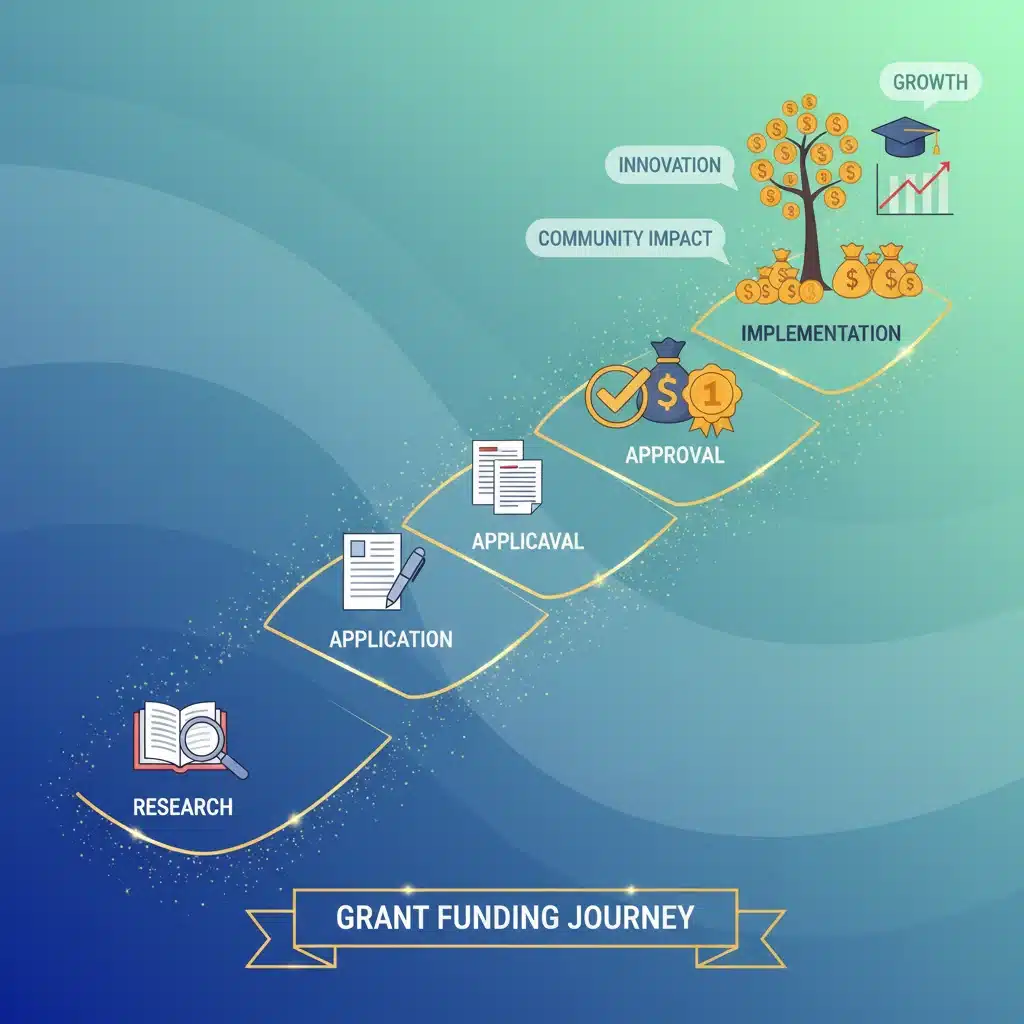
Securing a federal grant, especially a competitive one, requires meticulous planning and execution. Here’s a step-by-step guide:
Step 1: Define Your Professional Development Needs Clearly
Before you even look at grant announcements, clearly articulate what professional development you need and why. What specific skills do you want to acquire? How will this training impact your students and your school community? Having a clear purpose will help you identify the most suitable grant opportunities and strengthen your application narrative.
Step 2: Identify Suitable Grant Programs
Once you know your needs, use the resources mentioned above (Grants.gov, ED website, NSF, NEH, etc.) to find programs that align. Pay close attention to:
- Eligibility Requirements: Are you an eligible applicant (individual, school, district)?
- Funding Priorities: Does your proposed PD align with the grant’s stated goals?
- Award Ceilings: Many individual PD grants are capped, often around the $5,000 mark, but some can be higher, especially for institutes or long-term programs.
- Application Deadlines: Federal deadlines are strict and non-negotiable.
Step 3: Read the Funding Opportunity Announcement (FOA) Thoroughly
This cannot be stressed enough. The FOA (also known as Request for Proposals/RFP or Notice of Funding Opportunity/NOFO) is your bible. It contains every piece of information you need: purpose, eligibility, submission requirements, review criteria, budget guidelines, and contact information. Missing even a small detail can lead to disqualification. Understand what the granting agency is looking for in a successful proposal for federal grants.

Step 4: Craft a Compelling Project Narrative
This is the heart of your application. Your narrative should:
- Clearly State the Problem: What challenge are you trying to address? Use data or anecdotal evidence to support your claims.
- Propose a Solution (Your PD): Describe the specific professional development you plan to undertake. Be detailed. Is it a course, a conference, a workshop series, a mentorship program?
- Outline Goals and Objectives: What do you hope to achieve? Goals are broad statements; objectives are specific, measurable, achievable, relevant, and time-bound (SMART).
- Describe Activities and Timeline: How will you achieve your objectives? Provide a realistic timeline.
- Explain Expected Outcomes and Impact: How will this PD benefit your students, your school, and your own teaching practice? Quantify impacts where possible (e.g., "expect to increase student engagement in X by Y%").
- Demonstrate Need and Alignment: Reiterate how your proposal aligns with the grant’s priorities and addresses a genuine need.
Step 5: Develop a Realistic and Justified Budget
For professional development grants up to $5,000, your budget will likely include tuition fees, conference registration, travel expenses (flights, accommodation, meals), materials, and possibly substitute teacher costs if the PD requires time away from the classroom. Every item in your budget must be directly related to your proposed professional development and clearly justified in a budget narrative. Ensure your budget adheres to the grant’s guidelines regarding allowable costs and funding limits.
Step 6: Gather Required Supporting Documentation
Federal grant applications often require a host of supporting documents, which may include:
- Letters of support from your principal or district administration.
- Your resume or CV.
- Transcripts or certifications.
- Proof of enrollment or registration for the PD program.
- Data demonstrating student needs or current performance.
Start gathering these early, as some may take time to acquire. Ensure all documents are formatted as specified in the FOA.
Step 7: Register and Submit Through Grants.gov
If applying for a federal grant directly, your school or district will likely need to register with Grants.gov and obtain a DUNS number and SAM.gov registration. Individual educators may apply through an institutional affiliation. Understand your institution’s internal grant submission process and timelines, as they will often have their own review and approval stages before the federal deadline. Submit your application well in advance of the deadline to avoid last-minute technical issues.
Step 8: Seek Feedback and Revise
Before final submission, have colleagues, mentors, or your school’s grant writer review your proposal. Fresh eyes can catch errors, clarify ambiguities, and offer valuable suggestions for improvement. A well-vetted proposal significantly increases your chances of securing federal grants.
Maximizing Your Chances for Success with Federal Grants
Beyond the fundamental steps, several strategies can significantly boost your success rate when applying for federal grants:
Collaboration and Partnerships
Federal agencies often favor proposals that demonstrate collaboration. Partnering with other educators, schools, universities, or non-profit organizations can strengthen your application, showing broader impact and resource leveraging. For instance, a group of teachers from different schools applying for a joint PD initiative might be viewed favorably.
Demonstrate Sustainability
How will the benefits of your professional development extend beyond the grant period? Will you train other teachers? Develop new curriculum materials that can be shared? Implement a new program that becomes institutionalized? Showing a plan for sustainability makes your project more attractive to funders.
Focus on Equity and Underserved Populations
Many federal grant programs have a strong emphasis on equity. If your professional development aims to address the needs of underserved students (e.g., low-income, rural, English language learners, students with disabilities) or to enhance your ability to teach in high-need schools, highlight this prominently in your narrative. This is a powerful way to align with federal priorities for federal grants.
Data-Driven Approach
Support your claims with data. If you say students are struggling in a certain area, provide test scores, attendance data, or other relevant metrics. Similarly, when discussing expected outcomes, explain how you will measure success. A data-driven approach demonstrates credibility and rigor.
Networking and Information Gathering
Attend webinars hosted by federal agencies, join professional organizations, and connect with other educators who have successfully secured grants. These networks can provide invaluable insights, tips, and even potential partnership opportunities. Many agencies offer technical assistance workshops for grant applicants.
Persistence is Key
Grant writing is a competitive process, and rejection is a part of it. Don’t be discouraged if your first application isn’t successful. Use feedback from reviewers to improve future proposals. The experience gained from each application makes you a stronger candidate for future federal grants.
Understanding Post-Award Responsibilities
Receiving a federal grant is not the end of the process; it’s the beginning of a new set of responsibilities. Grant recipients are typically required to:
- Adhere to Budget: Spend funds strictly according to the approved budget and federal guidelines. Any significant deviations usually require prior approval from the granting agency.
- Maintain Records: Keep meticulous records of all expenditures, activities, and progress. This includes receipts, attendance logs for PD, and documentation of any materials purchased.
- Submit Reports: Provide regular progress reports (quarterly, semi-annually, or annually) detailing activities undertaken, objectives met, challenges encountered, and financial expenditures. A final report summarizing the entire project is always required.
- Comply with Regulations: Ensure compliance with all federal regulations, including those related to procurement, civil rights, and accessibility.
- Participate in Evaluations: Be prepared to participate in any program evaluations conducted by the granting agency or its contractors.
Understanding these responsibilities from the outset is crucial, as non-compliance can lead to serious consequences, including the clawback of funds. Your school or district’s business office or grants department will be an invaluable resource in navigating these post-award requirements for federal grants.
Case Studies and Examples (Hypothetical for 2026)
To illustrate the potential impact of these grants, consider these hypothetical scenarios for 2026:
Case Study 1: STEM Teacher in a Rural District
Ms. Chen, a middle school science teacher in a rural district, identifies a need for advanced training in robotics and coding to prepare her students for future careers. She researches NSF grants and finds a "Teacher Professional Development in Advanced Technologies" program. Her proposal outlines how she will attend a summer institute at a local university, integrate robotics into her curriculum, and mentor other teachers in her district. She requests $4,800 to cover tuition, materials, and travel. Her district supports her application, highlighting the impact on underserved rural students. Ms. Chen successfully secures the federal grants funds, transforming her classroom into a hub of innovation.
Case Study 2: ESL Educator in an Urban School
Mr. Rodriguez, an English as a Second Language (ESL) teacher in a large urban school, notices his students struggling with academic vocabulary in content areas. He finds a Department of Education discretionary grant focused on "Literacy Strategies for English Language Learners." His proposal details his plan to enroll in an online graduate certificate program specializing in academic language development and culturally responsive pedagogy. He requests $3,500 for tuition and specialized online resources. His application emphasizes the high percentage of ELL students in his school and how his enhanced skills will directly improve their academic success. He is awarded the grant, leading to improved literacy outcomes for his students.
Case Study 3: Special Education Teacher Focused on Inclusive Practices
Dr. Evans, a special education teacher, aims to implement more inclusive classroom practices to better support students with diverse learning needs. She discovers an OSEP grant for "Inclusive Education Leadership Development." Her proposal outlines her participation in a year-long cohort program that includes mentorship, development of an inclusive curriculum unit, and presenting her findings at a state conference. The grant covers her program fees, travel, and conference registration, totaling $4,950. Her school principal provides a strong letter of support, detailing how Dr. Evans’s leadership will benefit the entire school’s approach to inclusion. She receives the federal grants, becoming a beacon for inclusive practices in her district.
Conclusion: Investing in Educational Excellence Through Federal Grants
Federal grants represent a powerful, yet often underutilized, resource for US educators seeking professional development. While the application process can seem daunting, the potential rewards—enhanced teaching skills, improved student outcomes, and significant career growth—are well worth the effort. By understanding the landscape of federal funding, meticulously preparing applications, and strategically aligning proposals with agency priorities, educators can unlock access to funds up to $5,000 and beyond in 2026.
The commitment to lifelong learning is a hallmark of an effective educator. Federal grants provide the financial scaffolding necessary to support this commitment, ensuring that teachers have the resources to adapt, innovate, and inspire. As you look towards 2026 and beyond, embrace the opportunity to explore these vital funding avenues. Your professional growth is an investment not just in your career, but in the future of every student you teach. Take the first step today to secure the federal grants need to thrive.