Top Vocational Programs 2026: High Demand, Higher Salaries

In an ever-evolving job market, the pursuit of higher education often leads to questions about return on investment. While traditional four-year degrees remain a popular choice, a growing number of students and career changers are recognizing the immense value of vocational programs. These specialized training pathways offer direct routes to in-demand careers, often with significantly shorter training periods and impressive starting salaries. For graduates entering the workforce in 2026, understanding which high demand vocational programs offer the best prospects is crucial for a successful and financially rewarding future.
This insider report delves into the top 5 high demand vocational programs in the US that are projected to offer graduates in 2026 starting salaries at least 10% higher than the national average for entry-level positions. We’ll explore the reasons behind their demand, the skills required, and what you can expect from these lucrative career paths. If you’re planning your educational journey or considering a career pivot, this comprehensive guide will equip you with the knowledge to make an informed decision.
The Shifting Landscape of Employment: Why Vocational is Booming
The American economy is experiencing a significant shift, characterized by a burgeoning demand for skilled trades and specialized technical expertise. This isn’t a new phenomenon, but rather an acceleration of trends that have been brewing for years. Several factors contribute to the rise of high demand vocational programs:
- Aging Workforce: A large segment of the skilled workforce is nearing retirement, creating a significant void in critical industries. This demographic shift means fewer experienced professionals are available to fill essential roles, driving up demand for new talent.
- Technological Advancements: While some fear automation, technology often creates new needs for skilled technicians. From maintaining complex industrial machinery to managing intricate IT networks and implementing smart home systems, new technologies require specialized human oversight and maintenance.
- Infrastructure Development: The country’s infrastructure, from roads and bridges to energy grids and communication networks, requires constant upkeep, repair, and expansion. This fuels a steady demand for construction, electrical, and plumbing professionals, among others.
- Healthcare Needs: An aging population and advancements in medical science continue to drive robust growth in the healthcare sector, creating a persistent need for various allied health professionals.
- Perception Shift: There’s a growing recognition that vocational careers are not just viable but highly respectable and financially rewarding paths. The stigma once associated with ‘blue-collar’ jobs is fading, replaced by an appreciation for the specialized skills and critical functions these roles perform.
These factors collectively create a robust environment where graduates of high demand vocational programs are not just finding jobs, but securing well-paying positions right out of school. The emphasis on practical skills, hands-on training, and direct industry relevance makes vocational education an incredibly efficient and effective pathway to career success.
Decoding the 10%+ Higher Starting Salaries
When we talk about 10%+ higher starting salaries, it’s important to contextualize this. The national average starting salary for all entry-level positions can vary widely based on numerous factors. However, for the high demand vocational programs we’re highlighting, the specific skills acquired are so critical and specialized that employers are willing to pay a premium to secure talent. This premium is often due to:
- Scarcity of Talent: When there are more job openings than qualified applicants, the laws of supply and demand drive wages up.
- Immediate Productivity: Vocational graduates often require less on-the-job training because their programs are designed for immediate application of skills. This makes them valuable assets from day one.
- Criticality of Role: Many vocational roles are essential for the functioning of businesses and society. A breakdown in an HVAC system, a cybersecurity breach, or a medical emergency all require immediate and skilled intervention.
- Hazardous or Physically Demanding Work: Some trades involve conditions that warrant higher compensation.
The promise of a 10% (or more) higher starting salary isn’t just about immediate financial gain; it sets a higher baseline for future earnings, retirement savings, and overall financial stability. It’s a clear indicator of the value the market places on these specific skill sets, making these high demand vocational programs exceptionally attractive.
The Top 5 High-Demand Vocational Programs for 2026 Graduates
Based on current labor market projections, industry demand, and salary data, here are the top 5 high demand vocational programs poised to offer 2026 graduates significant career advantages and higher starting salaries:
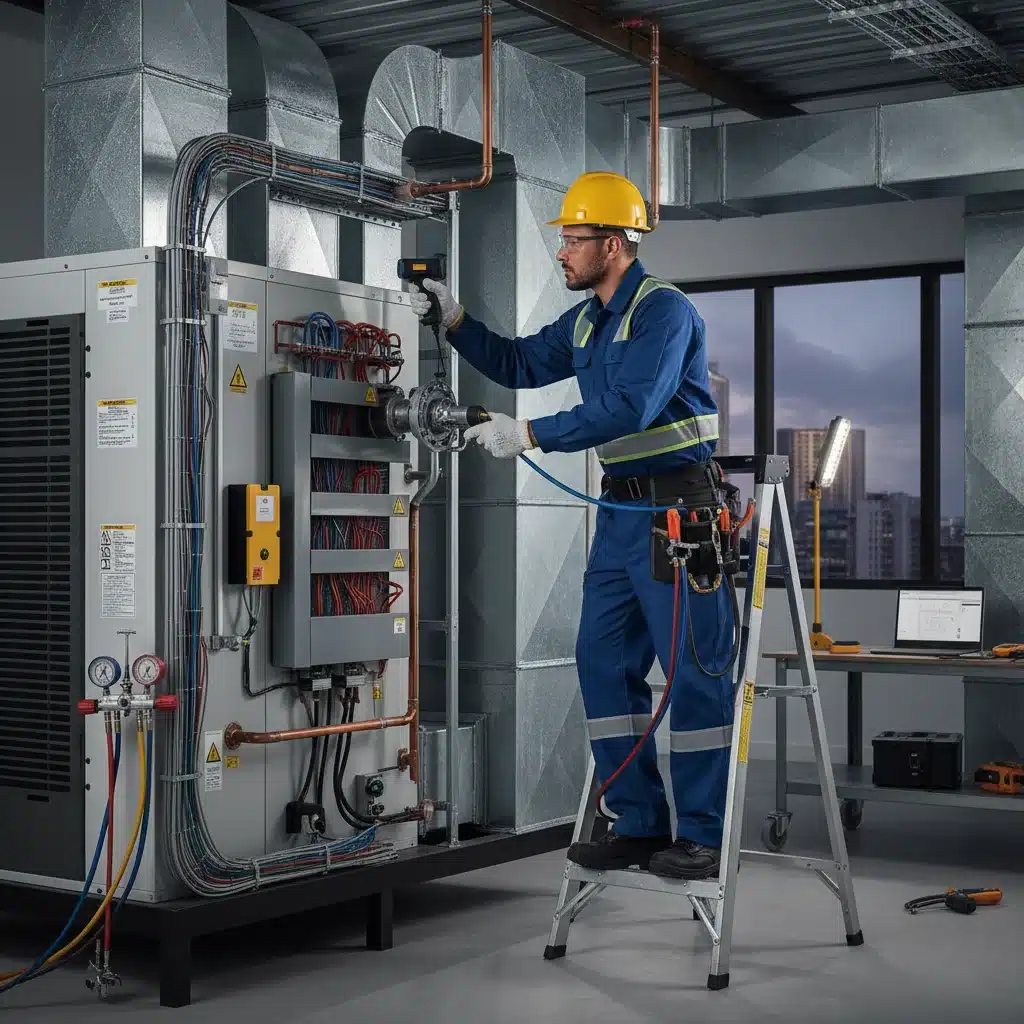
1. HVACR Technology (Heating, Ventilation, Air Conditioning, and Refrigeration)
Why the Demand? The need for skilled HVACR technicians is constant and growing. Every building, residential or commercial, relies on functional heating, cooling, and ventilation systems. As climate change leads to more extreme weather, and as buildings become more complex and energy-efficient, the expertise of HVACR professionals becomes even more critical. The push for green building technologies also requires technicians skilled in new, eco-friendly systems. An aging workforce further exacerbates the talent gap, making this one of the most consistently high demand vocational programs.
What You’ll Learn: HVACR programs cover everything from installation and maintenance to repair of various heating, cooling, and refrigeration systems. Students learn about electrical components, thermodynamics, fluid dynamics, system diagnostics, safety protocols, and increasingly, smart home automation and energy management systems. Certifications like EPA 608 for refrigerant handling are often integrated into the curriculum.
Career Outlook & Salary: The Bureau of Labor Statistics (BLS) projects a faster-than-average growth for HVACR mechanics and installers. Graduates can find employment with contractors, government agencies, schools, hospitals, and large corporations, or even start their own businesses. Starting salaries for new graduates in 2026 are expected to be well above the national entry-level average, with experienced technicians earning significantly more. The immediate need for these skills ensures competitive compensation packages from the outset.
2. Cybersecurity and Network Administration
Why the Demand? In today’s digital age, data is paramount, and protecting it is an absolute necessity. Businesses, governments, and individuals face constant threats from cyberattacks. The demand for professionals who can secure networks, protect sensitive information, and respond to breaches far outstrips the supply. This makes cybersecurity one of the most critical and high demand vocational programs available. As technology advances, so do the threats, ensuring a perpetual need for skilled professionals in this field.
What You’ll Learn: Vocational cybersecurity programs focus on practical skills in network security, ethical hacking, digital forensics, risk management, incident response, and compliance. Students often gain proficiency in various operating systems, network protocols, firewalls, intrusion detection systems, and encryption technologies. Many programs prepare students for industry-recognized certifications like CompTIA Security+, Network+, and Certified Ethical Hacker (CEH).
Career Outlook & Salary: The BLS projects very strong growth for information security analysts. Graduates can pursue roles such as cybersecurity analyst, network administrator, security specialist, or IT support specialist. The starting salaries in this field are consistently among the highest for vocational graduates, reflecting the critical nature of the work and the severe shortage of qualified talent. The potential for career advancement and specialization is also immense.
3. Advanced Manufacturing and Robotics
Why the Demand? The US manufacturing sector is undergoing a renaissance, driven by automation, robotics, and advanced technologies (Industry 4.0). Companies are investing heavily in smart factories that require a new breed of technician capable of operating, programming, and maintaining sophisticated robotic systems and automated production lines. This shift has created a significant skills gap, positioning advanced manufacturing as a high demand vocational program.
What You’ll Learn: These programs delve into topics such as industrial robotics, programmable logic controllers (PLCs), computer-aided design (CAD) and manufacturing (CAM), automation systems, precision machining, quality control, and lean manufacturing principles. Emphasis is placed on hands-on experience with industrial equipment and software, preparing graduates for immediate entry into modern manufacturing environments.
Career Outlook & Salary: Graduates can find roles as robotics technicians, automation specialists, CNC programmers, industrial maintenance technicians, and quality control inspectors. The demand for these skills ensures competitive starting salaries, often significantly higher than traditional manufacturing roles. As industries continue to embrace automation, the long-term career prospects for these specialists are excellent, with opportunities for continuous learning and specialization.
4. Diagnostic Medical Sonography (DMS) / Ultrasound Technician
Why the Demand? The healthcare sector is a perpetual source of job growth, and diagnostic imaging plays a crucial role in modern medicine. Ultrasound technology is non-invasive, safe, and increasingly versatile, leading to its widespread use in diagnosing a variety of conditions, monitoring pregnancies, and guiding medical procedures. As the population ages, and as medical technology advances, the demand for skilled sonographers continues to rise steadily, making DMS a highly high demand vocational program.
What You’ll Learn: DMS programs combine classroom instruction with extensive clinical experience. Students learn human anatomy and physiology, medical terminology, patient care, and the physics of ultrasound. They gain hands-on proficiency in operating ultrasound equipment, interpreting images, and performing various types of sonographic examinations (abdominal, obstetric/gynecological, vascular, cardiac, etc.). Accreditation from organizations like the Commission on Accreditation of Allied Health Education Programs (CAAHEP) is crucial.
Career Outlook & Salary: The BLS projects much faster than average growth for diagnostic medical sonographers. Graduates primarily work in hospitals, physicians’ offices, and outpatient imaging centers. Due to the specialized nature of the skills and the direct impact on patient care, starting salaries for DMS graduates are typically well above the average for entry-level vocational roles. This field offers stability, excellent benefits, and the satisfaction of contributing directly to patient health outcomes.

5. Electrical Technology (Specializing in Renewable Energy or Industrial)
Why the Demand? Electricians are always in demand, but specialization in rapidly growing sectors like renewable energy (solar, wind) or complex industrial systems elevates this trade to a new level of opportunity. The national push towards sustainable energy sources, coupled with the ongoing need to maintain and upgrade industrial electrical infrastructure, creates a massive demand for highly skilled electrical technicians. This makes specialized electrical technology one of the most promising high demand vocational programs.
What You’ll Learn: Core electrical programs cover wiring, circuitry, conduit bending, safety codes (like the National Electrical Code – NEC), and troubleshooting. Specializations might add modules on photovoltaic (solar) system installation and maintenance, wind turbine technology, battery storage systems, smart grid technologies, or advanced industrial control systems (motor controls, PLCs). Apprenticeships are often a key component, providing invaluable on-the-job training.
Career Outlook & Salary: The BLS projects solid growth for electricians, with even stronger growth for those specializing in renewable energy. Graduates can work for electrical contractors, utility companies, renewable energy firms, manufacturing plants, or become independent contractors. The specialized nature of these skills, particularly in emerging fields, commands higher starting salaries. Experienced electricians, especially those with advanced certifications, can achieve very high earning potential.
Beyond the Classroom: What Makes Vocational Graduates Stand Out?
While the specific skills learned in these high demand vocational programs are crucial, vocational education also instills a set of foundational qualities that make graduates highly attractive to employers:
- Problem-Solving Abilities: Vocational training is inherently hands-on, requiring students to diagnose issues and find practical solutions.
- Critical Thinking: Understanding complex systems and processes is a core component of most vocational fields.
- Attention to Detail: Precision and accuracy are vital in trades like HVACR, advanced manufacturing, and healthcare.
- Safety Consciousness: Safety protocols are emphasized from day one, fostering a responsible and careful approach to work.
- Work Ethic: Vocational programs often have rigorous schedules and demand dedication, cultivating a strong work ethic.
- Adaptability: Industries are constantly evolving, and vocational training often prepares individuals to adapt to new technologies and methods.
These soft skills, combined with highly specialized technical expertise, create well-rounded professionals who are ready to contribute meaningfully from their first day on the job. This holistic approach to education is a significant factor in why graduates of high demand vocational programs are so sought after and well-compensated.
Choosing the Right Program: Key Considerations
Deciding on a vocational program is a significant step. Here are some key factors to consider to ensure you choose the best path for your future:
- Accreditation: Ensure the program and institution are accredited by recognized bodies. This assures quality education and can be crucial for financial aid, licensing, and transferability of credits.
- Curriculum & Hands-on Training: Look for programs with robust, up-to-date curricula that emphasize practical, hands-on experience. A strong faculty with industry experience is also a plus.
- Industry Connections & Job Placement: Research the school’s ties to local industries. Do they have partnerships? What is their job placement rate for graduates? A strong network can be invaluable.
- Certifications & Licensing: Many vocational fields require specific certifications or licenses. Ensure the program prepares you for these necessary qualifications.
- Cost & Financial Aid: Understand the total cost of the program and explore all available financial aid options, including scholarships, grants, and federal student loans.
- Location & Flexibility: Consider the program’s location and whether it offers schedule flexibility (e.g., evening classes, online components) if needed.
- Personal Interest & Aptitude: While salary is important, genuine interest in the field will lead to greater job satisfaction and long-term success. Assess your own strengths and passions.
Doing thorough research on these aspects will help you select a program that aligns with your career aspirations and maximizes your chances of success in a high demand vocational program.
The Future is Skilled: Investing in Vocational Education
For those looking to enter the workforce in 2026, the landscape is ripe with opportunity for graduates of high demand vocational programs. The shift in economic needs, coupled with technological advancements and an aging workforce, has created a robust demand for skilled trades and technical professionals. The promise of 10% or more higher starting salaries is not merely a statistical anomaly but a reflection of the critical value these professions bring to the economy.
Whether it’s ensuring our comfort through advanced HVACR systems, protecting our digital lives with cybersecurity expertise, building the future with advanced manufacturing, diagnosing health conditions with sonography, or powering our world with specialized electrical knowledge, vocational careers are at the heart of modern society. Investing in these programs is an investment in a stable, rewarding, and financially secure future. As you plan your next steps, consider the powerful potential of these top vocational pathways and position yourself for success in the dynamic job market of 2026 and beyond.
The journey to a high-paying, in-demand career doesn’t always require a traditional four-year degree. Often, the most direct and efficient route is through a specialized vocational program that equips you with the exact skills employers are desperately seeking. Explore these options, talk to professionals in these fields, and discover how a vocational education can unlock your full potential.