Online Learning Evolution: Higher Education Trends 2026

Higher Education Trends 2026: How Online Learning is Evolving and What it Means for Students
The landscape of higher education is undergoing a profound metamorphosis, driven significantly by the relentless march of technology and the evolving demands of a globalized workforce. As we peer into 2026, the Online Learning Evolution stands out as a pivotal force reshaping how knowledge is disseminated, acquired, and applied. This isn’t merely about moving traditional classrooms to a digital format; it’s about a complete re-imagining of pedagogical approaches, student engagement, and institutional strategies. The COVID-19 pandemic acted as an undeniable catalyst, accelerating digital transformation in education by years, if not decades. Now, with the initial shockwaves settled, institutions, educators, and students are collectively navigating a new normal where online learning is not just an alternative but an integral, often preferred, mode of education. Understanding these shifts is crucial for anyone involved in or considering higher education – from prospective students and current learners to faculty, administrators, and policymakers.
The transition to widespread online learning has brought with it a myriad of opportunities and challenges. On one hand, it has democratized access to education, allowing individuals from diverse geographical locations and socio-economic backgrounds to pursue higher learning without the traditional barriers of relocation or rigid schedules. On the other hand, it has necessitated a rapid adaptation of teaching methodologies, a significant investment in technological infrastructure, and a renewed focus on ensuring equitable access and quality of instruction. By 2026, we anticipate that the Online Learning Evolution will have matured considerably, moving beyond emergency remote teaching to embrace sophisticated, purpose-built digital learning ecosystems. This article will delve deep into the multifaceted trends defining this evolution, exploring the technological innovations, pedagogical shifts, and socio-economic implications that will shape higher education for years to come. We will examine how these changes are impacting student experiences, faculty roles, and the very definition of a university education, ensuring a comprehensive understanding of what lies ahead.
The Rise of Personalized and Adaptive Learning Pathways
One of the most significant trends defining the Online Learning Evolution by 2026 is the widespread adoption of personalized and adaptive learning pathways. Traditional education often follows a one-size-fits-all model, where all students progress through the same curriculum at the same pace. However, online platforms, powered by artificial intelligence (AI) and machine learning (ML), are increasingly capable of tailoring educational content and delivery to individual student needs, learning styles, and progress rates. This means that students will no longer be passive recipients of information but active participants in a customized learning journey.
Adaptive learning systems utilize data analytics to monitor student performance, identify areas of strength and weakness, and then dynamically adjust the learning materials, exercises, and assessments. For instance, if a student struggles with a particular concept, the system can provide additional resources, different explanations, or practice problems until mastery is achieved. Conversely, if a student demonstrates proficiency, they can be accelerated to more advanced topics, preventing boredom and maximizing engagement. This level of personalization was largely unattainable in traditional classroom settings but is becoming a cornerstone of the Online Learning Evolution. The benefits are multifold: improved student outcomes, increased engagement, reduced attrition rates, and a more efficient use of learning time. Institutions are investing heavily in these technologies, recognizing their potential to create a more effective and equitable educational experience for a diverse student body. The integration of AI tutors and intelligent feedback systems will become commonplace, offering students immediate, constructive guidance, mimicking the individualized attention that was once the hallmark of exclusive, small-group instruction. This shift is not just about technology; it’s about fundamentally rethinking how we support every student’s unique learning trajectory.
Immersive Technologies: VR, AR, and Gamification in Online Education
Beyond traditional video lectures and discussion forums, the Online Learning Evolution is embracing immersive technologies like Virtual Reality (VR), Augmented Reality (AR), and sophisticated gamification techniques. These technologies promise to transform passive learning into highly engaging, experiential education, breaking down geographical barriers and making complex concepts more accessible and intuitive. By 2026, we expect to see a significant integration of these tools across various disciplines, moving beyond experimental pilot programs to become standard components of online curricula.
VR, for instance, can transport students to historical sites, inside the human body, or into complex machinery, allowing for hands-on, risk-free exploration and experimentation that would be impossible or impractical in a physical classroom. Medical students can practice surgical procedures in a virtual operating room, engineering students can design and test prototypes in a simulated environment, and history students can walk through ancient civilizations. AR, on the other hand, overlays digital information onto the real world, enhancing textbooks, laboratory experiments, and field trips with interactive 3D models and contextual data. Imagine a biology student pointing their phone at a plant and seeing an overlay of its cellular structure or an architecture student visualizing a building design superimposed on a real construction site.

Gamification, the application of game-design elements and game principles in non-game contexts, is also a powerful driver of engagement in the Online Learning Evolution. By incorporating elements like points, badges, leaderboards, and narrative-driven challenges, educators can motivate students, foster healthy competition, and make learning more enjoyable and memorable. This approach taps into intrinsic human desires for achievement, recognition, and social connection, turning educational tasks into engaging quests. The combination of VR, AR, and gamification creates a rich, multi-sensory learning environment that caters to different learning styles and keeps students actively involved, promising a future where online education is not only effective but also incredibly captivating. These technologies address the challenge of maintaining student attention and motivation in a digital environment, offering a dynamic alternative to static content and fostering deeper understanding through active participation and exploration.
The Blurring Lines: Hybrid and Blended Learning Models
As the Online Learning Evolution progresses towards 2026, the distinction between purely online and purely in-person education will continue to blur, giving rise to sophisticated hybrid and blended learning models. These models aim to leverage the best of both worlds, combining the flexibility and accessibility of online learning with the rich, interactive experiences of face-to-face instruction. The pandemic forced many institutions into emergency remote teaching, but the lessons learned are now being applied to intentionally design more effective and engaging integrated learning environments.
Hybrid models typically involve a significant portion of the course delivered online, with scheduled in-person components for specific activities such as lab work, group projects, discussions, or examinations. Blended learning, while often used interchangeably, generally refers to courses where online and in-person components are more seamlessly integrated, with students often having some choice in how they engage with material. For example, lectures might be delivered online asynchronously, freeing up classroom time for problem-solving sessions, debates, or collaborative activities. This approach caters to a wider range of student preferences and circumstances, offering greater flexibility while still fostering a sense of community and direct interaction.
The success of these models hinges on thoughtful instructional design that maximizes the unique advantages of each modality. Technologies like advanced video conferencing, collaborative online whiteboards, and virtual breakout rooms are facilitating more dynamic and interactive online components, making remote participation feel more integrated. For institutions, adopting hybrid models means optimizing campus resources, potentially accommodating more students, and reaching a broader, more global audience. For students, it means greater autonomy over their learning paths, the ability to balance academic pursuits with other commitments, and access to a diverse array of learning experiences. The Online Learning Evolution is thus moving towards a flexible, student-centric paradigm where learners can tailor their educational journey to fit their individual needs and lifestyles, ensuring that higher education remains relevant and accessible in a rapidly changing world.
Data Analytics and AI-Driven Support Systems
The proliferation of online learning platforms generates vast amounts of data, and by 2026, the intelligent utilization of this data will be a hallmark of the Online Learning Evolution. Advanced data analytics and AI-driven support systems are transforming how institutions understand student behavior, predict academic success or struggle, and provide targeted interventions. This shift moves beyond simple tracking of grades to a holistic understanding of the learning process, enabling proactive support and continuous improvement.
Learning analytics dashboards provide educators and administrators with real-time insights into student engagement, performance on assignments, participation in discussions, and even time spent on different learning modules. AI algorithms can analyze these patterns to identify students who might be at risk of falling behind, allowing instructors to intervene early with personalized outreach or additional resources. This predictive capability is a game-changer, moving from reactive support to proactive guidance, ultimately enhancing student retention and success. Furthermore, AI is increasingly being deployed in sophisticated tutoring systems and chatbots that can answer student questions 24/7, provide instant feedback on assignments, and guide students through complex topics. These tools augment the role of human instructors, freeing them from repetitive tasks and allowing them to focus on higher-level teaching, mentorship, and personalized interaction.
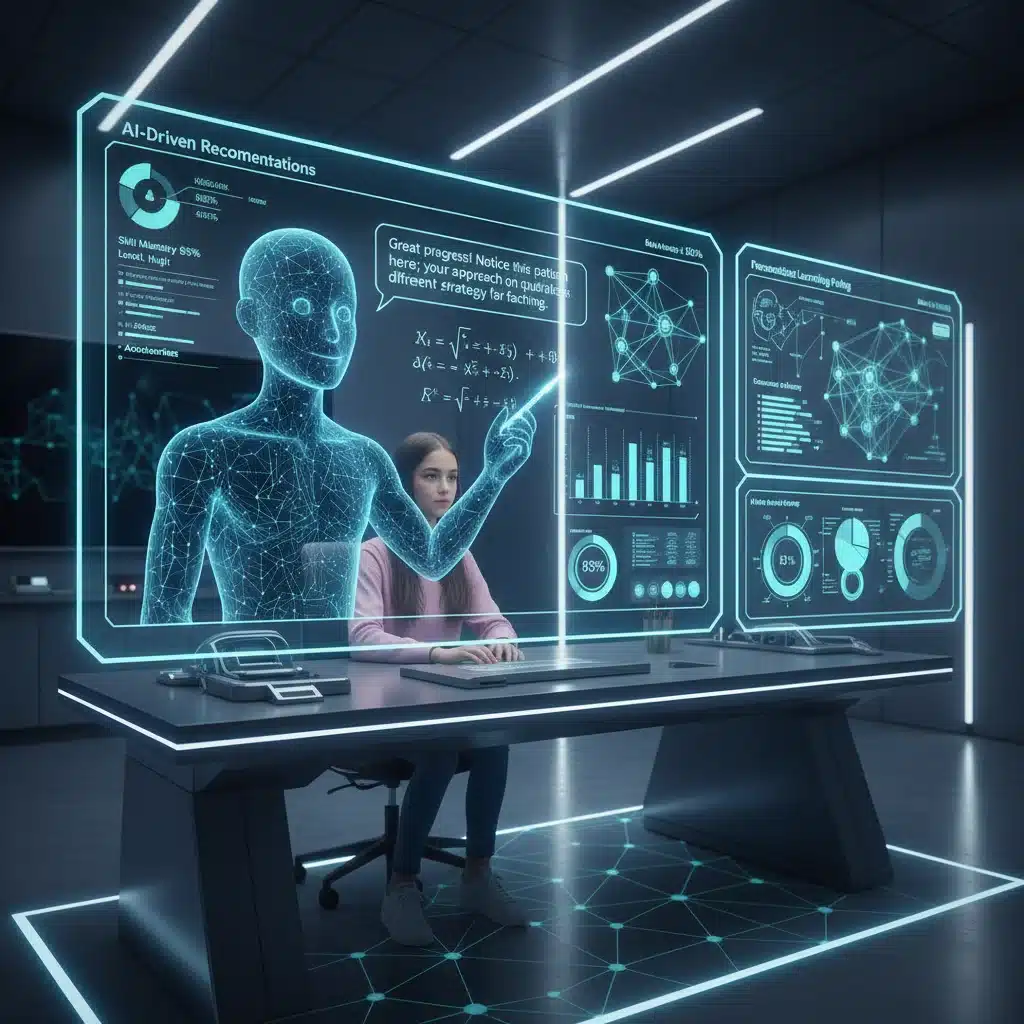
Beyond individual student support, data analytics also informs curriculum development and institutional strategy. By analyzing aggregate data, institutions can identify which teaching methods are most effective, which course materials resonate best with students, and where curriculum gaps might exist. This iterative feedback loop ensures that online programs are continually optimized for quality and effectiveness. The ethical implications of data privacy and algorithmic bias are critical considerations in this development, and institutions will need robust policies and transparent practices to build trust. Nevertheless, the power of data and AI to personalize, support, and optimize the learning experience is undeniable, making it a cornerstone of the Online Learning Evolution towards a more intelligent and responsive educational ecosystem. This intelligent use of data is not just about efficiency; it’s about creating a more equitable and effective learning environment for all.
Micro-credentials, Stackable Degrees, and Lifelong Learning
The traditional four-year degree model is facing increasing pressure from the rapidly changing demands of the job market. By 2026, the Online Learning Evolution will heavily feature micro-credentials and stackable degrees, catering to the need for flexible, lifelong learning and continuous skill development. This shift reflects a move away from education as a one-time event to education as an ongoing journey, adapting to the dynamic needs of individuals and industries.
Micro-credentials, such as badges, certificates, or nanodegrees, validate specific skills or competencies acquired over a shorter period than a traditional degree. These can range from expertise in a particular software tool to proficiency in a specialized analytical technique. They are highly relevant to employers who need to quickly upskill their workforce or hire individuals with very specific, in-demand capabilities. Online platforms are ideally suited for delivering these focused, bite-sized learning experiences, making them accessible to working professionals and those seeking to pivot careers without committing to a full degree program.
Stackable degrees take this concept further by allowing students to earn a series of micro-credentials that can eventually be combined or ‘stacked’ to form a larger certificate, an associate’s degree, or even a bachelor’s or master’s degree. This modular approach provides immense flexibility, allowing students to learn at their own pace, earn credentials as they go, and build up to a full degree over time, often while working. It reduces the financial and time commitment risks associated with traditional degrees and makes higher education more approachable for a wider demographic. The Online Learning Evolution is facilitating this change by providing the infrastructure for delivering, tracking, and validating these diverse credential types, often in partnership with industry. This model is particularly appealing in fields experiencing rapid technological advancement, such as IT, data science, and digital marketing, where skills can become obsolete quickly. Universities are increasingly partnering with corporations and professional organizations to co-create these micro-credentials, ensuring their relevance and value in the labor market. This trend signifies a fundamental re-evaluation of what constitutes ‘higher education’ and how it can best serve the needs of a dynamic, skill-driven economy.
Global Access and Cross-Cultural Collaboration
The inherent borderless nature of online learning is a powerful driver of global access and cross-cultural collaboration, a trend that will only intensify by 2026 as part of the Online Learning Evolution. Online platforms eliminate geographical constraints, allowing students from virtually any corner of the world to access high-quality education from leading institutions, fostering a truly international learning environment. This not only democratizes education but also enriches the learning experience through diverse perspectives.
Students in online courses frequently interact with peers from different countries, cultures, and socio-economic backgrounds. This exposure provides invaluable opportunities for cross-cultural communication, understanding, and collaboration, skills that are increasingly vital in our interconnected global society. Group projects involving students from multiple continents, discussions that bring together varied cultural viewpoints, and shared learning experiences across time zones become commonplace. This global interaction prepares students for careers in multinational organizations and equips them with a broader worldview, making them more adaptable and culturally competent professionals.
Furthermore, online learning facilitates international partnerships between universities, allowing for joint degree programs, shared faculty expertise, and collaborative research initiatives that transcend national borders. Institutions can now reach a global talent pool for both students and educators, creating richer academic communities. The challenge lies in addressing issues of digital divide, ensuring equitable access to technology and reliable internet connectivity across different regions. However, ongoing efforts to expand digital infrastructure and provide affordable access are critical components of this global expansion. The Online Learning Evolution is thus transforming higher education into a truly global enterprise, breaking down traditional barriers and fostering a new era of international intellectual exchange and cooperation. This global reach is not just about expanding market share for institutions; it’s about fulfilling the fundamental mission of education to empower individuals and advance knowledge on a worldwide scale.
The Evolving Role of Faculty and Institutional Support
The significant shifts brought about by the Online Learning Evolution by 2026 necessitate a fundamental re-evaluation and transformation of the roles of faculty and the nature of institutional support. Educators are no longer solely deliverers of content but are evolving into facilitators, mentors, and instructional designers, while institutions must adapt their infrastructure and services to meet the unique demands of a digital-first learning environment.
For faculty, the transition to online learning requires new skill sets. This includes proficiency in using various learning management systems (LMS), understanding effective online pedagogical strategies, creating engaging multimedia content, and mastering tools for virtual collaboration and assessment. The focus shifts from lecturing to curating resources, designing interactive activities, providing personalized feedback through AI-assisted tools, and fostering a strong sense of community in a virtual space. Professional development programs for faculty will become more crucial than ever, equipping them with the expertise to navigate and innovate within the digital learning landscape. Institutions are recognizing the need to invest in ongoing training and support for their educators to ensure high-quality online instruction.
Institutional support structures are also undergoing a dramatic overhaul. This includes robust IT infrastructure to support reliable online platforms, dedicated technical support for students and faculty, and specialized instructional design teams who work alongside faculty to develop engaging and effective online courses. Student support services, such as academic advising, counseling, career services, and library resources, are also being adapted for online delivery, ensuring that remote students have access to the same level of assistance as their on-campus counterparts. The emphasis is on creating a seamless and supportive ecosystem that addresses the unique needs of online learners, from onboarding to graduation. The Online Learning Evolution is pushing universities to become more agile, responsive, and student-centric, requiring a holistic approach to supporting the entire academic community in a digital age. This evolution demands a cultural shift within institutions, moving towards a greater appreciation and integration of digital pedagogy as a core component of their educational mission.
Challenges and Ethical Considerations in Online Learning
While the Online Learning Evolution presents immense opportunities, it is not without its challenges and ethical considerations, which will continue to be critical areas of focus by 2026. Addressing these issues is paramount to ensuring that online education remains equitable, effective, and responsible.
One of the primary challenges is the persistent digital divide. Unequal access to reliable internet connectivity, suitable devices, and digital literacy skills can exclude significant populations from participating in online learning, exacerbating existing socio-economic disparities. Institutions and policymakers must work collaboratively to bridge this gap, ensuring that online education truly democratizes access rather than creating new forms of exclusion. This includes initiatives for providing affordable internet, loaner devices, and digital skills training for underserved communities.
Another significant concern revolves around academic integrity and assessment in online environments. While proctoring technologies are becoming more sophisticated, the challenge of ensuring authentic learning and preventing cheating remains. Innovative assessment methods that focus on project-based learning, critical thinking, and real-world application, rather than rote memorization, are gaining traction as more robust ways to evaluate student understanding in an online context. Furthermore, the ethical implications of data privacy and algorithmic bias in AI-driven learning systems are critical. As online platforms collect vast amounts of student data, ensuring its secure handling, transparent use, and protection from misuse is paramount. Institutions must develop clear policies regarding data ownership, consent, and the ethical deployment of AI to avoid reinforcing biases or compromising student privacy. The potential for algorithmic bias in personalized learning pathways, where certain demographics might be inadvertently steered towards different learning trajectories, also requires careful monitoring and mitigation.
Maintaining student engagement and preventing isolation in online settings is another ongoing challenge. While immersive technologies and interactive platforms help, fostering a sense of community and connection among online learners requires intentional design and active facilitation from instructors. Mental health support services tailored for online students are also becoming increasingly vital. The Online Learning Evolution demands a continuous commitment to addressing these complex issues, ensuring that as education becomes more technologically advanced, it also remains human-centered, ethical, and universally accessible. Overcoming these hurdles will define the true success and sustainability of digital higher education in the coming years, requiring a multi-faceted approach involving technology, pedagogy, and policy.
Conclusion: The Future is Flexible, Personalized, and Global
As we look towards 2026, the trajectory of higher education is undeniably shaped by the accelerating Online Learning Evolution. What began as a niche offering and was later thrust into the mainstream by necessity, is now maturing into a sophisticated, integral component of the global educational ecosystem. The key trends we’ve explored – personalized and adaptive learning, immersive technologies, hybrid models, AI-driven support, micro-credentials, and global collaboration – collectively paint a picture of a future where education is more flexible, more accessible, and more tailored to individual needs than ever before.
For students, this evolution means an unprecedented degree of choice and control over their learning journeys. They will have access to high-quality content from institutions worldwide, the flexibility to learn at their own pace and on their own schedule, and the opportunity to acquire skills that are directly relevant to a rapidly changing job market. The traditional model of a fixed, linear educational path is giving way to a dynamic, modular approach that supports lifelong learning and continuous professional development. The focus is shifting from simply acquiring a degree to continuously building a portfolio of skills and competencies.
For institutions and educators, the future demands adaptability, innovation, and a commitment to continuous improvement. The role of faculty is transforming from didactic lecturer to skilled facilitator and mentor, leveraging technology to create richer, more engaging learning experiences. Universities must invest in robust digital infrastructures, comprehensive faculty development, and student support services that cater specifically to the online learner. The imperative is to design educational experiences that are not just digitally delivered, but digitally enhanced, fostering critical thinking, creativity, and collaboration in virtual spaces.
The challenges, particularly around equitable access and ethical AI use, remain significant and require ongoing attention and proactive solutions. However, the overall momentum of the Online Learning Evolution is undeniable and overwhelmingly positive. By 2026, online learning will no longer be seen as a mere substitute for in-person education but as a powerful, distinct, and often superior modality that offers unique advantages. It will be a cornerstone of a more inclusive, responsive, and globally interconnected higher education system, preparing individuals not just for careers, but for a lifetime of learning and adaptation in a complex world. The future of higher education is flexible, personalized, and truly global, with online learning leading the charge into this exciting new era.